Photogala vs Everlense: What You Actually Get for Your Money


Everlense is one of the first names that pops up when you search for event photo sharing apps. It has a free tier, a clean interface, and basic photo challenges. For a lot of people, that's enough.
But "enough" depends entirely on what kind of event you're running. A casual birthday dinner for 15 people has different needs than a 180-guest wedding or a corporate team-building day with a leaderboard and prizes. And the gap between these two apps widens fast once you move beyond basic photo uploads.
I spent time digging into both platforms, feature by feature, plan by plan. Here's what I found.
The Free Tier Question
Everlense's biggest draw is obvious: it has a free plan. You can create a gallery, share a QR code, and collect photos without spending anything. That's a genuine advantage, and there's no point pretending otherwise.
The catch is the limit. Everlense's free tier caps you at 50 photos. For a small dinner party, that might work. For anything bigger, you'll hit the ceiling fast. Picture a 30-person birthday: if even half the guests upload 4-5 photos each, you're already over. And once you hit the limit, new uploads just... stop.
Photogala doesn't have a free tier. The Plus plan costs €39. But it comes with unlimited photos and unlimited guests from day one. No caps, no surprises mid-event. That trade-off matters more than it sounds. Running out of photo slots at 9 PM on your wedding day is the kind of problem you really don't want to have.
What the Numbers Look Like
Everlense's paid plans scale photo limits with price. Their mid-tier bumps you to a few thousand photos, and the top tier reaches around 10,000. Photogala's approach is different: every plan, even the cheapest one, includes unlimited uploads at original quality.
Photogala vs Everlense: Feature Comparison
| Feature | Photogala | Everlense |
|---|---|---|
| Starting Price | €39 (Plus) | Free (50 photos) |
| Unlimited Photos | all plans | capped per tier |
| Unlimited Guests | all plans | |
| Video Uploads | ||
| Photo Challenges | basic | |
| Achievements & Badges | up to 50 | |
| Leaderboard & Points | ||
| Real-World Rewards | Deluxe | |
| AI Face Recognition | Deluxe | |
| AI NSFW Filter | Deluxe | |
| Content Moderation | Premium+ | |
| Comments & Mentions | Premium+ | |
| Gallery Layouts | 4 layouts | |
| Custom Branding | ||
| Geo Map View | Deluxe | |
| Photo Wall / Live Display | ||
| One-Time Payment |
The table tells one story. But tables flatten nuance. Some of these differences matter a lot. Others might not matter at all for your event. So let's dig into the ones that actually change the experience.
Photo Challenges: Surface-Level Similar, Deep-Level Different
Both apps let you create photo challenges (tasks like "Take a selfie with the bride" or "Find someone wearing red"). Everlense deserves credit here. They were early to include challenges, and the basic implementation works.
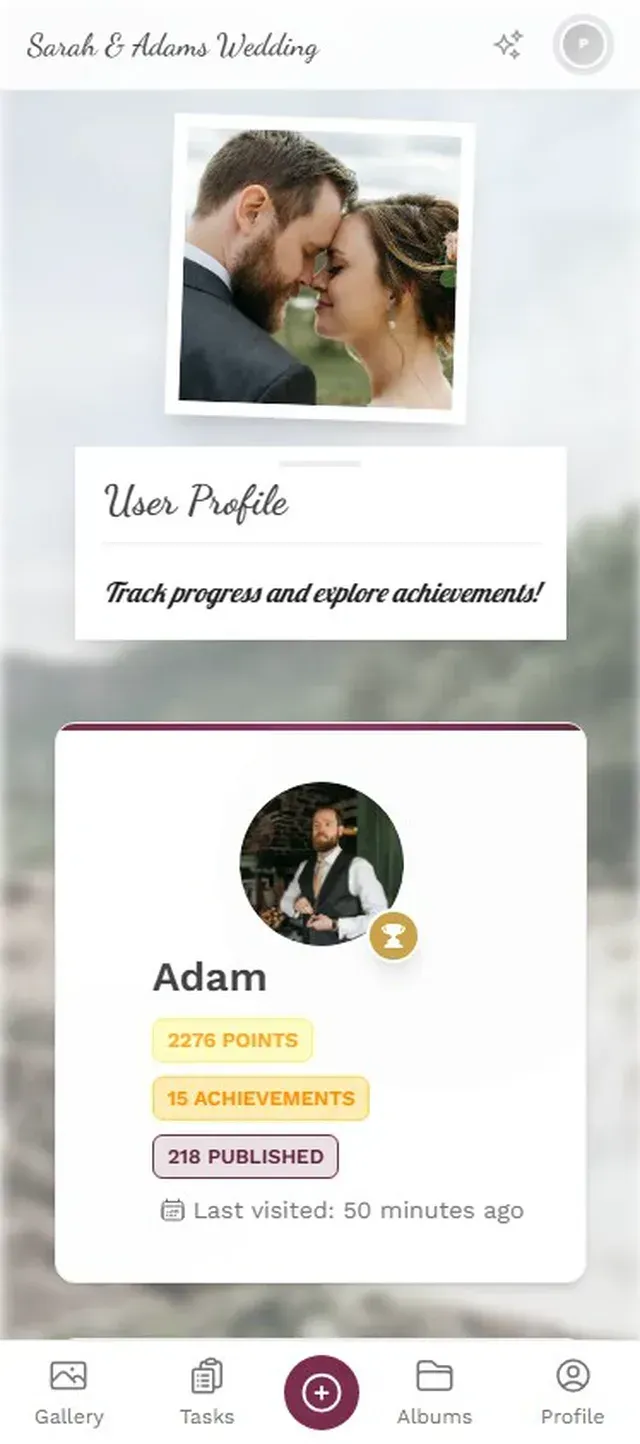
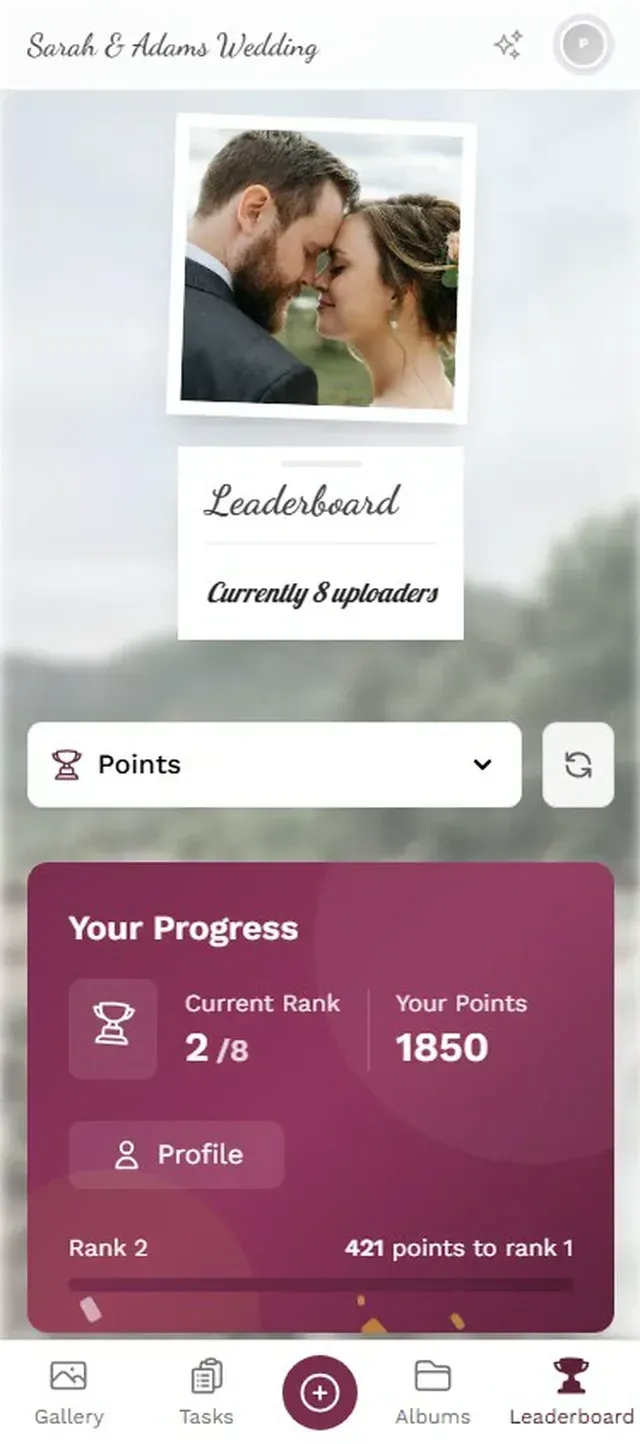
Photogala takes that foundation and builds a full gamification system on top of it. Challenges award points. Points feed into a leaderboard. Achievements unlock as guests hit milestones. And on the Deluxe plan, you can set up real-world rewards that guests claim at the event itself: a drink voucher for completing 5 challenges, a dessert for reaching the top 3 on the leaderboard.
Imagine a corporate team event with 60 people. On Everlense, you'd get challenges. People complete them, photos appear. Fine. On Photogala, those same 60 people are checking the leaderboard between activities, ribbing colleagues about their ranking, uploading extra photos to climb a spot. The gamification turns passive uploaders into active participants.
That's the difference between a feature that exists and a feature that changes behavior.
Photo challenges with points, progress tracking, and printable QR task cards
Discover what Photogala can do
The AI Gap
This is where the comparison gets lopsided. Everlense has no AI features. Photogala's Deluxe plan includes two that genuinely change the experience.
Face recognition automatically groups photos by person. After the event, instead of scrolling through 600 photos to find yourself, you tap a face cluster and see every photo you're in. At a 2024 Kamero study, AI face recognition in event contexts achieves 95%+ accuracy, even with group shots and tricky lighting. For a wedding with 150+ guests, that's the difference between a usable gallery and an overwhelming photo dump.
NSFW content filtering catches inappropriate uploads before they hit the shared gallery (or worse, the live photo wall behind the dance floor). You can set the sensitivity level. The moderation dashboard shows flagged content for manual review. At a corporate event, this isn't a nice-to-have. It's a liability question.
Everlense simply doesn't offer either of these. If you need moderation or face-based filtering, it's not an option there, regardless of which plan you choose.
Social Features and the "Aliveness" Factor
One thing that surprised me comparing both apps: how different the gallery feels during a live event.
Everlense galleries are essentially photo collections. You upload, you browse. Clean, functional.
Photogala adds a social layer starting from the Premium plan. Comments on photos. Threaded replies. @Mentions. Likes. When someone uploads a great candid shot, other guests react to it in the gallery itself, not in a separate WhatsApp group. The gallery becomes the conversation, not just the storage.
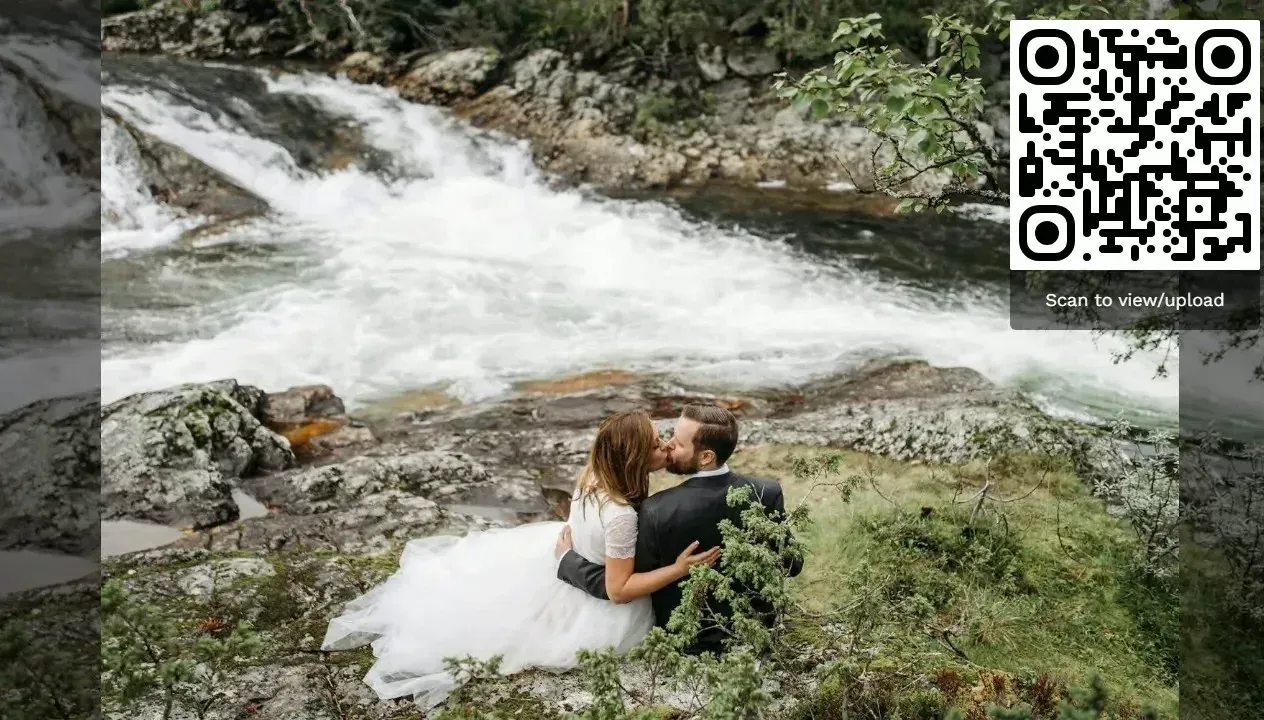
Add the live photo wall (a TV or projector screen cycling through new uploads in real time) and the gallery turns into an active part of the event atmosphere. According to a 2025 GC Event Studio report, 59% of event planners believe technology significantly improves attendee experience. A live photo wall is one of the simplest ways to prove that stat right.
Guests comment, reply, and @mention each other directly on photos
Where Everlense Wins
Honesty matters more than a sales pitch, so here's where Everlense has a real edge:
- The free tier. If you genuinely need to share under 50 photos and don't want to spend anything, Everlense covers that. Photogala's cheapest plan is €39.
- Lower entry price on paid plans. Everlense's paid plans start around €29. That's a bit less than Photogala's Plus plan. For a tight budget, it counts.
- Simplicity. If you want zero gamification, zero AI, zero social features, and just a clean gallery with a QR code, Everlense is simpler. Less to configure, less to think about.
These are legitimate reasons to choose Everlense. Not every event needs a leaderboard or face recognition. A small garden party for close friends might be perfectly served by a simple shared gallery.
The honest trade-off with Photogala: There's no free tier, and the browser-based approach means there's no native app. Everything runs in the mobile browser. For most guests this is invisible (scan QR, upload, done), but if your crowd expects an App Store download, set expectations upfront.
Where Photogala Pulls Ahead
For events where engagement matters, where you want guests actively participating and not just passively uploading, Photogala offers tools Everlense doesn't have at any price point:
Gamification that works. Challenges, achievements, leaderboards, points, and real-world rewards. Research from AmplifAI shows gamified environments increase engagement by 48%. At events, the psychology is the same. Give people a score and a ranking, and suddenly the quiet uncle is uploading photos between courses.
Content moderation. A dedicated dashboard where admins approve or reject uploads before they go live. Configurable rejection reasons. The NSFW AI filter as an automatic first line of defense. For corporate events or any event with a live display, this is essential.
Four gallery layouts (Modern, Polaroid, Timeline, Vintage) plus six header styles on the Deluxe plan. Full color customization, custom fonts, custom logos. Everlense offers some branding options, but the range isn't comparable.
Unlimited everything. No photo caps on any plan. No guest limits. No worrying about running out of space at 11 PM when the dance floor photos start rolling in. A Mixbook survey found that 50% of Americans never do anything with their phone photos. Making uploads frictionless and unlimited removes one more barrier between a memory and a shared gallery.
Pricing Head-to-Head
Both platforms use one-time pricing, which is refreshing in a world of SaaS subscriptions.
Pricing Comparison
| Plan | RecommendedPhotogala | Everlense |
|---|---|---|
| Free Tier | no | Yes - 50 photos |
| Entry Paid Plan | €39 (Plus) | ~€39 |
| Mid Plan | €69 (Premium) | ~€69 |
| Top Plan | €119 (Deluxe) | ~€119 |
| Photo Limit | Unlimited (all plans) | 50 – 10,000 |
| Guest Limit | Unlimited (all plans) | Varies by tier |
At the top tier, both apps land around €119. But what you get for that €119 is dramatically different. Photogala's Deluxe includes AI face recognition, NSFW filtering, unlimited challenges, unlimited achievements, real-world rewards, advanced moderation, and six header styles. Everlense's top tier raises the photo limit and unlocks some extra features, but the AI and gamification depth simply isn't there.
So Which One Should You Pick?
If your event is small, your budget is zero, and you just want a shared gallery with no extras, Everlense's free tier handles that. No reason to overcomplicate it.
If your event has more than 30-40 guests, or if engagement matters (weddings, corporate events, milestone celebrations), the unlimited uploads and gamification system in Photogala change the game. The difference between "people uploaded some photos" and "the gallery was the highlight of the party" comes down to whether guests have a reason to keep participating beyond the first upload.
And if you need moderation, AI features, or a live photo wall, there's only one option in this comparison.
For a deeper look at how Photogala stacks up against other alternatives, check out the Photogala vs GuestPix comparison or the Photogala vs FridaySnap breakdown.
Ready to create your gallery?
Start sharing your event photos with guests in minutes.
Create GalleryWritten by

I believe event photos should be more than static galleries. They should be live, playful, and unforgettable.
Categories
Related Posts
Wedding Hashtag vs QR Code Gallery: What Actually Works in 2026
Hashtags made sense in 2018. In 2026, most guest photos hide behind private profiles. Here's what replaced them.

How Much Does Event Photo Sharing Cost? Complete 2026 Guide
From free shared albums to premium platforms: what event photo sharing actually costs in 2026, what you get at each price point, and where the hidden fees lurk.

Photogala vs Snapchat for Event Photo Sharing: One Keeps Your Photos, One Deletes Them
Snapchat is fun for selfies, but event photo sharing needs permanence, organization, and zero friction. Here's how a purpose-built gallery compares.