Wedding Hashtag vs QR Code Gallery: What Actually Works in 2026

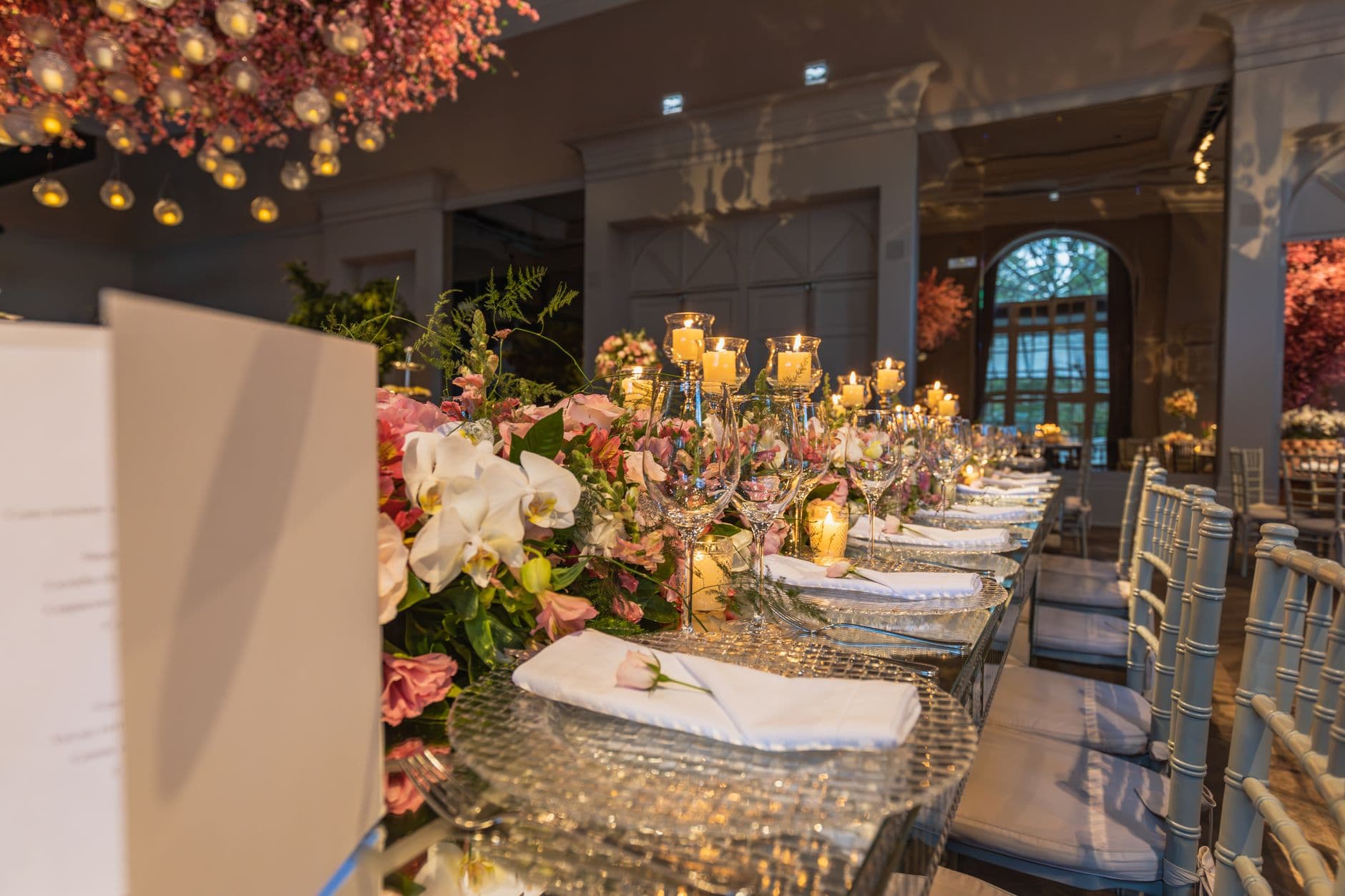
Picture a Saturday in June. The ceremony was perfect, the speeches made people cry, and 180 guests spent the whole evening taking photos on their phones. Monday morning, you search your wedding hashtag on Instagram. Fourteen posts. Three of them are from the florist.
That's the hashtag problem in one scene. And it's not because your guests didn't care. It's because the way people use social media in 2026 has made hashtags almost useless for collecting wedding photos.
Where Your Hashtag Photos Disappear
Here's what most couples don't realize until it's too late: the majority of Instagram accounts are now private. When a guest with a private profile posts a photo with your hashtag, it doesn't appear in the public hashtag feed. You can't see it. Other guests can't see it. According to BestEver.Pics, hashtags hide roughly 90% of guest photos behind private profiles. The couple ends up with "a handful of low-quality posts instead of the hundreds of memories expected."
And even the photos that do show up? They're Instagram-compressed. Cropped to fit a grid. Run through filters. What you wanted was the raw, full-resolution moment. What you got was a 1080px square with a Valencia tint.
The other issue is simpler: people forget. You can print it on napkins, announce it during speeches, put it on the welcome sign. Half your guests will still upload their photos to their story (which vanishes in 24 hours) or just keep them on their phone forever. A Hive Moments analysis found that QR-based uploads collect 3 to 5 times more photos than hashtags at comparable weddings.
Hashtags also mean your wedding photos live on a public platform. Anyone searching that hashtag sees them. If privacy matters to you (or your guests), that's worth considering.
Why QR Codes Changed the Math
The shift started around 2023, but by 2026 it's decisive. QR code usage overall has grown significantly since 2021, and nearly half of couples now include one on their save-the-dates or invitations. The reason is friction, or rather, the lack of it.
A hashtag requires guests to open Instagram, type the hashtag correctly, write a caption, and post. That's four steps, assuming they have an Instagram account at all. Your uncle who only uses WhatsApp? Your grandmother who has a phone but no social media? They're excluded entirely.
A QR code gallery works differently. Guest points their phone camera at a code. A browser page opens. They tap upload, select photos, done. No app download, no account creation, no typing. The whole process takes under 30 seconds, and it works for anyone with a smartphone. That includes the uncle, the grandmother, and the 8-year-old who borrowed someone's phone for the evening.
If you want to take the QR concept further, we wrote a full guide on how to design a branded QR code that actually gets scanned. Placement and design matter more than most people think.
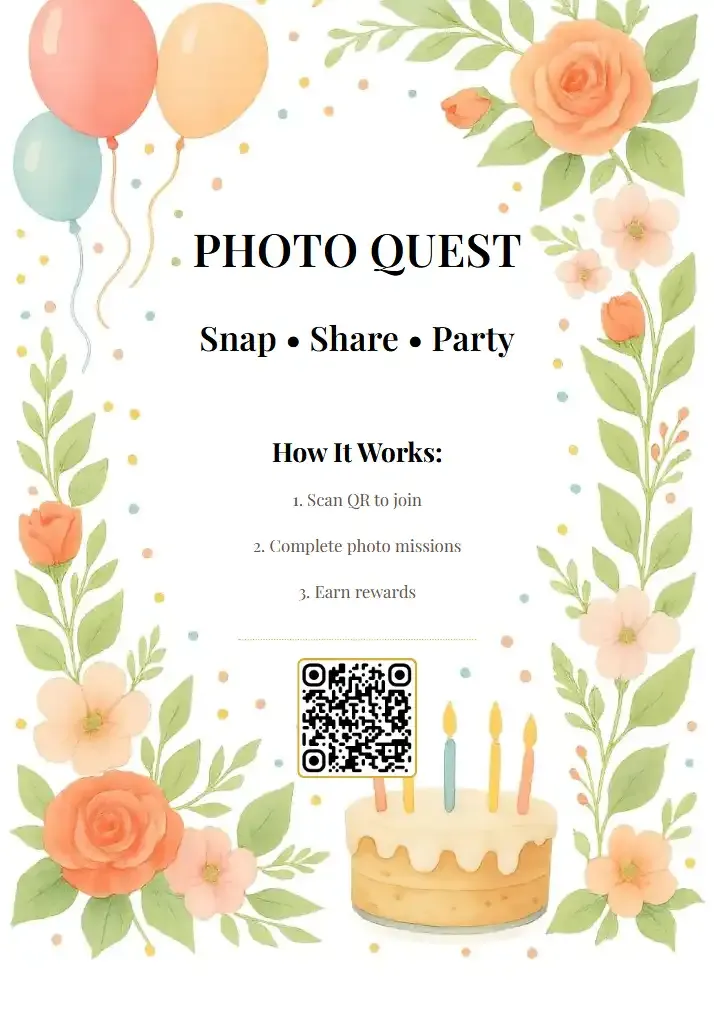
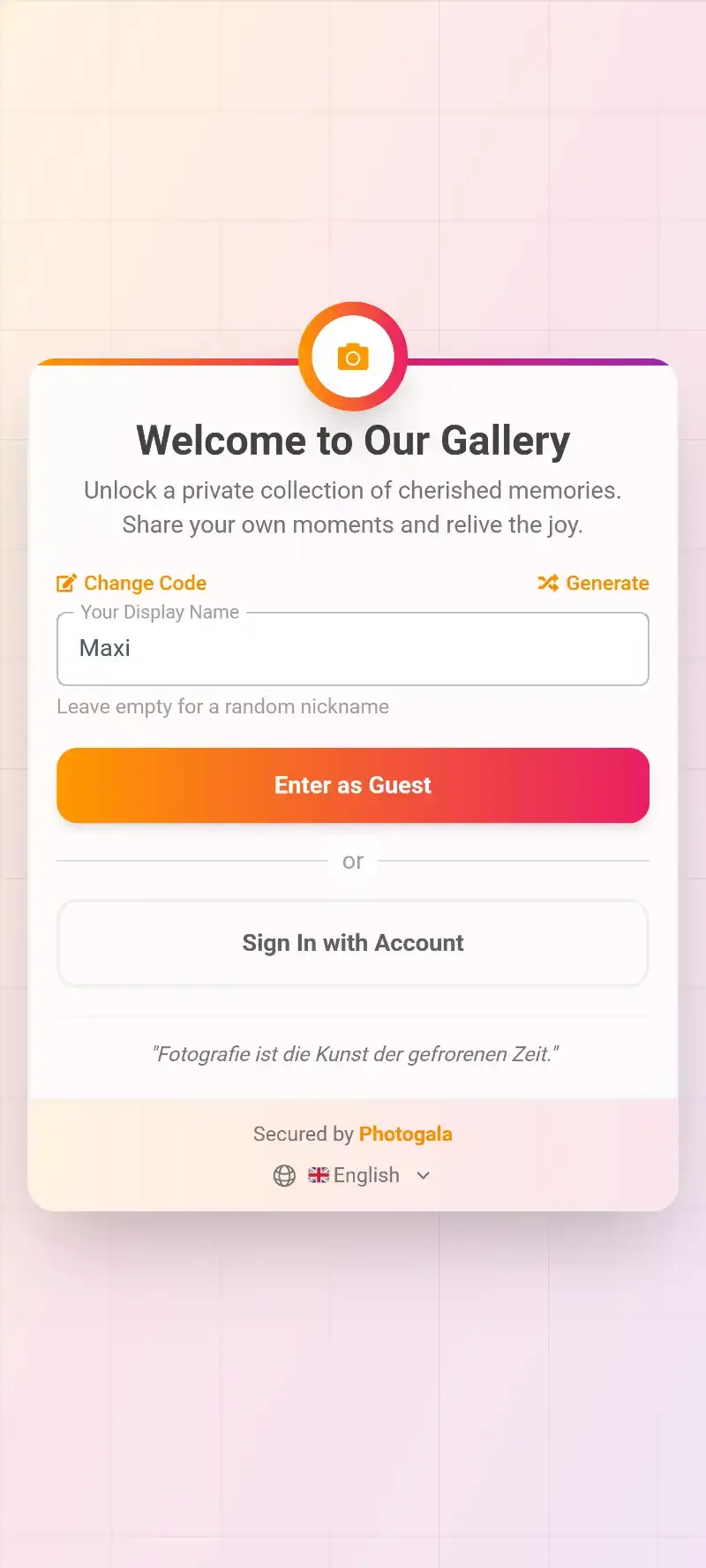
1.One scan, no app install, no account needed
The Real Comparison: Side by Side
Talking about it in abstract is one thing. Seeing the specifics is another. Here's how the two approaches compare on the things that actually matter for collecting wedding guest photos.
Hashtag vs. QR Code Gallery
| Feature | Wedding Hashtag | QR Code Gallery |
|---|---|---|
| Guest needs an account | (Instagram/TikTok) | |
| App download required | (social media app) | |
| Works for all age groups | ||
| Photos in one place | scattered across platforms | single gallery |
| Original quality photos | platform compression | |
| Private by default | ||
| Real-time display on screen | requires social wall tool | |
| Works without internet posting | uploads to private gallery | |
| Typical photo collection rate | 10-30 posts | 100-400+ uploads |
| Guests can see all photos | private profiles hidden | |
| Video support | platform limits |
The collection rate difference is the number that matters most. At a 180-guest wedding, a hashtag might yield 20-40 public posts. A QR gallery at the same event routinely collects 200-500 photos, because the barrier to participate is so much lower. More of your guests' perspectives end up in your collection: the dance floor from table nine, the quiet moment by the garden, the kids running around with sparklers.
See it in action
Every guest photo in one album – no app.
What a QR Gallery Actually Looks Like at a Wedding
Say you're planning a 200-guest wedding at a vineyard. Three weeks before, you set up a gallery with your names, date, and a color scheme that matches your invitations. Takes about five minutes. You get a QR code that you can customize with your branding and print however you like.
At the venue, the QR code goes on table cards, on a sign near the entrance, maybe on the back of the menu. Guests scan it when they sit down. Some start uploading right away. Others wait until after dinner when the dancing starts and the candid moments pile up.
What catches most people off guard: you can connect the gallery to a screen at the venue. A live photo wall that cycles through guest uploads in real time. Every few minutes, a new photo appears. Someone spots themselves on screen and nudges their neighbor. That neighbor uploads three more photos. The feedback loop is almost automatic. We've written more about why photo walls are replacing traditional booths if you're considering one.
1.Guest photos appear on screen in real time
By the end of the night, imagine 300+ photos from dozens of different guests. Not just the posed table shots. The flower girl asleep on a chair. The best man's shoes after six hours of dancing. The grandparents slow-dancing when they thought nobody was watching. These are the photos that matter most, and they're the ones a hashtag almost never captures.
The Honest Trade-offs
A hashtag has one genuine advantage: it's free. No platform, no setup, no cost. If budget is the only factor and you genuinely don't mind losing most of the photos, a hashtag works fine as a casual, low-effort option.
QR gallery platforms cost money. Photogala's paid plans start at €39, which is a real expense on top of everything else a wedding costs. There's no native app either, so everything runs in the browser. For most guests that's actually simpler (nothing to download), but if someone has a very old phone with a slow browser, the experience won't be as smooth. Photogala also doesn't compress uploads, which means the gallery uses real storage, and the free demo plan caps at 50 photos. For a full wedding, you'll want a paid tier.
Worth mentioning: a few couples try a hybrid approach. Hashtag for social media visibility, QR gallery for actual photo collection. It can work, but in practice the hashtag becomes an afterthought once people realize how easy the QR upload is. Most of the effort ends up going into one or the other.
Beyond Upload: What Happens After
Collecting photos is the first problem. But what you do with 300+ photos afterward is the second one. With a hashtag, you're manually screenshotting or using third-party tools to download posts. With a QR gallery, all photos already sit in one place.
Photogala takes this further than most platforms. You can set up photo challenges before the wedding: "Best dance move," "Funniest face," "Something blue." Guests see the challenges when they open the gallery. It gives them creative direction and a reason to keep uploading throughout the night. If you want inspiration, there's a list of 50 creative photo challenge ideas that goes beyond the obvious.
There's also a leaderboard and points system that turns uploading into a friendly competition. Imagine the bride's uncle, a retired teacher, uploading 25 photos because he wants to stay in the top three. Sounds unlikely? Competitive guests are the ones who surprise you. Challenges can even include example preview photos, so guests know exactly what kind of shot you're looking for. Photo roulette, meme recreation, movie scene reenactments: the creative possibilities are wide open.
After the wedding, downloading the full collection as a ZIP takes one click. Original quality, no compression. The gallery stays online for 6-12 months depending on the plan, so guests who didn't upload during the event can still add photos later. Even long-distance guests who couldn't attend in person can contribute from wherever they are.
Guest Experience Is the 2026 Differentiator
There's a bigger shift happening in weddings right now. According to Agape Planning, guest experience is the top wedding trend of 2026. Couples are designing around how guests feel, not just how things look. Every touchpoint matters: the welcome, the food, the entertainment, the way guests participate in the celebration.
Photo sharing fits right into this. A hashtag is passive. It asks guests to do work on their own time, with their own tools. A QR gallery is active. It's a shared experience. Guests see each other's photos, react to them, and contribute to something collective happening right now at the event. When the live wall shows a photo someone just uploaded five seconds ago, it creates a moment. People laugh, point, take another photo.
That kind of engagement is what guest interaction tools at weddings are all about. And it works across generations. The teenagers get it instantly. The less tech-savvy guests can handle scanning a QR code because there's nothing to download or sign up for. Even guests who've never used a photo sharing app before figure it out in seconds. If you're curious how guest photos complement the professional photographer's work, that balance between DIY and pro shots is worth thinking about.
One thing I'd suggest: make sure you collect photos before guests leave the reception. Once people go home, upload rates drop sharply. The QR code on the table is your best window.
If you're comparing specific platforms, we put together a full comparison of 7 wedding photo apps for 2026 that covers pricing, features, and what each does best. And for vow renewals or milestone celebrations, the same QR approach works perfectly. There's a separate guide for vow renewal photo sharing if that's your situation.
The hashtag had its era. It was clever, it was fun, it worked when most Instagram accounts were public and everyone posted everything. In 2026, the way people use social media has changed. Private profiles, disappearing stories, platform fatigue. The photos are still being taken. They're just not making it to your collection anymore. A QR code gallery puts a simple door between your guests' camera rolls and your shared wedding gallery. No friction, no forgotten hashtags, no lost memories. And if you're exploring QR code ideas for your wedding beyond just photo sharing, there's a lot more you can do with them.
All of this comes with your own event.
Setting it up takes five minutes. You can build and view everything before you decide.
Starting from €39 one-timeOne-time payment — No subscription
- No App Required
- Setup in 5 Minutes
- 30-Day Money Back
“We were really thrilled, and everything went so much more smoothly, from the seating plan all the way to the photo games! Simply great! Highly recommended!”
Written by

I believe event photos should be more than static galleries. They should be live, playful, and unforgettable.
Categories
Related Posts

Bridal Shower Photo Sharing: Collect Every Sweet Moment in One Gallery
Bridal shower photos end up scattered across 15 phones. Here's how to get them all into one gallery before the mimosas wear off.
Free vs Paid Event Photo Apps: What You Actually Give Up
Free event photo sharing sounds perfect until you see compressed images, upload limits, and zero engagement tools. Here's what the price tag really buys.
Why Event Photo Galleries Beat Group Chats for Sharing Memories
Group chats promise easy photo sharing but deliver chaos, compression, and silence after 48 hours. Dedicated photo galleries fix every one of those problems.