Why QR Code Photo Sharing Is Replacing Traditional Photo Booths at Events

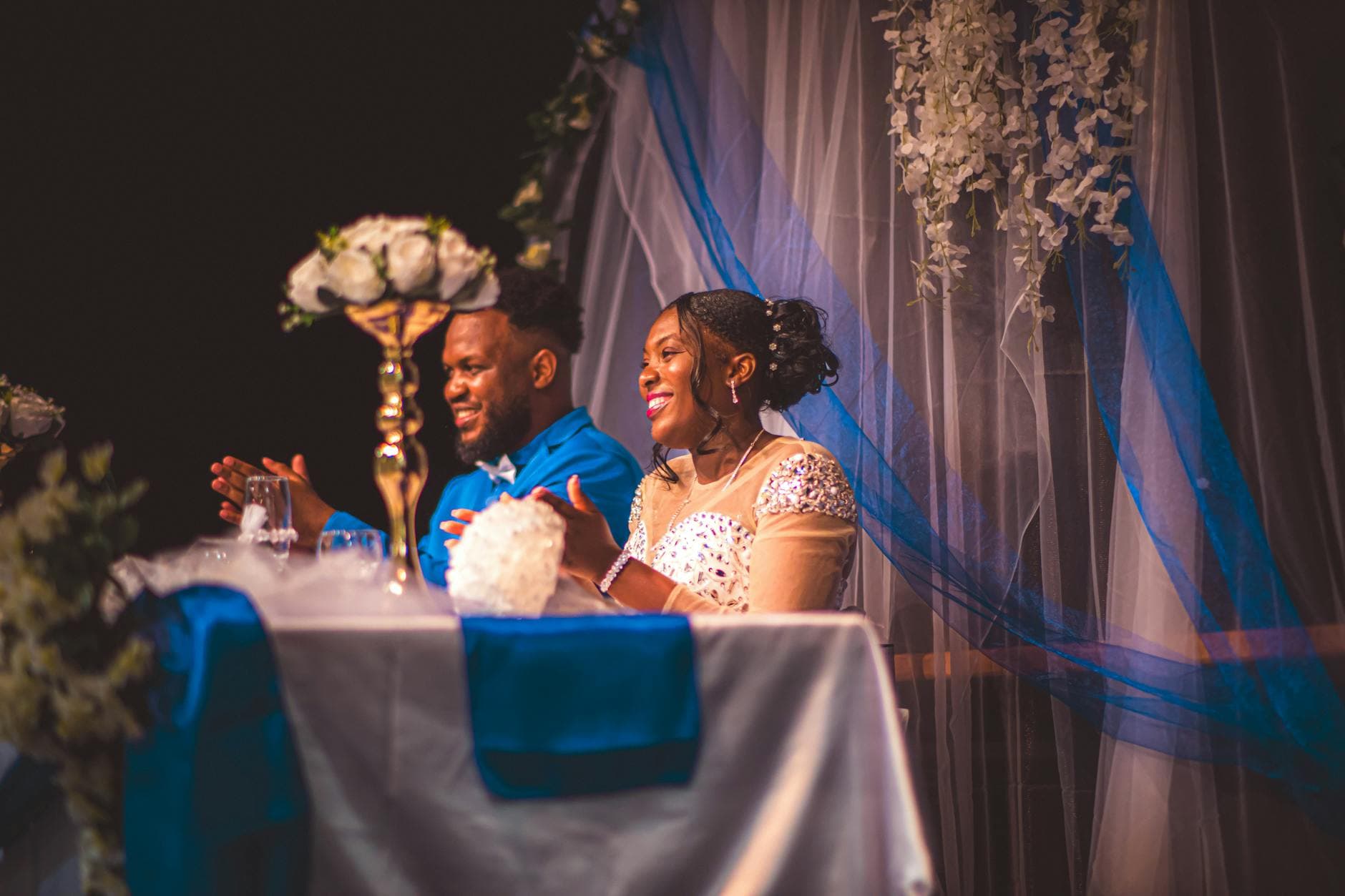
Picture a corporate summer party last year. The company rented a photo booth for €800. It sat in the corner near the restrooms. By the end of the night, 47 people had used it. That's about €17 per strip of four identical photos with the same props and the same backdrop.
Meanwhile, on the dance floor, guests were already taking photos on their phones. Hundreds of them. Candid ones, group shots, blurry dance floor chaos. The good stuff. The problem? Those photos lived on 80 different phones, scattered across camera rolls that would never be shared.
That gap between where the photos are taken and where they end up is why QR code photo sharing is quietly replacing the photo booth at weddings, corporate events, and parties of every size. Not because photo booths are bad. They had a great run. But the math has changed.
The Photo Booth Problem Nobody Talks About
Photo booths are fun. Genuinely fun. Nobody is arguing with that. The silly props, the countdown timer, the strip of photos you stick on your fridge. There's a reason 61% of couples still include them as wedding entertainment.
But here's what those numbers don't show: photo booths capture a tiny fraction of the event. One booth, one location, one queue. Guests use it once (maybe twice if there's no line), then move on. At a 150-guest wedding, you might get 60-80 booth visits over an entire evening. That's not a photo collection. That's a novelty.
The real photos, the ones people actually want to see the next morning, are already on guests' phones. A bride's uncle filming the first dance. A college friend catching the moment someone slipped on the dance floor. Kids making faces at the dessert table. None of those happen in front of a backdrop with a rubber mustache.
And those phone photos? According to a Mixbook survey from 2023, 50% of Americans do nothing with the photos on their phone. They just sit there. The moment passes, the intent to share fades, and the photos become digital clutter.
What Changed: Every Guest Already Has a Camera
The original pitch for photo booths made sense. In 2010, smartphone cameras were mediocre, and getting guests to "share" photos meant emailing them days later. A dedicated booth with a good camera and instant prints solved a real problem.
That problem doesn't exist anymore. Smartphones now account for 94% of all photos taken globally. The cameras are excellent. The photos are high resolution. Every guest at your event is carrying a device that can take better photos than most booths from five years ago.
The bottleneck isn't the camera. It's the sharing.
QR code photo sharing flips the model. Instead of funneling guests to one location to use one camera, you turn every phone into a contributor. Guests scan a code, their phone browser opens a gallery, and they upload directly. No app to install. No account to create. The gallery fills in real time from every corner of the venue.
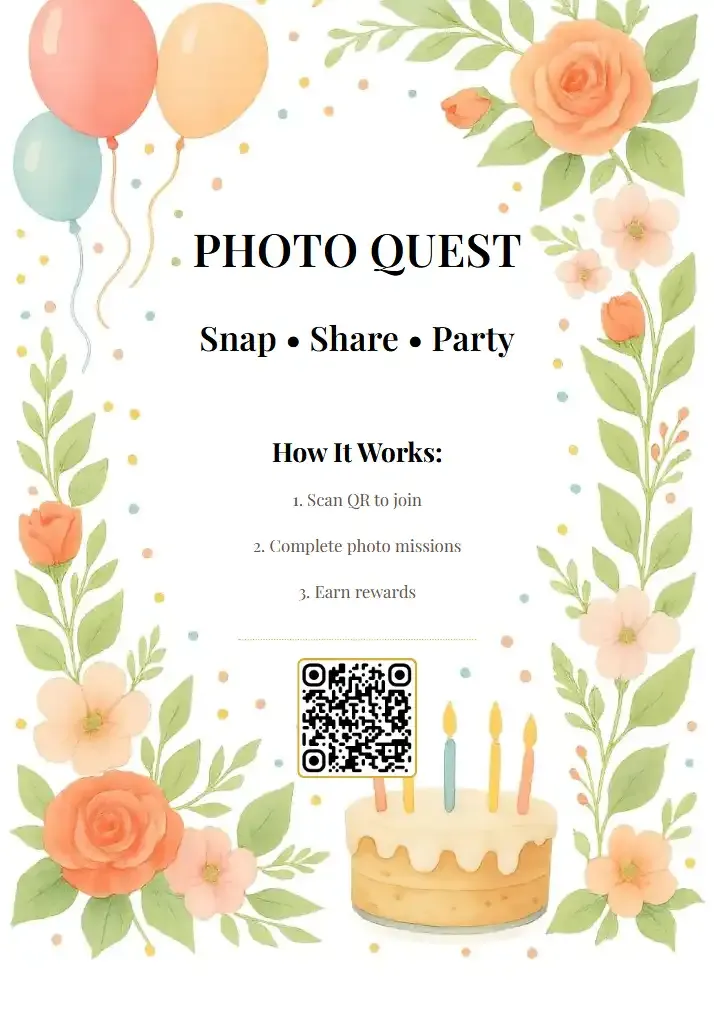
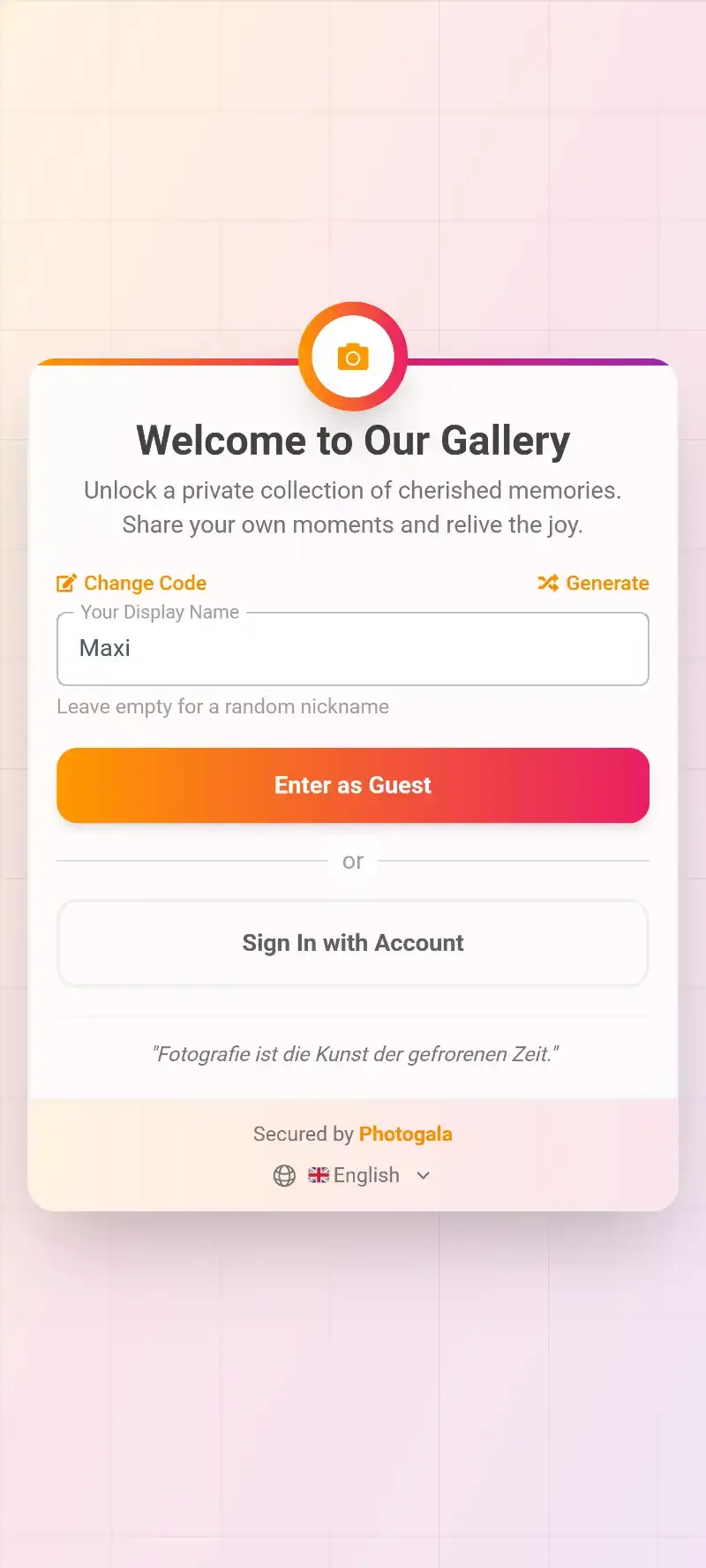
1.Scan the QR code. That's the entire onboarding.
The difference in coverage is dramatic. A photo booth captures one angle, one spot. QR sharing captures the whole event from every perspective, because the cameras are already in guests' hands.
The Numbers Tell a Clear Story
Say you're planning a 200-guest wedding. A photo booth might produce 150-200 photos over 5 hours (including duplicates from the same groups posing twice). With QR code sharing, even conservative estimates land at 400-700 photos from dozens of different contributors. At events with photo challenges or a leaderboard, that number climbs higher because guests have a reason to keep shooting.
QR code usage itself has surged. According to QR Code Chimp, 49% of couples now include QR codes on save-the-dates and invitations, a 42% increase since 2021. Guests know what to do with a QR code. The learning curve is gone.
Placement matters more than you'd think. Print QR codes on table cards, napkins, or the bar menu. The more places guests see the code, the more uploads you'll get. A single poster by the entrance gets scanned once and forgotten. Codes at every table get scanned all night.
See it in action
Every guest photo in one album – no app.
What You Actually Get (and Don't Get)
Honesty moment: QR code sharing doesn't replace everything a photo booth does. Photo booths give people a physical print to take home. They create a dedicated "photo moment" with props and backdrops. For some events, especially casual birthday parties or corporate mixers where people need an icebreaker, that structured activity still has value.
But QR sharing does things a booth physically can't:
- Coverage: Photos from every room, every moment, every angle. Not just the booth corner.
- Volume: 5x-10x more photos from natural moments guests are already capturing.
- Convenience: No queue, no waiting, no walking across the venue.
- Real-time gallery: Everyone sees uploads as they happen, on their phones or on a live photo wall on a screen.
- Post-event access: The gallery stays available for weeks or months. No lost photo strips.
The cost comparison is also hard to ignore. A photo booth rental runs €500-1,200 for an evening, plus delivery, setup, and an attendant. A QR-based gallery costs a fraction of that. With Photogala, for instance, you're looking at a one-time payment starting at €39 with unlimited photos and no per-guest fees.
The Engagement Factor Most People Miss
Here's something that surprised me when looking at how events use photo sharing: the best setups don't just collect photos. They give guests a reason to take more.
Imagine a wedding where guests get photo challenges through the gallery. "Photograph someone from the bride's side talking to someone from the groom's side." "Catch the flower girl doing something sneaky." "Find the oldest photo of the couple displayed somewhere at the venue." Each challenge includes an example preview photo showing guests what to aim for, which turns a simple prompt into something creative and fun.
Add a leaderboard and suddenly the bride's uncle, who normally takes three photos all night, is uploading 20 because he wants to beat his nephew's score. That's not hypothetical wishful thinking. Research from AmplifAI shows gamified environments increase engagement by 48% in workplace settings. The psychology works the same at events: give people a small competitive nudge and participation jumps.
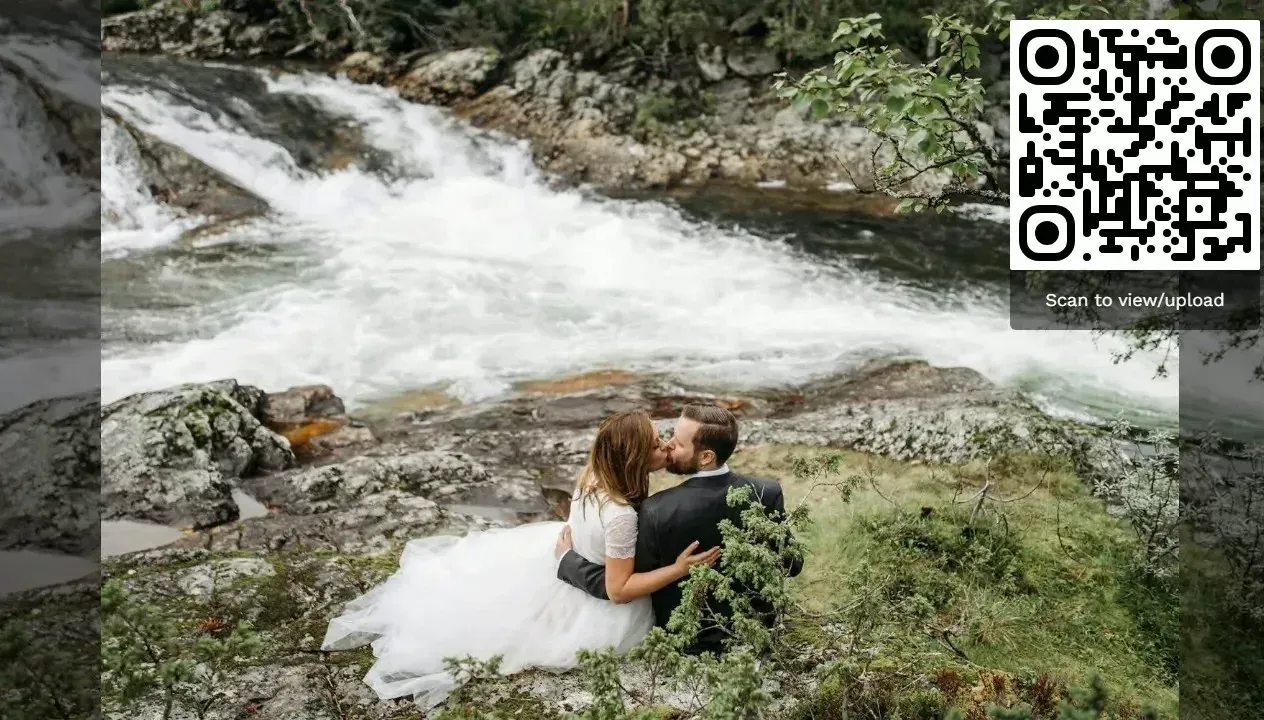
1.Guests see challenges and example photos directly in the gallery.
A photo booth can't do this. It's a static experience: walk up, pose, leave. QR photo sharing with challenges turns the entire event into the experience.
The Live Wall Changes the Room
One detail that often gets overlooked: the photo wall. Set up a screen (a TV, a projector, even a large tablet) and connect it to the gallery. As guests upload photos, they appear on screen in real time. No cables, no special hardware. Just open the photo wall URL on whatever screen you have.
Place it near the bar or the dance floor, somewhere people naturally gather. Within an hour, guests start watching for their own photos to appear. Someone uploads a group shot, their friends see it on the big screen, everyone laughs, three more people pull out their phones to upload something better. It creates a feedback loop that no photo booth can match.
For corporate events, the effect is even more pronounced. Event technology experts note that attendees now expect interactive, tech-driven experiences as a baseline, not a bonus. A live photo wall running alongside a conference or team event signals that this is a modern, engaged organization. And it gives quieter attendees a way to participate without speaking up.
Setting It Up Takes Less Time Than You Think
From zero to live gallery in three steps
Create a gallery
Pick your event type, set a name, choose your branding. Takes about two minutes.
Print or share the QR code
Put QR codes on table cards, invitations, or a poster. Share the link digitally for remote guests.
Turn on the photo wall
Open the wall URL on any screen at your venue. Photos appear as guests upload them.
The whole setup takes 10-15 minutes. Compare that to coordinating a photo booth delivery window, clearing space for the equipment, testing the printer, and briefing the attendant. For large events with multiple rooms or outdoor areas, QR sharing scales without any additional hardware.
One honest caveat: Photogala works entirely in the browser, which means guests need a cell signal or Wi-Fi. At most venues, that's not an issue. But if you're planning an outdoor wedding in a remote field with no reception, you'll want to confirm connectivity first. That's the one scenario where a self-contained booth still has an edge.
Who's Actually Making the Switch
The shift isn't theoretical. Wedding photographers are noting the trend: QR code photo sharing solves the problem of scattered guest photos that never get collected. Couples get a complete gallery that includes both the photographer's polished shots and hundreds of candid guest perspectives.
Corporate event planners are catching on too. 2026 event tech reporting emphasizes that real-time photo sharing platforms are now considered essential for maximizing event ROI. The days of hiring a photographer and hoping someone collects the USB drive are ending.
And it's not just big events. Even smaller gatherings, a 30-person birthday party, a retirement dinner, a team offsite, benefit from having all the photos in one place instead of scattered across a dozen group chats that go silent after 48 hours.
The photo booth had a great decade. It earned its spot at parties and weddings. But when every guest is already carrying a high-quality camera, the smarter play is collecting all those photos instead of adding one more camera to the mix. QR code sharing doesn't replace the fun of a booth. It replaces the limitation of only capturing photos in one spot, at one time, with one lens.
The best event photos aren't the ones taken at the booth. They're the ones guests almost forgot to share.
All of this comes with your own event.
Setting it up takes five minutes. You can build and view everything before you decide.
Starting from €39 one-timeOne-time payment — No subscription
- No App Required
- Setup in 5 Minutes
- 30-Day Money Back
“Excellent service and great pictures! Photogala fully met our expectations at the event. The value for money is unbeatable. Absolutely recommended! The seating plan saved us a lot of hassle!”
Written by

I believe event photos should be more than static galleries. They should be live, playful, and unforgettable.
Categories
Related Posts

Bridal Shower Photo Sharing: Collect Every Sweet Moment in One Gallery
Bridal shower photos end up scattered across 15 phones. Here's how to get them all into one gallery before the mimosas wear off.

Maternity Photo Sharing: How to Keep Every Announcement, Bump Shot, and Memory in One Place
Pregnancy announcements land on 4 different apps. Maternity photos get lost in group chats. Here's how to keep every photo in one shared gallery your whole family can access.

Sales Kickoff Photo Sharing: How to Turn a Mandatory Meeting Into a Team Memory
Sales kickoffs are expensive. The photos from them usually disappear into 14 different camera rolls. Here's how to fix that.