The Photo Booth Had a Good Run. Here's What's Replacing It.

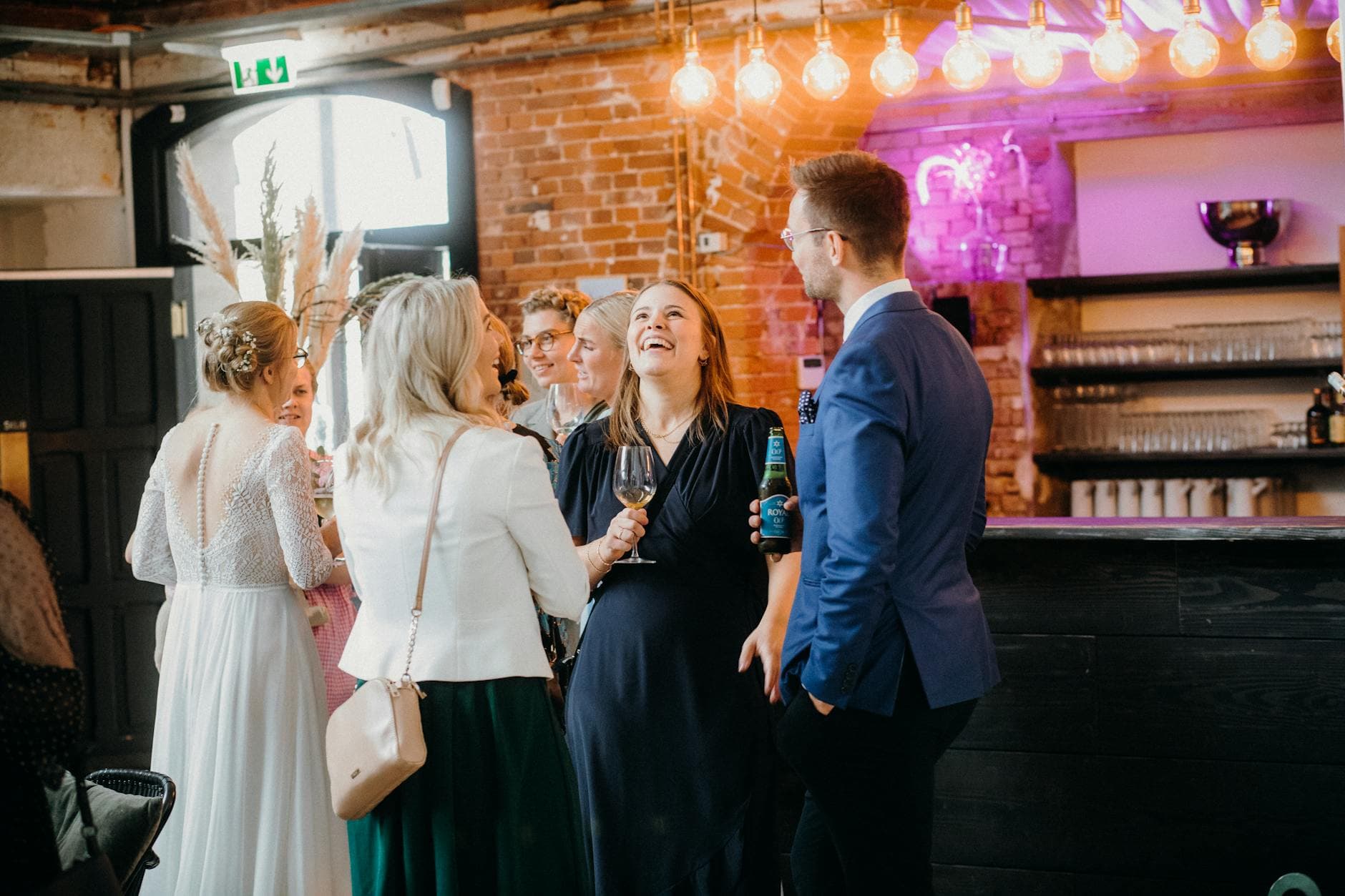
Picture a company summer party. 120 employees, a DJ, a taco bar, and a rented photo booth in the corner. By the end of the night, the booth has produced 47 photo strips. Meanwhile, someone checks the shared WhatsApp group: 380 photos from guests' phones, most of them blurry, scattered across three different chat threads, impossible to collect.
That's the photo booth paradox. You pay hundreds (sometimes thousands) for a dedicated photo station, and it captures a tiny fraction of what people actually photograph. The real moments live on 120 phones, and nobody ever collects them.
In 2026, event planners are waking up to this. The event industry is moving toward interactive activations that foster creativity and connection, not just staged poses with cardboard props. Photo booths aren't dead, but the alternatives have gotten so much better that it's worth reconsidering what you're actually paying for.
What a Photo Booth Actually Gives You
Let's be fair. Photo booths do some things well. They create a focal point at the event. Guests get physical prints. The silly props give people permission to be goofy. For 61% of couples who include photo booths at weddings, that novelty factor still matters.
But here's what a booth doesn't give you: coverage. A photo booth sits in one corner. It captures whoever walks up to it, usually the same group of friends three times, doing slightly different poses. Meanwhile, the best man's impromptu speech on the dance floor? The CEO tripping over a cable? The quiet moment between the couple at the back table? None of that makes it into the booth.
Then there's the cost. Traditional photo booth rentals range from several hundred to thousands of dollars depending on location, duration, and features. For a corporate event with 150 people, you're looking at EUR 500-1,500 for a few hours. That buys you the booth, an attendant, props, and prints. What it doesn't buy you is every candid moment your guests captured on their phones.
The Alternatives People Are Actually Using
Over the past two years, three categories of photo booth alternatives have emerged. Each solves a different slice of the problem.
1. DIY Stations (The Budget Option)
The simplest swap: skip the rental, set up a backdrop, buy some props from Amazon, and let guests use their own phones. MikeStaff calls this a "totally viable alternative" and they're not wrong. A decent backdrop, some fairy lights, and a ring light will run you under EUR 100.
The downside? Photos still scatter across everyone's camera rolls. You'll need a shared album (Google Photos, iCloud) or a group chat to collect them. That works for a 20-person birthday. At a 150-person corporate event, it falls apart fast. Half the team won't have the same platform, and nobody wants to join yet another WhatsApp group.
2. AI-Powered Booths (The Premium Option)
On the opposite end of the spectrum, AI-enhanced photo booths can now transform guests into magazine covers, fantasy avatars, or vintage oil paintings. They're impressive. They're also expensive, often EUR 2,000+ for a full setup, and they still have the same fundamental problem: one station, one corner, a fraction of the moments.
3. QR Code Photo Sharing (The Coverage Option)
This is the category that's growing fastest. Instead of bringing guests to a camera, you turn every guest's phone into the camera. Print a QR code on table cards, hang it on a sign, or display it on a screen. Guests scan, open a browser gallery (no app install), and start uploading photos and videos from wherever they are.
The math is simple. A photo booth has one camera in one location. QR code sharing gives you 150 cameras spread across the entire venue, the parking lot, the after-party, and the ride home.
The hybrid approach works well for larger events. Keep a small photo station with a backdrop for staged group shots, but add QR code sharing to capture everything else. You get the best of both worlds without the EUR 1,500 booth rental.
See it in action
Every guest photo in one album – no app.
What 150 Phones Can Do That One Booth Can't
Say you're organizing a team-building day for a marketing department. 80 people, an afternoon of activities, dinner afterward. A photo booth would sit in the dinner venue, capturing maybe 60-70 staged photos during the evening portion.
With a QR code gallery, things look different. The first uploads come in during the afternoon activities: someone captures the tug-of-war, another snaps the CEO losing at trivia. By dinner, you have 120 photos from 30 different people. By the end of the night, that number could easily hit 250-300.
But the interesting part isn't just volume. It's variety. A photo booth gives you face-forward, posed, prop-in-hand shots. Guest phones give you candid moments, behind-the-scenes clips, group selfies from weird angles, and the 15-second video of someone falling off a chair that becomes office legend.
As Double A Weddings puts it, guests are "everywhere" and capture candid footage that professional cameras simply cannot. The ugly-crying reactions, the off-camera moments, the group shots at different locations. A booth misses all of it.
The Engagement Problem (and How to Fix It)
Here's where most QR code solutions stop. They solve the collection problem but create a new one: motivation. Scanning a QR code and uploading photos requires effort, even if it's small. At a party where people are eating, drinking, and talking, "upload your photos" competes with everything else.
This is exactly why photo booths survived so long. They're a physical thing in the room. You walk up, you interact, you get a print. It's tangible.
The QR code alternatives that actually work borrow this psychology. They give guests a reason to participate beyond "we'd love your photos." Photo challenges ("photograph the funniest dance move"), leaderboards ("top uploader gets a prize"), and achievements turn passive uploading into an active game.
Gamification isn't just a tech buzzword here. Research shows gamified environments increase engagement by 48% in workplace settings. At an event, where people are already in a good mood and slightly competitive, the effect can be even stronger.
1.Guests see challenges like "Best group selfie" or "Catch the DJ in action"
A Side-by-Side Look
Numbers talk. Here's how a traditional photo booth stacks up against a QR code gallery with gamification for a typical 100+ person event.
Photo Booth vs. QR Code Gallery
| Feature | QR Code Gallery (Photogala) | Traditional Photo Booth |
|---|---|---|
| Setup cost | €39-139 (one-time) | EUR 500-1,500+ (rental) |
| Photos captured | 200-500+ (from all guests) | 40-80 (booth visitors only) |
| Video support | some booths | |
| Coverage area | Entire venue + beyond | One corner |
| App install required | browser-based | |
| Photo challenges / games | ||
| Leaderboard | ||
| Live photo wall on TV | ||
| Content moderation | ||
| Physical prints | ||
| AI face recognition | Deluxe plan | |
| Guest effort to participate | Scan QR, upload | Walk to booth, wait in line |
The one clear win for a traditional booth: physical prints. Some guests genuinely love walking away with a photo strip. If that's a priority, a booth (or even a Polaroid station) still makes sense for part of the event.
But for everything else, the QR code approach captures more content, costs less, and doesn't require floor space or an attendant.
What This Looks Like in Practice
Imagine setting up a gallery for a corporate awards dinner. You create the event in about two minutes: name it, pick a color scheme, upload the company logo. You get a QR code that you can customize, print on table cards, or display on a screen at the entrance.
Guests scan the code. Their phone browser opens the gallery. No app download, no account creation. They tap "upload" and start sharing photos from the evening. If you've set up photo challenges ("Capture the award winner's reaction," "Best table group photo," "Sneakiest candid of the CEO"), guests see those when they open the gallery.
On a TV near the bar, a live photo wall cycles through new uploads every few seconds. This is the part that replaces the booth's physical presence. When people see their photo pop up on a big screen, they upload more. It's the same dopamine loop as a booth print, except it scales to everyone, not just the person standing in front of the camera.
1.No app needed. Scan, open, upload.
One honest trade-off: A QR code gallery is browser-based, which means it depends on guests having their phones and decent WiFi or cell reception. At an outdoor venue with spotty signal, plan for a portable hotspot. A photo booth with a built-in printer doesn't need internet at all.
When a Booth Still Makes Sense
Not every event should ditch the booth entirely. A few scenarios where it still earns its spot:
- Themed events with elaborate setups. A 1920s speakeasy party where the booth has period costumes and a vintage backdrop? That's an experience, not just a photo station.
- Small events under 30 people. When the guest count is low, you don't need 30 cameras. A single station with good lighting and fun props might be enough.
- Events where physical prints matter. Retirement parties, milestone birthdays, or farewell events where guests want something tangible to hand over or take home.
For everything else, especially corporate events, weddings with 80+ guests, and multi-day gatherings, the combination of QR code sharing with photo challenges, a live wall, and a leaderboard will capture ten times the content at a fraction of the cost.
The photo booth had a great run. But 150 phones in a room will always outshoot one camera in a corner. The question isn't whether to make the switch. It's whether you'll be the planner who figures it out now, or the one still renting a booth next year while everyone else has moved on.
All of this comes with your own event.
Setting it up takes five minutes. You can build and view everything before you decide.
Starting from €39 one-timeOne-time payment — No subscription
- No App Required
- Setup in 5 Minutes
- 30-Day Money Back
“I use PhotoGala Deluxe and I'm absolutely thrilled. It was the perfect solution for documenting a sports event. Uploading and downloading via the link is a breeze for every participant. What won me over most were the photo wall and the slideshow – both are quick to set up and look really professional. Big praise also to Peter from the PhotoGala team: he's very easy to reach by email, replies quickly and even took my suggestions on board and added new features that made my slideshow even better. You rarely get support this dedicated. A clear 5-star recommendation!”
Written by

I believe event photos should be more than static galleries. They should be live, playful, and unforgettable.
Categories
Related Posts

Sales Kickoff Photo Sharing: How to Turn a Mandatory Meeting Into a Team Memory
Sales kickoffs are expensive. The photos from them usually disappear into 14 different camera rolls. Here's how to fix that.
Customer Appreciation Event Photos: The Album Nobody Plans (But Everyone Wants)
Your best clients showed up, mingled, laughed. Then what? Here's how to turn a customer appreciation event into a shared photo gallery that keeps the relationship warm.
Store Grand Opening Photos: How One QR Code Captures the Ribbon Cutting and Everything After
The ribbon cutting lasts 3 seconds. The photos from your grand opening should last forever. Here's how to collect every guest photo with a single QR code.