Photo Booth Apps vs Photogala: What Actually Works Better at Events?

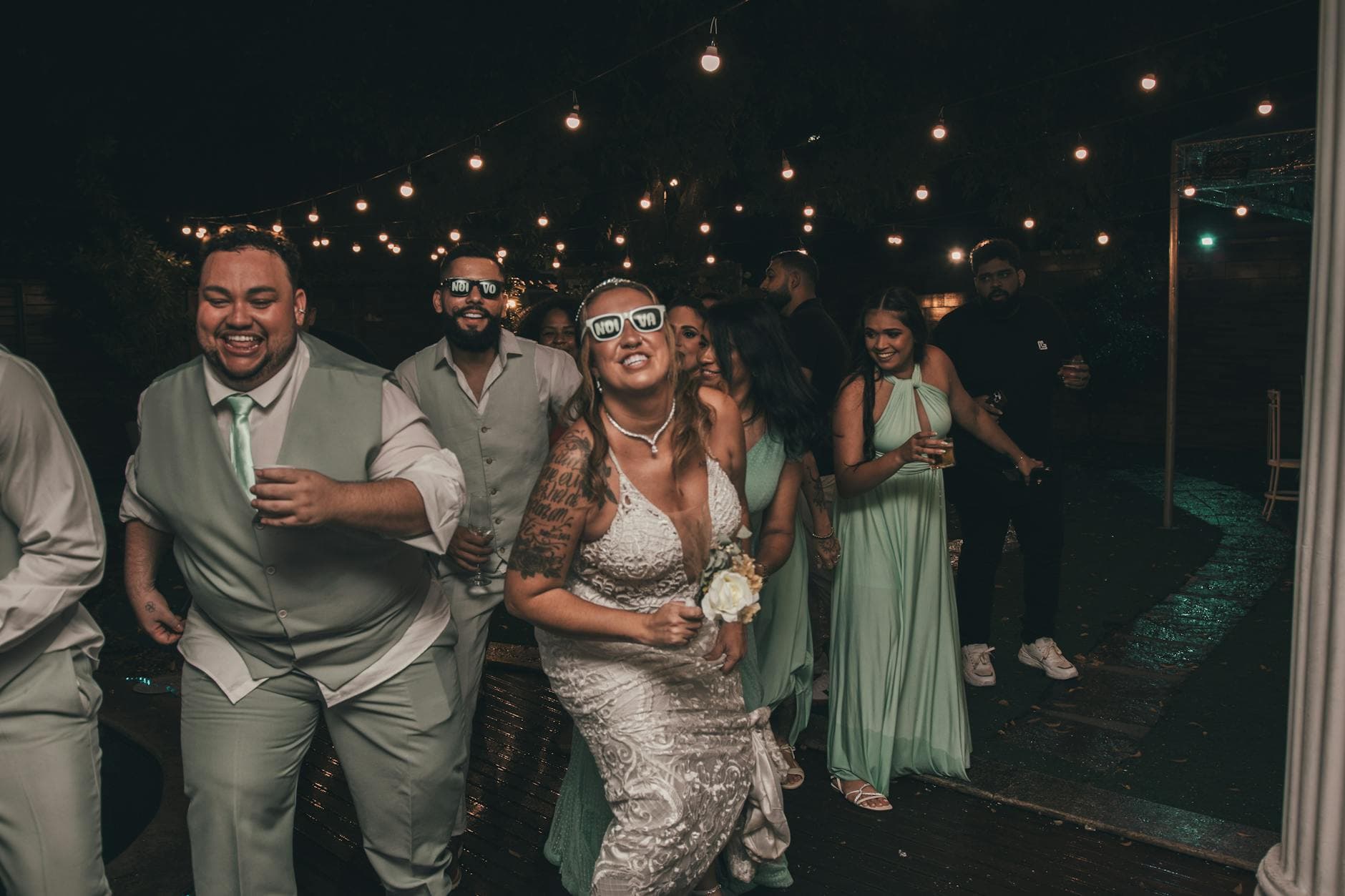
Picture a corporate summer party. The company rented a photo booth with props, a ring light, and a green screen. Cost: somewhere around $800 for four hours. By 9 PM, exactly nine people have used it. The same three couples, plus one brave soul from accounting who went solo. Meanwhile, 70+ guests have phones in their pockets full of candid shots from the night, and those photos will never leave their camera rolls.
That's the photo booth problem in a nutshell. Not that they're bad. They're fun when people actually use them. The issue is participation rate. And that's where the entire category starts to crack.
The Photo Booth Model Has a Bottleneck
Photo booth apps like Simple Booth, Snappic, or Booth.Events digitized what was once a physical rental. Instead of a clunky box, you get an iPad on a tripod running software with filters, overlays, and branded templates. Some, like Banuba, even integrate AR effects and AI-powered personalization. Genuinely impressive tech.
But they all share the same fundamental constraint: one device, one queue. Guests walk up, take a photo, maybe add a filter, then the next person steps in. At a 150-person wedding, that means most guests never touch the booth. They glance at the line, decide it's not worth the wait, and move on.
Web-based platforms like Snapbar have categorized the market into three tiers: browser-based tools, iPad apps, and DSLR desktop software. Each tier offers more polish but also more friction. More hardware. More setup time. More things that can go wrong at 10 PM when the DJ bumps the tripod.
What QR-Based Sharing Changes
The alternative isn't really "better photo booths." It's a different model entirely. Instead of funneling everyone through a single device, you turn every guest's phone into its own camera station.
Here's how it works with Photogala: you create a gallery, get a QR code, and print it on table cards or project it on a screen. Guests scan it with their phone camera. No app download, no account creation, no sign-up form. The browser opens, they pick photos from their camera roll (or take new ones), upload, done. The whole thing takes about 20 seconds.
Guests pick photos from their camera roll and upload instantly.
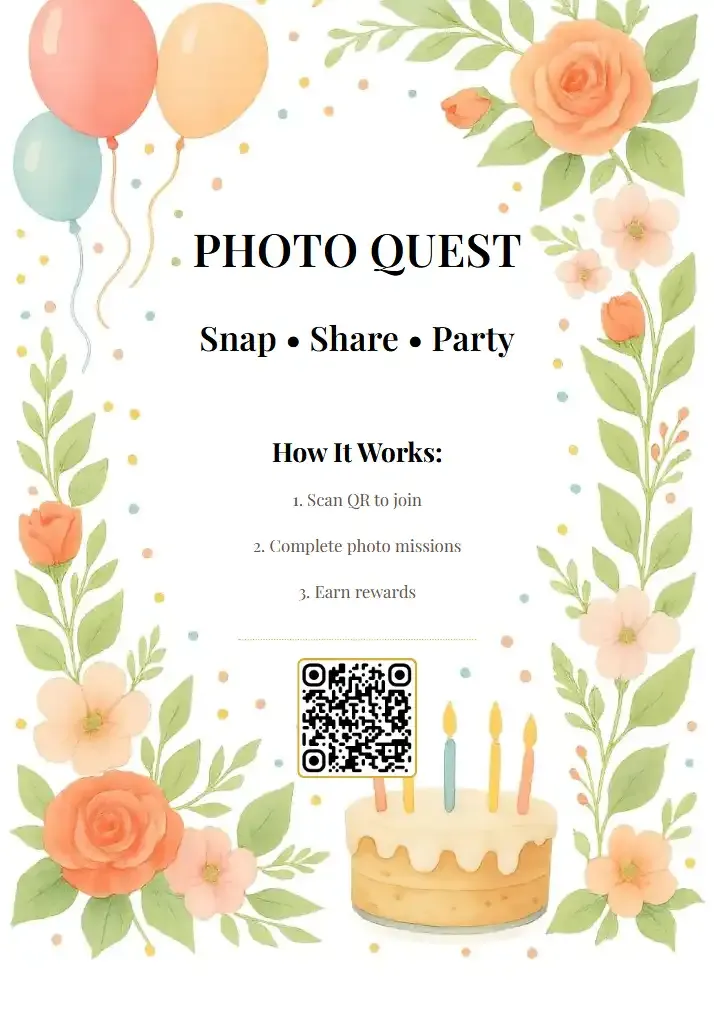
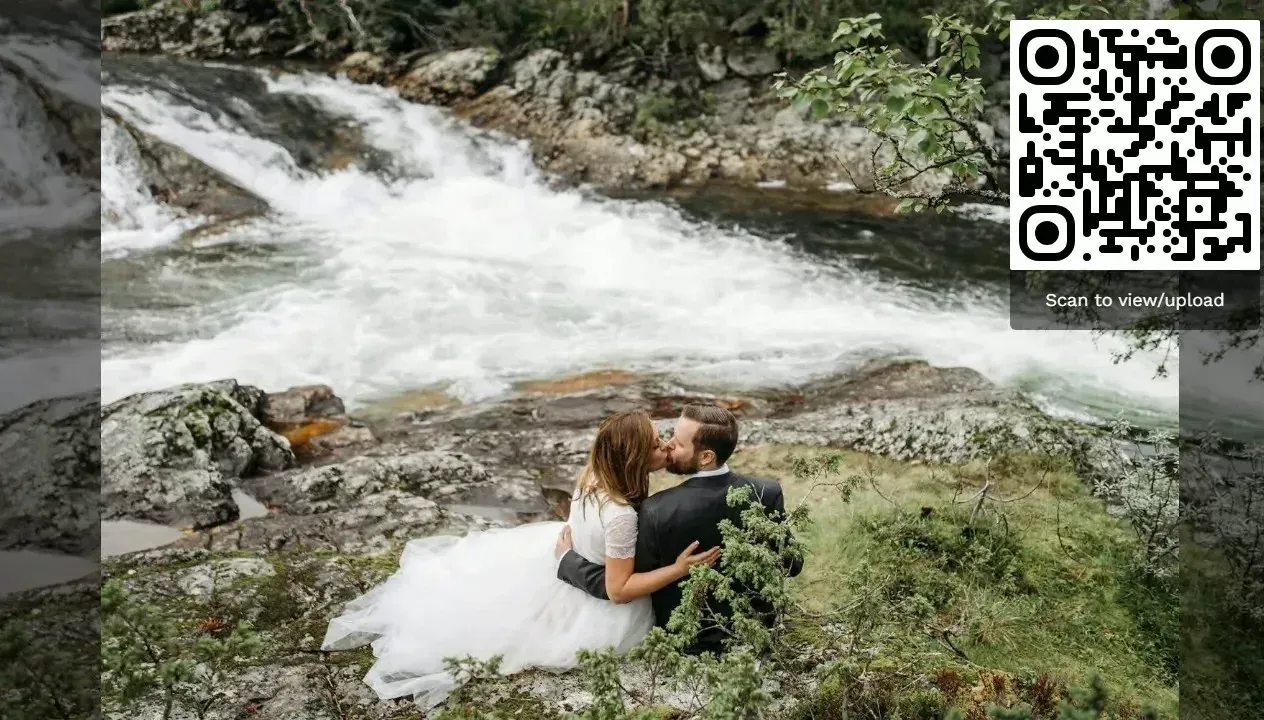
The participation math flips completely. Instead of 9 guests using a booth over four hours, imagine 60 out of 150 guests uploading 5-8 photos each. That's 300-480 candid shots from angles no single booth could cover. The dance floor, the dessert table, the moment the best man's speech went off the rails.
Where Photo Booth Apps Still Win
Honesty matters here: photo booth apps do some things genuinely well.
Polished output. A booth with good lighting, a ring light, and branded overlays produces consistently high-quality portraits. If your goal is giving every guest a perfectly lit keepsake photo with your company logo in the corner, a booth app delivers that. Guest phone photos are candid but inconsistent. Some are great, some are blurry, some are hilariously bad (which, depending on your event, might be a feature).
Props and theatrics. The silly hats, fake mustaches, and oversized sunglasses are part of the experience. People remember the booth because it was a thing at the event. There's a physical station to visit.
Print output. Some premium booth setups include an instant printer. Guests walk away with a physical photo strip. That's a tangible takeaway no digital platform can replicate.
If your event absolutely needs printed photo strips or branded studio-quality portraits, a photo booth app on dedicated hardware is still the right call. Photogala isn't trying to replace that specific use case.
Where the Booth Model Falls Short
For everything beyond posed portraits, though, the limitations stack up fast.
Coverage. A booth captures what happens in front of it. Guest phones capture everything else. The surprise proposal during the first dance, the kids chasing each other through the garden, the quiet moment between the bride and her grandmother. No booth catches those.
Volume. According to PhotoAid's research, 44% of event guests actively take photos at weddings. That's a massive pool of content sitting in camera rolls. A booth collects a fraction of what's already being photographed.
Guest effort. Walking to a booth, waiting in line, posing. That's a real ask. Scanning a QR code from your seat? Not so much.
Discover what Photogala can do
The Feature Gap Most People Don't Know About
Here's where things get interesting. Photo booth apps are essentially cameras with filters. They don't do anything with the photos after capture beyond maybe emailing them or posting to a social wall.
Photogala treats the photo collection as the starting point, not the end product. Once photos are uploaded, the platform layers on features that photo booth software simply doesn't have.
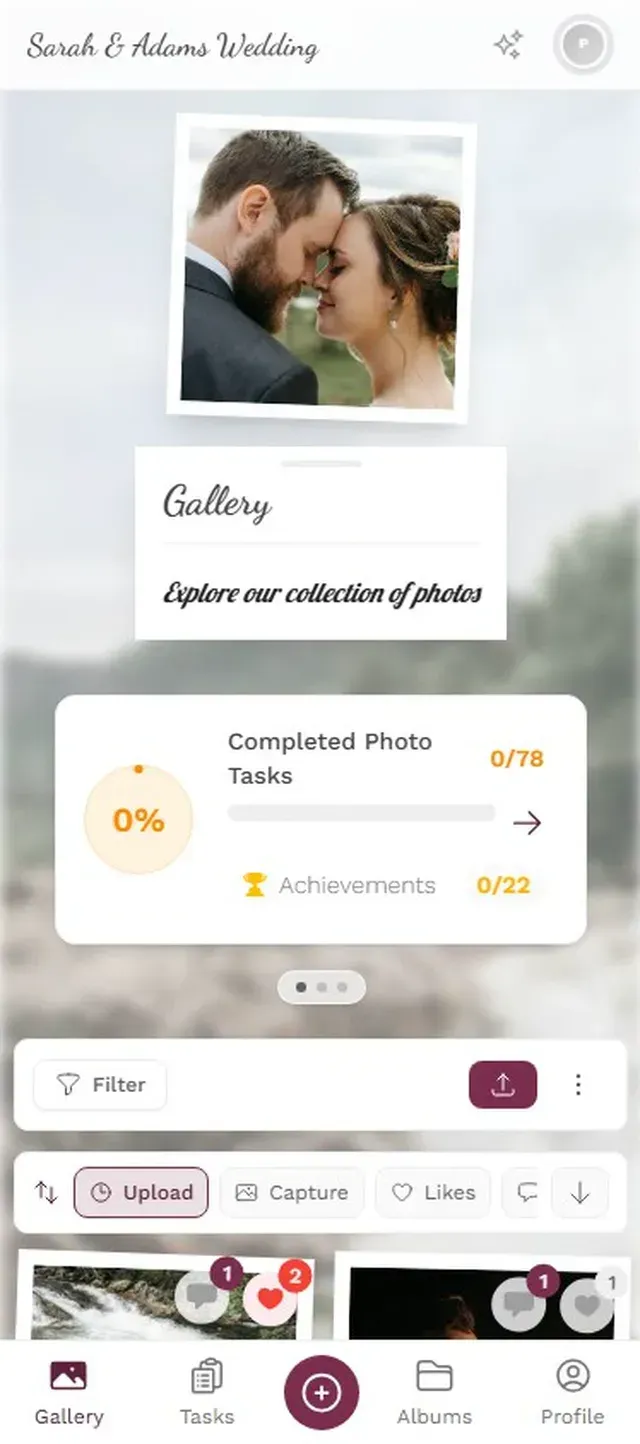
Photo challenges let you gamify the whole event. Create tasks like "catch someone dancing who shouldn't be" or "best group selfie at the dessert table." You can even attach example preview photos so guests know exactly what you're looking for. Think of it as a photo scavenger hunt baked into the gallery. FrogQuest charges separately for this kind of thing at corporate events, and their typical format runs 2-3 hours. With Photogala, challenges run all night, automatically.
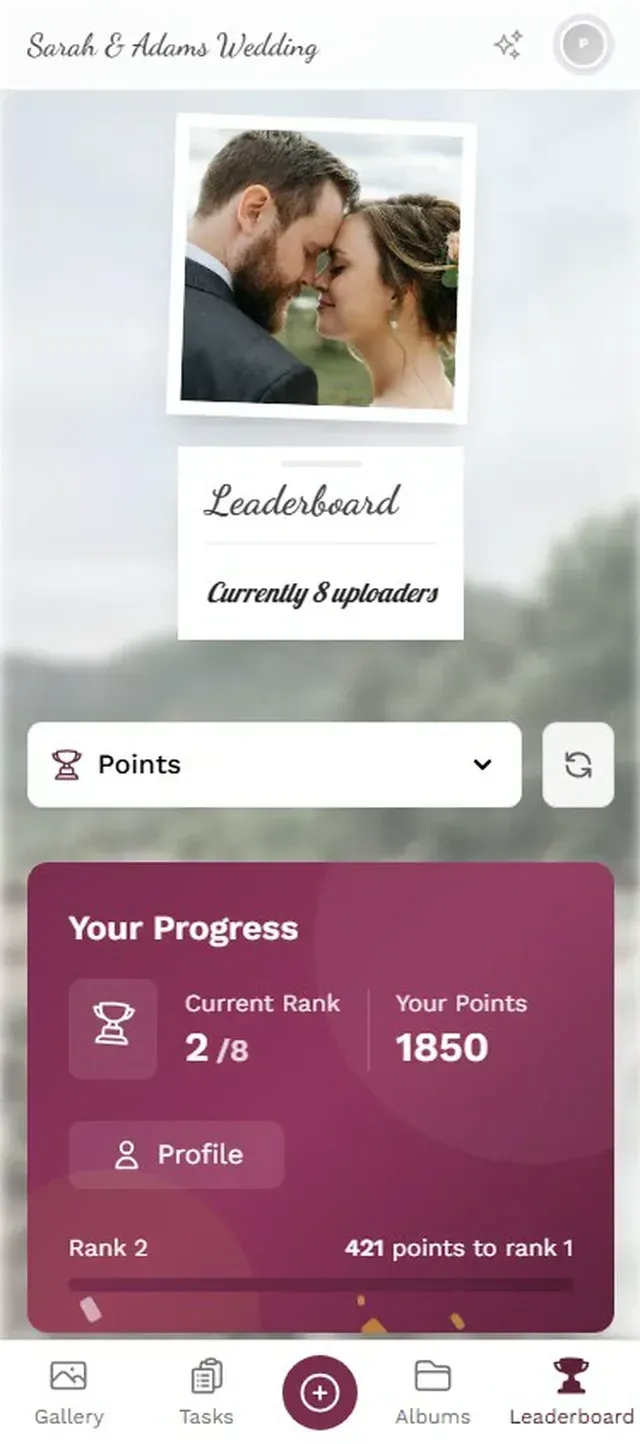
Leaderboards and achievements turn casual uploading into a low-stakes competition. Imagine the bride's uncle, checking his ranking between dinner courses, uploading one more photo to edge past his niece. That psychology works. Gamification increased engagement by 48% in workplace settings, per AmplifAI research. At a party with free drinks? The effect compounds.
AI face recognition (on the Deluxe plan) automatically groups photos by person. After the event, the bride can pull up every photo she appears in across all 400+ uploads. No manual tagging required.
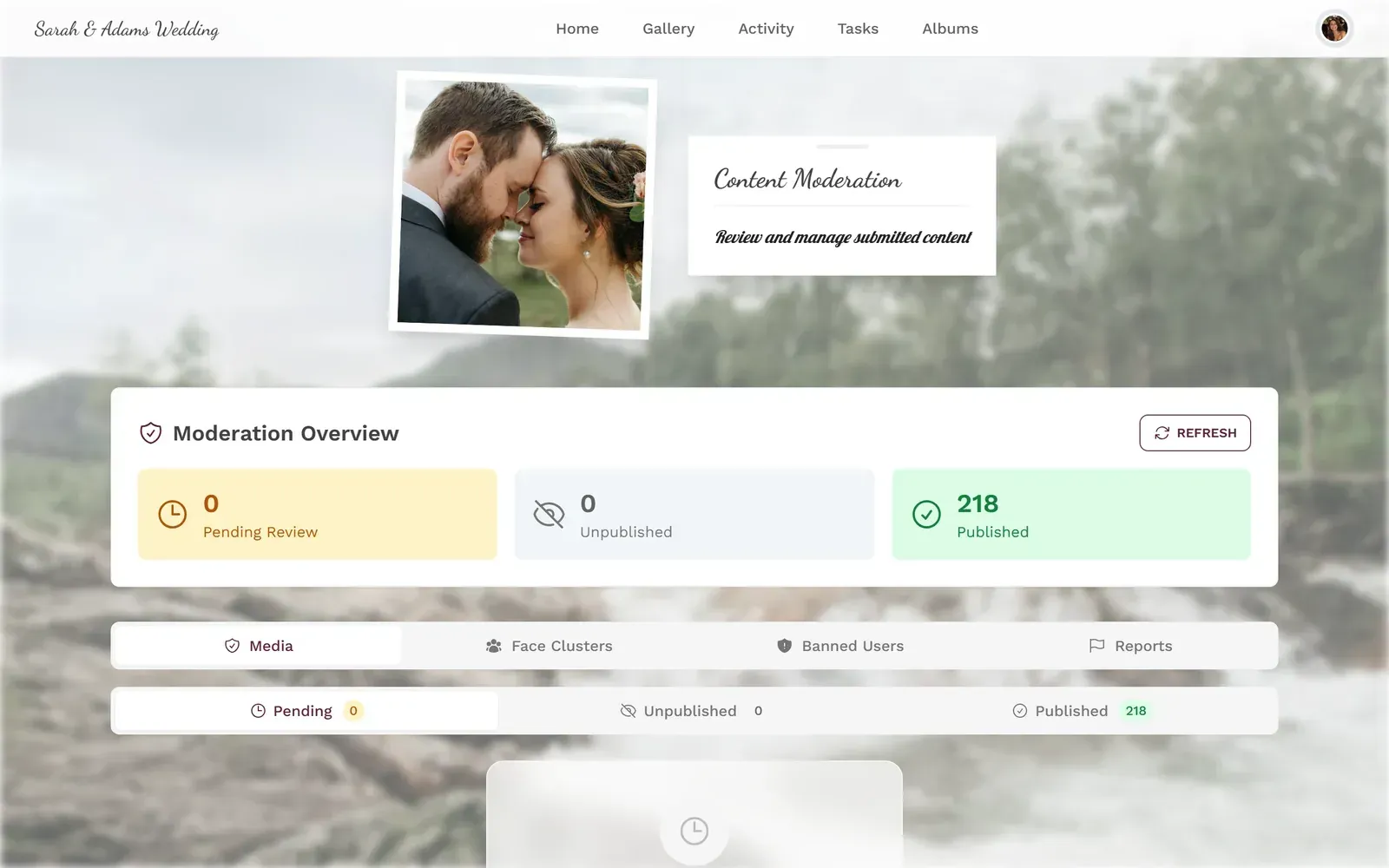
Content moderation gives you a dashboard to approve or reject photos before they hit the photo wall. Assign it to a trusted friend. One tap to approve, one tap to reject. Particularly useful at corporate events where HR gets nervous about what might appear on the big screen.
Guests complete creative photo challenges throughout the event.
Side-by-Side: What You Actually Get
Photo Booth Apps vs Photogala
| Feature | Photogala | Photo Booth Apps |
|---|---|---|
| Guest participation | all guests via QR | one device, one queue |
| App download required | varies by provider | |
| Candid event coverage | ||
| Branded photo overlays | ||
| Photo challenges / scavenger hunt | ||
| Leaderboard & achievements | ||
| Live photo wall | some providers | |
| AI face recognition | ||
| Content moderation dashboard | ||
| Print output | some providers | |
| Comments & social features | ||
| Hardware required | guests use their phones | iPad/DSLR + tripod + lighting |
| Unlimited uploads | one photo per visit | |
| Setup time | under 5 minutes | 30-60 minutes typical |
The Honest Trade-Off
Photogala doesn't do printed photo strips. It doesn't replace a ring light and a green screen for polished portraits. And it's browser-based, not a native app, which means upload speed depends on the venue's WiFi (or guests' mobile data).
But if your goal is maximizing the number of photos captured, getting candid coverage from every corner of the event, and giving guests a reason to actually participate instead of just spectating, the QR-based model wins by a wide margin.
The best events we've seen described? They use both. A photo booth in one corner for the people who love posing. A Photogala QR code on every table for everyone else. The booth gets 40 polished shots. The QR gallery gets 400 candid ones. Together, that's a complete picture of the night.
If you're already reading a comparison of photo booth alternatives, you've probably sensed that the traditional booth model doesn't scale. The question isn't whether QR-based sharing works. It's whether you still need the booth alongside it.
The photo booth had a great run. But phones got better, QR codes went mainstream, and guests stopped wanting to stand in line. The photos that matter most at any event aren't the ones taken in front of a backdrop. They're the ones nobody planned.
Ready to create your gallery?
Start sharing your event photos with guests in minutes.
Create GalleryWritten by

I believe event photos should be more than static galleries. They should be live, playful, and unforgettable.
Categories
Related Posts

Club Event Photos: How to Stop Losing Member Moments to WhatsApp Chaos
Sports clubs, hobby groups, and societies generate hundreds of photos at every event. Most vanish into WhatsApp threads nobody scrolls back through. Here's a better system.
Wedding Hashtag vs QR Code Gallery: What Actually Works in 2026
Hashtags made sense in 2018. In 2026, most guest photos hide behind private profiles. Here's what replaced them.
How to Configure Photo Challenges Guests Will Actually Finish
Most photo challenges get ignored after the first hour. Here's how to design tasks guests complete, with the right number, the right difficulty, and the right timing.