Photogala vs Dropbox for Event Photo Sharing: Which One Do Guests Actually Use?


Picture a wedding reception. The couple printed a card on every table: "Share your photos with us!" followed by a Dropbox link. Thoughtful. Organized. And by the end of the night, exactly 11 people had uploaded anything.
Not because guests didn't care. They took hundreds of photos. But somewhere between finding the link, opening Dropbox, signing in (or creating an account), figuring out which folder, and waiting for their phone's browser to cooperate with the upload UI... most people just gave up and went back to dancing.
This is the gap between a file storage tool and an event photo sharing platform. Dropbox solves the storage problem brilliantly. It was never designed to solve the "get 150 people to upload photos in real time at a party" problem.
Two Tools Built for Very Different Jobs
Dropbox launched in 2007 as a file syncing service. It's excellent at what it does: sync documents across devices, share folders with colleagues, back up important files. Over 700 million registered users trust it for exactly that.
But event photo collection has a fundamentally different set of requirements. You're not dealing with a team of 5 people who use Dropbox daily. You're dealing with 80 to 200 guests, most of whom have never seen your Dropbox folder before, many of whom are three drinks in, and all of whom you need to convert from "I'll send you the photos later" into "I just uploaded 12 photos in 90 seconds."
That conversion rate, from intention to action, is everything. And it's where the two products diverge completely.
The Guest Experience Gap
Here's the Dropbox flow for a guest at an event: receive a link (printed card, text message, or email), open it on their phone, get prompted to sign in or download the app, dismiss the app download prompt, wait for the mobile web interface to load, find the upload button, select photos from their camera roll, wait for the upload, hope it doesn't time out. That's 6 to 8 steps before a single photo lands in the folder.
The QR code flow looks different. Scan code with phone camera, gallery opens in the browser, tap upload, select photos, done. Three steps. No account. No app. No folder navigation.
This isn't about which product is "better" in some absolute sense. Dropbox is a superior file management tool. But for the specific use case of collecting photos from event guests in real time, friction is the enemy. Every extra tap loses people. A 2024 study by PhotoAid found that the average person stores about 2,795 photos on their phone. The photos are there. The challenge is getting them out.
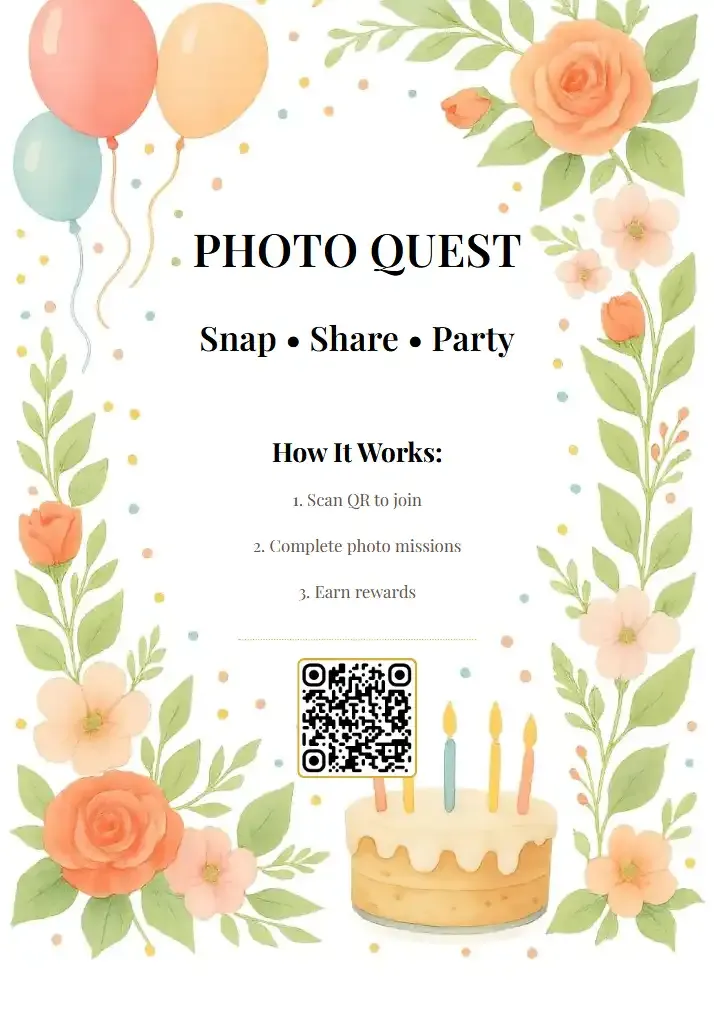
1.Guests scan a QR code and start uploading immediately
What Happens After Upload
With Dropbox, photos land in a folder. That's it. You get a flat list of files, sorted by upload date or filename. No thumbnails in a gallery view (on mobile, at least not a good one). No way for guests to browse what others uploaded. No likes, no comments, no real-time feed.
This matters more than you'd think. When guests can see each other's photos appearing live, it creates a social feedback loop. Someone spots a hilarious photo of the best man's speech, laughs, and uploads their own version. That loop drives participation. A Dropbox folder doesn't create that loop. It's a dead end: upload and forget.
Imagine a 200-guest wedding where photos appear on a big screen behind the DJ as guests upload them. People crowd around, pointing, laughing, uploading more. That's not a file storage feature. That's an event experience. And it's something a purpose-built photo sharing tool can do that Dropbox simply wasn't designed for.
A live photo wall near the bar or dance floor turns passive photo-takers into active participants. If you're curious how the real-time display works, here's a deep dive into photo wall setup.
See it in action
Every guest photo in one album – no app.
Feature-by-Feature: Where Each Tool Wins
Let's be specific. Dropbox genuinely excels at some things. Large file transfers, cross-platform sync, granular sharing permissions for teams. If you need to send a 2GB video file to a colleague, Dropbox is hard to beat.
But for event photo collection, the feature set looks quite different:
Photogala vs Dropbox for Event Photos
| Feature | Photogala | Dropbox |
|---|---|---|
| QR code upload (no account) | ||
| Works without app install | mobile web limited | |
| Real-time photo gallery | ||
| Live photo wall / TV display | ||
| Guest browsing & interaction | likes, comments, sharing | |
| Photo challenges / gamification | ||
| Face recognition & AI grouping | Deluxe plan | |
| Content moderation | approve/reject queue | |
| Multiple gallery layouts | 4 layouts | |
| Unlimited photos per event | within storage quota | |
| Bulk download as ZIP | ||
| File version history | ||
| Team collaboration features | extensive | |
| Storage across file types | photos/videos only | any file type |
| Free tier | 2 GB |
Dropbox wins clearly on general-purpose file management. Version history, team folders, document collaboration. But none of those features matter at a wedding reception or corporate event where you need guests to share photos quickly and enjoyably.
The Moderation Problem Nobody Talks About
Here's something that catches event planners off guard: when you give 150+ people an open upload link, someone will upload something inappropriate. Maybe it's accidental (a screenshot instead of a photo). Maybe it's a guest who thought that blurry photo of the bathroom was funny. At a corporate event, the stakes are even higher.
Dropbox has no content moderation layer. Every file that's uploaded appears in the shared folder, visible to everyone with the link. You'd need to manually monitor the folder throughout the event and delete anything problematic.
A dedicated event platform can handle this differently. Pre-approval queues let a designated moderator (assign it to the maid of honor or the office manager) review photos before they go live. An AI filter catches obviously inappropriate content automatically. It's not a glamorous feature, but ask anyone who's run a live photo wall at a company party: moderation isn't optional.
The "I'll Send You the Photos Later" Problem
There's a reason 1801 & Co. specifically recommends QR code upload methods as "simple, modern, and efficient" for event photo collection. The biggest competitor to any photo sharing tool isn't another app. It's inertia. The promise of "I'll send them to you" that never materializes.
Dropbox doesn't solve this problem because it requires guests to take action after the event: find the link, remember to upload, actually do it. By Monday morning, the wedding is a warm memory and the photos stay on the phone. A Mixbook survey found that 50% of Americans do nothing with the photos on their phone. Half.
The solution is capturing photos while the energy is high, while people are at the event, while they're excited. That means reducing friction to near-zero and giving guests a reason to upload right now. QR codes on table cards. A visible photo wall showing uploads in real time. Photo challenges that turn uploading into a game.
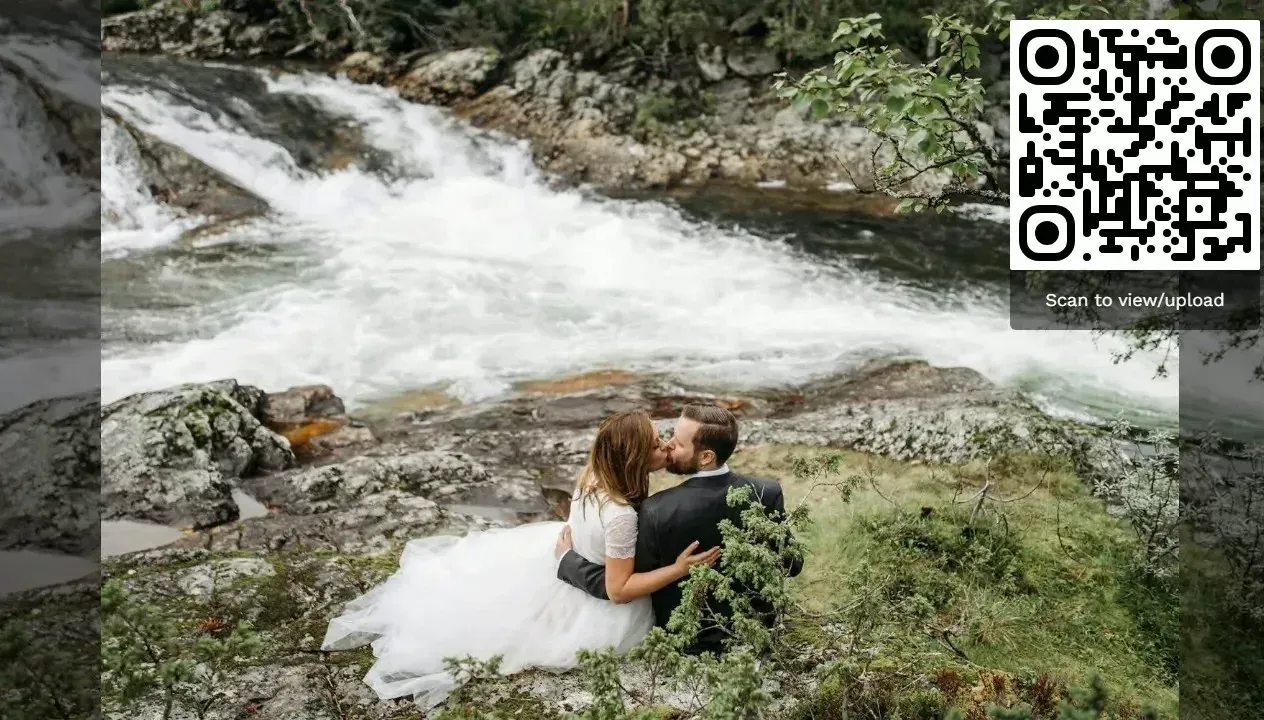
1.Photo challenges give guests a reason to upload right now
When Dropbox Actually Makes Sense
Fairness matters. There are event scenarios where Dropbox is genuinely the right call:
- Small team events (under 10 people) where everyone already has Dropbox and knows the shared folder. No onboarding friction.
- Post-event photo collection from a hired photographer delivering high-res files. Dropbox handles large files well.
- Document-heavy events like conferences where you're sharing slides, PDFs, and photos in one place.
- Budget of zero. Dropbox's free tier (2 GB) costs nothing. For a tiny gathering where you just need a shared folder, it works.
The honest trade-off with Photogala: it's not free. The Plus plan costs €39 as a one-time payment. If you're hosting a dinner party for 8 friends who all use Dropbox, you don't need a dedicated photo sharing platform. But the moment your guest list crosses 30 or 40 people, the math changes. The friction of Dropbox starts costing you photos.
What Guests Actually Do (Not What We Hope They'll Do)
Event planners tend to overestimate guest motivation. "Of course they'll upload to Dropbox, I sent them the link!" In practice, guest behavior follows the path of least resistance. The Wedding Showcase notes that guests capture unique perspectives professional photographers miss, including candid moments, emotional reactions, and spontaneous dance floor chaos. The photos exist. Getting guests to actually share them is the hard part.
Imagine two scenarios at the same 120-guest wedding. Table A has a printed card with a Dropbox link. Table B has a QR code that opens directly to a gallery with a photo wall visible across the room. By the end of the reception, Table B's photos are already on the screen, already getting reactions, already part of the evening. Table A's card is under someone's dessert plate.
That's not a knock on Dropbox. It's a recognition that context matters. The right tool for syncing work documents isn't automatically the right tool for collecting party photos.
The couple from the opening? For their next big event (a milestone birthday the following year), they switched to a QR code photo gallery. The upload count went from 11 photos to over 200. Same group of friends. Same enthusiasm. Different tool, different outcome.
All of this comes with your own event.
Setting it up takes five minutes. You can build and view everything before you decide.
Starting from €39 one-timeOne-time payment — No subscription
- No App Required
- Setup in 5 Minutes
- 30-Day Money Back
“I use PhotoGala Deluxe and I'm absolutely thrilled. It was the perfect solution for documenting a sports event. Uploading and downloading via the link is a breeze for every participant. What won me over most were the photo wall and the slideshow – both are quick to set up and look really professional. Big praise also to Peter from the PhotoGala team: he's very easy to reach by email, replies quickly and even took my suggestions on board and added new features that made my slideshow even better. You rarely get support this dedicated. A clear 5-star recommendation!”
Written by

I believe event photos should be more than static galleries. They should be live, playful, and unforgettable.
Categories
Related Posts

Free vs Paid Event Photo Apps: What You Actually Give Up
Free event photo sharing sounds perfect until you see compressed images, upload limits, and zero engagement tools. Here's what the price tag really buys.

Why Event Photo Galleries Beat Group Chats for Sharing Memories
Group chats promise easy photo sharing but deliver chaos, compression, and silence after 48 hours. Dedicated photo galleries fix every one of those problems.
Photogala vs Eversnap: What Happens When Your Photo Sharing App Shuts Down
Eversnap shut down in June 2026. Here's what that means for your event photos, and how to pick a platform that won't disappear.