10 Disposable Cameras. 270 Shots. Maybe 80 Keepers.

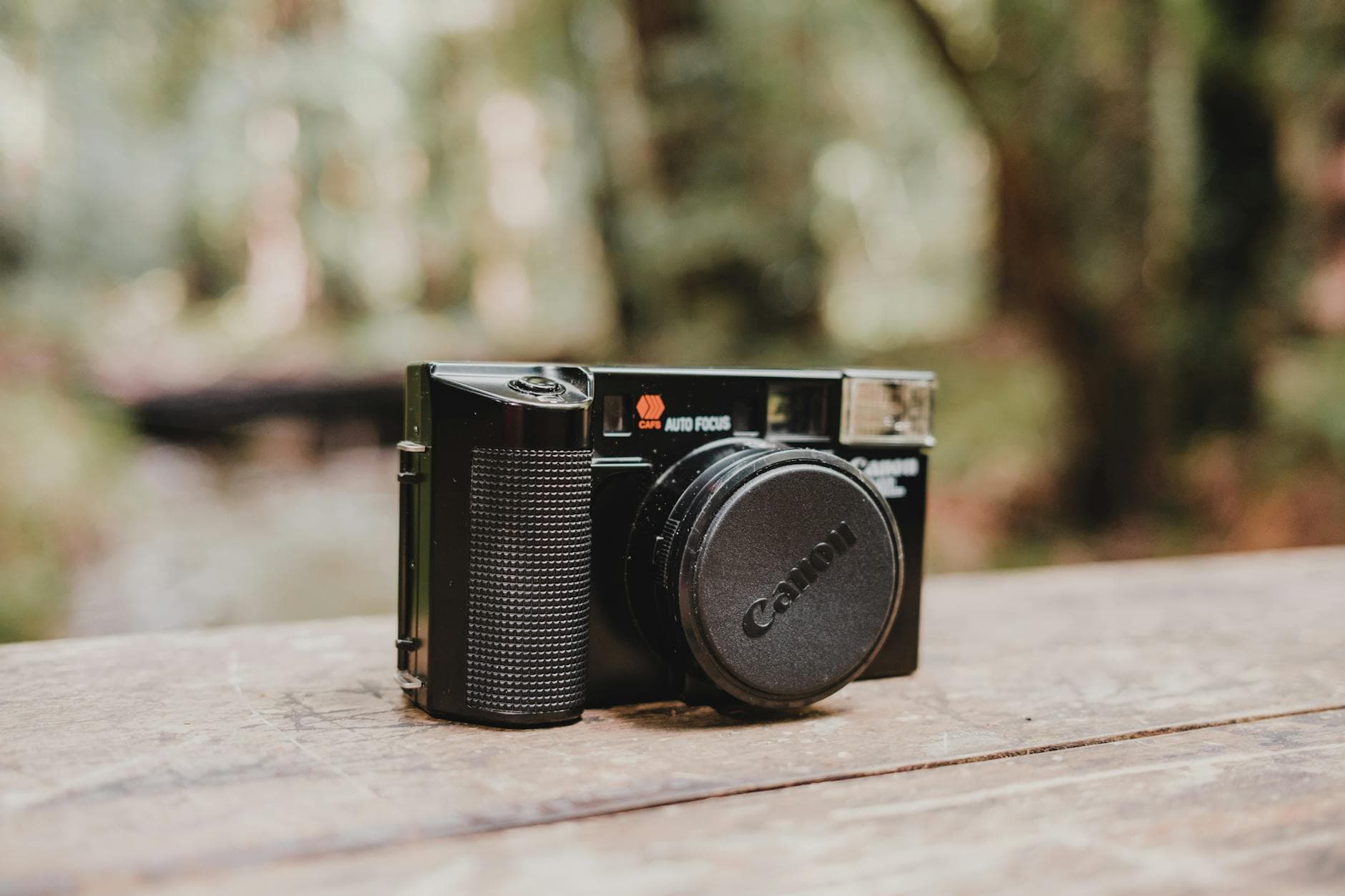
Picture a Tuesday evening, two weeks after the wedding. An envelope from the photo lab sits on the kitchen counter. Inside: 270 prints from the 10 disposable cameras scattered across reception tables. You start flipping through them. Seventeen shots of the ceiling. Nine with someone's thumb covering the lens. A committed series of the centerpiece from increasingly creative angles. Forty-three exposures so dark you can barely make out faces. And buried in the middle, maybe 60 to 80 shots that are genuinely worth keeping.
Total cost for those 80 photos: around $350. That's roughly $4.50 per usable image. Kwillt's breakdown of disposable camera results puts it bluntly: blurry images, fingers blocking the lens, and an alarming number of photos featuring shoes. The disposable camera table is one of those wedding ideas that looks charming on a Pinterest mood board and disappointing in a FedEx envelope.
So why do couples keep doing it? And what actually works better? The answer starts with math most people never bother to do.
The Cost Breakdown Nobody Puts on the Mood Board
Here's the math for a 150-guest wedding with 10 tables. One disposable camera per table, which is the bare minimum most wedding blogs recommend.
Ten cameras at $17: that's $170 before anyone takes a single photo. Development and digital scanning runs about $18 per roll. Another $180. Grand total: $350 for 270 exposures. Now factor in the usability rate. JoinMyMoment's 2025 analysis of disposable camera alternatives highlights the waste problem: overexposed shots, motion blur in dim lighting, accidental triggers. A 30% usability rate is generous for evening receptions. That leaves roughly 80 keepers at $4.40 each.
Want one camera per table at a 20-table reception? Double everything. $700 for maybe 160 usable photos.
Don't forget the hidden time cost. Someone has to collect all cameras at the end of the night (good luck finding the one that ended up in the photo booth corner), mail them to a lab, wait 1 to 2 weeks for processing, then sort through hundreds of bad shots. That's 3 to 4 hours of post-wedding admin nobody budgets for.
What Actually Happens at the Tables
Here's what the cute Pinterest tutorials don't mention. Disposable cameras require guests to operate 1990s technology. Wind the film advance wheel. Look through a tiny optical viewfinder (not the screen they're used to). Hold the camera rock-steady in a dim reception hall with zero image stabilization. Most guests haven't touched a disposable camera in 15 years. It shows.
The built-in flash has an effective range of about 4 meters. Anything beyond that, including the dance floor shot from your table, comes back as a dark smear. Evening receptions are where disposable cameras suffer most, and evening receptions are when the best moments happen.
Then there's the participation gap. Some cameras come back with all 27 frames used. Others return with 3. A few never come back at all because a guest pocketed it, a child adopted it, or it got knocked off the table. You budgeted for 270 exposures and got 180 on a good night.
When Disposable Cameras Actually Make Sense
Full transparency: there are situations where disposable cameras genuinely work. Small daytime events with 20 to 30 people. Outdoor ceremonies with plenty of natural light. Retro-themed parties where the lo-fi aesthetic IS the point. The Nerdy Photographer notes that Gen Z is authentically drawn to the film look, and that's a real cultural moment worth respecting.
If your goal is a handful of imperfect, nostalgic snapshots from an intimate gathering, disposable cameras deliver exactly that charm. The math problem only starts when you're trying to use them as your primary guest photo collection method at a large event. That's asking a 1990s tool to solve a 2026 problem.
Three Alternatives, Compared
61% of couples now include a photo booth as guest entertainment, but photo booths, shared albums, and QR-based sharing all solve different problems. Here's how they stack up for collecting guest photos at a 150-person wedding.
Wedding Photo Collection: Cost and Quality Compared
| Criteria | Disposable Cameras | Shared Albums | QR Photo Sharing | Photo Booth |
|---|---|---|---|---|
| Cost (150 guests) | $300–700 | Free | $35–79 | $500–1,500 |
| Usable photos | 60–80 | Varies widely | Unlimited | 100–200 |
| Cost per usable photo | ~$4.50 | Free | < $0.50 | ~$5–10 |
| Guest effort | High | Medium – need account | Low – scan QR code | Medium – wait in line |
| Photo quality | Low – no stabilization | High – smartphone | High – smartphone | Medium – fixed angle |
| Time to access photos | 1–2 weeks | Instant | Instant | Instant (prints) |
| Candid moments | ||||
| Video support |
Shared albums (Google Photos, iCloud) are free but hit a wall fast: research from QRShrt shows only 20 to 30% of wedding guests will download a dedicated app or create an account to join a shared album. The guests who don't bother are exactly the ones with photos you'll never see. Photo booths are fun but capture posed moments at a fixed station, not candid shots from the dance floor at 11 PM.
QR-code sharing sits in the middle: near-zero friction for guests, unlimited capacity, and photos land in a shared gallery within seconds. The trade-off? It's not free. Plans start around $35 for basic events.
See it in action
Every guest photo in one album – no app.
The QR Code Approach: No App, No Excuses
The concept is almost comically simple. Print a QR code on table cards, a poster near the bar, or even on cocktail napkins. Guests scan it with their phone camera. A browser-based gallery opens. They pick photos from their camera roll and upload. Done. No app store visit, no account creation, no waiting for an invite link in a group chat.
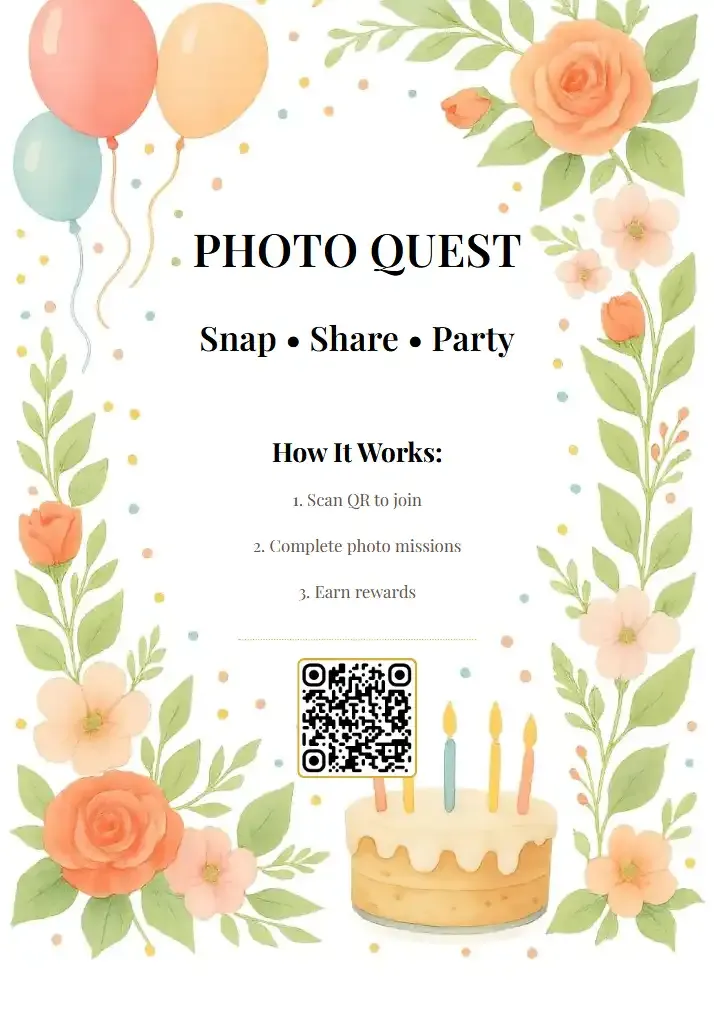
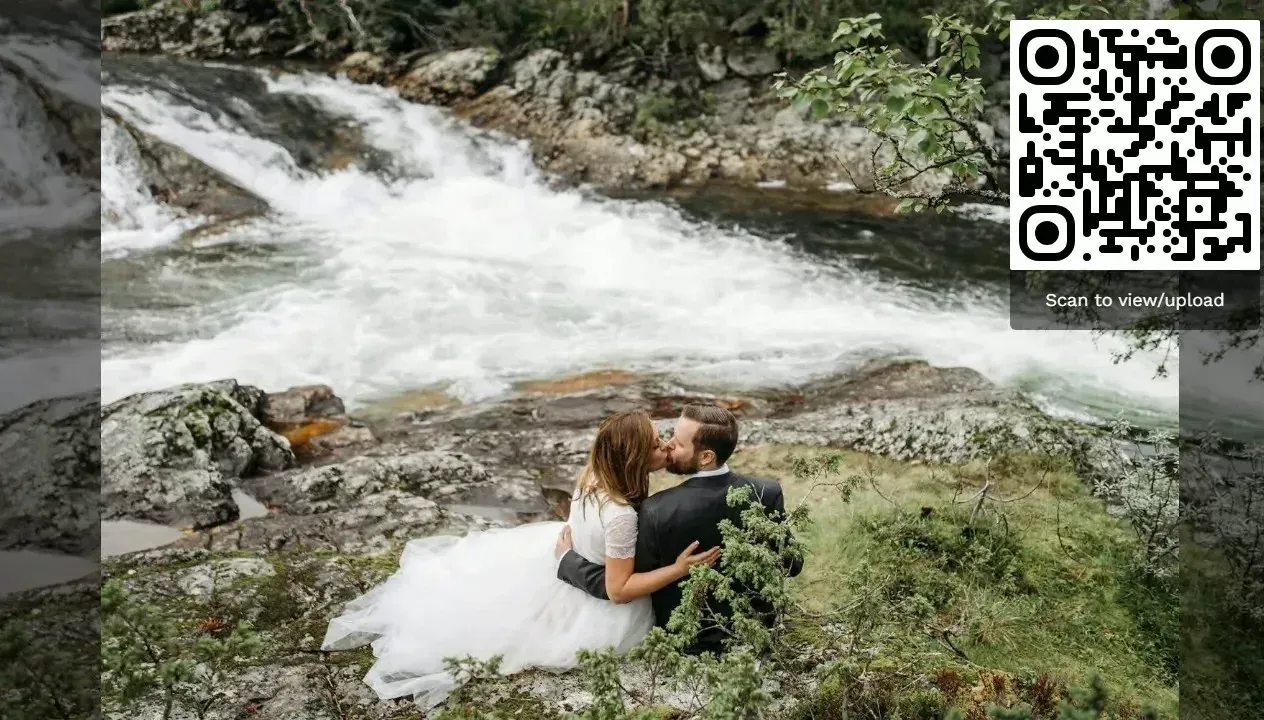
1.Scan the QR code. No app, no account.
Imagine a 200-guest wedding where the QR code is printed on every table card. By the time dessert arrives, the gallery already has 150 photos from guests who uploaded between courses. Set up a screen near the dance floor, and suddenly you've got a live photo wall cycling through guest submissions. People see their own photos on the big screen, laugh, and upload more. It's a feedback loop that disposable cameras simply can't create.
Setup Takes About 5 Minutes
Create a gallery
Pick a name, choose your style, and the gallery is live. Two minutes, tops.
Print your QR code
Table cards, a poster near the bar, cocktail napkins. Print-ready templates are provided.
Guests scan and upload
No app, no account needed. Phone camera to shared gallery in under 30 seconds.
Best QR code placement: near the bar and next to the restrooms. Those are the two spots where guests stand around with their phones out. A table card is good, a bar sign is better. Both is best.
One honest trade-off: browser-based sharing requires WiFi or cell signal at the venue. Remote barn weddings or underground venues might need a signal booster. And if you specifically want that vintage film grain, digital smartphone photos won't replicate it. Different tools for different goals.
The Waste Factor
A quick note on sustainability, since it matters to more couples every year. Disposable cameras are single-use plastic electronics with batteries, plastic lenses, and chemical film processing. JoinMyMoment highlights the environmental waste as a growing concern, particularly for couples planning eco-conscious weddings. Ten cameras means ten sets of batteries and plastic housings heading to a landfill. Digital sharing eliminates that entirely.
The Envelope vs. the Gallery
There's something undeniably nostalgic about that envelope from the photo lab. Holding physical prints, not knowing what you'll find. That feeling is real, and no QR code replaces it completely. But nostalgia runs about $4.50 per usable photo at a 150-guest wedding, with a two-week wait and a 70% waste rate.
For most weddings over 50 guests, the math points clearly in one direction: a digital gallery captures more moments, from more angles, at a fraction of the cost. And the photos are ready before the last guests leave. If you want both worlds, put one disposable camera on the head table for charm and use QR codes everywhere else. The film photos become a fun novelty. The digital gallery becomes the actual collection.
All of this comes with your own event.
Setting it up takes five minutes. You can build and view everything before you decide.
Starting from €39 one-timeOne-time payment — No subscription
- No App Required
- Setup in 5 Minutes
- 30-Day Money Back
“I use PhotoGala Deluxe and I'm absolutely thrilled. It was the perfect solution for documenting a sports event. Uploading and downloading via the link is a breeze for every participant. What won me over most were the photo wall and the slideshow – both are quick to set up and look really professional. Big praise also to Peter from the PhotoGala team: he's very easy to reach by email, replies quickly and even took my suggestions on board and added new features that made my slideshow even better. You rarely get support this dedicated. A clear 5-star recommendation!”
Written by

I believe event photos should be more than static galleries. They should be live, playful, and unforgettable.
Categories
Related Posts

Bridal Shower Photo Sharing: Collect Every Sweet Moment in One Gallery
Bridal shower photos end up scattered across 15 phones. Here's how to get them all into one gallery before the mimosas wear off.

Maternity Photo Sharing: How to Keep Every Announcement, Bump Shot, and Memory in One Place
Pregnancy announcements land on 4 different apps. Maternity photos get lost in group chats. Here's how to keep every photo in one shared gallery your whole family can access.

Sales Kickoff Photo Sharing: How to Turn a Mandatory Meeting Into a Team Memory
Sales kickoffs are expensive. The photos from them usually disappear into 14 different camera rolls. Here's how to fix that.