Can You Put an Image in a QR Code? (Yes, But There's a Better Question)

Somewhere right now, someone is staring at a QR code generator wondering if they can cram a photo into that little black-and-white square. Maybe it's a wedding photographer who wants guests to scan a code and see a portrait. Maybe it's an event planner trying to link a QR code to a gallery of 200 photos. The short answer: yes, you can put an image in a QR code. The longer answer is more interesting.
Because the real question most people are actually asking isn't "can I embed one photo in a QR code?" It's "how do I use QR codes to share photos with a group of people?" Those are very different problems with very different solutions.
This piece covers both. First, the straightforward technical answer. Then, the approach that actually matters for events, weddings, and any situation where dozens (or hundreds) of people need to share photos with each other.
The Technical Answer: Yes, a QR Code Can Link to an Image
A standard QR code stores data, usually a URL. Point it at an image file hosted online, and scanning the code opens that image. Simple. Services like QR Code Generator PRO and Me-QR let you upload a photo and generate a scannable code that links directly to it.
Some generators go further. You can create an image gallery QR code that opens a mini page with multiple photos. QR Code Tiger calls this a way to "showcase portfolios" or "share event pictures with friends." And QR.cafe points out that embedding a logo or graphic into the QR code itself increases the chance people actually scan it.
There's an important distinction here, though. You're not literally storing the image inside the QR code. QR codes max out at about 3KB of data. A single smartphone photo is 3-8MB. What you're storing is a link to where the image lives online.
Quick clarification: A QR code can hold about 4,296 characters of data. That's enough for a URL, a paragraph of text, or a vCard. It's nowhere near enough for an actual image file. Every "image QR code" is really a link QR code pointing to a hosted image.
Where Image QR Codes Fall Apart
For a single photo, the approach above works fine. Photographer wants to share a portrait? QR code to the hosted image. Done.
But picture this: a wedding with 150 guests. The couple wants everyone's photos in one place. Creating 150 individual QR codes that each link to one image is absurd. And even a gallery QR code from a free generator only works one direction: the host uploads images, guests view them. There's no way for guests to upload their photos back.
That one-way limitation is the gap most people hit. They Google "image QR code," find a generator, create a code that displays their photos, and then realize it doesn't solve the actual problem. The actual problem is collection, not display.
Think about the last event you attended. You took photos on your phone. Other people took photos on their phones. And then what? Someone created a WhatsApp group that got noisy, or a shared iCloud album that half the Android users couldn't access, or everyone just... kept their photos to themselves. A Mixbook survey found that 50% of Americans do nothing with the photos on their phone. At events, that number feels even higher.
The Better Question: QR Codes That Collect Photos
Instead of a QR code that shows one image, imagine a QR code that opens a shared gallery where anyone can upload. No app download. No account creation. Guest scans the code, types a display name, and starts uploading from their camera roll. Every photo appears in a shared gallery in real time.
That's what event photo sharing platforms do. And the QR code is the unlock mechanism. It replaces the friction of "download this app" or "join this shared album" with a single scan that works on any smartphone.
The numbers back this up. QR code usage surged roughly 323% between 2021 and 2025, and 49% of couples now include QR codes on their wedding invitations, according to QR Code Chimp's statistics. People are comfortable scanning codes. The barrier to entry is nearly zero.
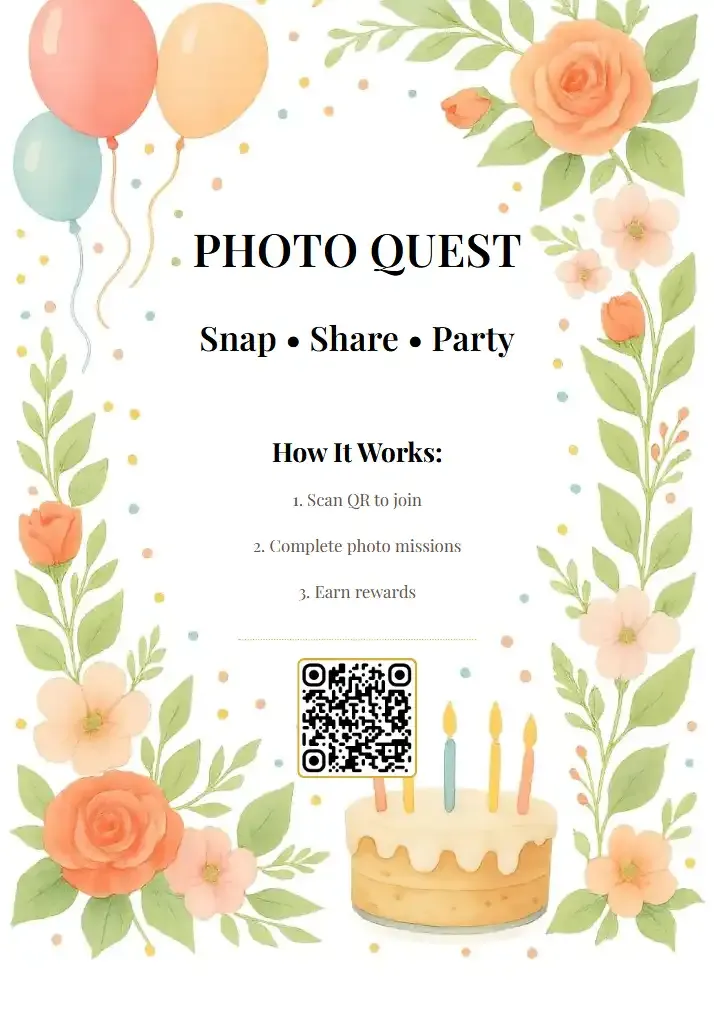
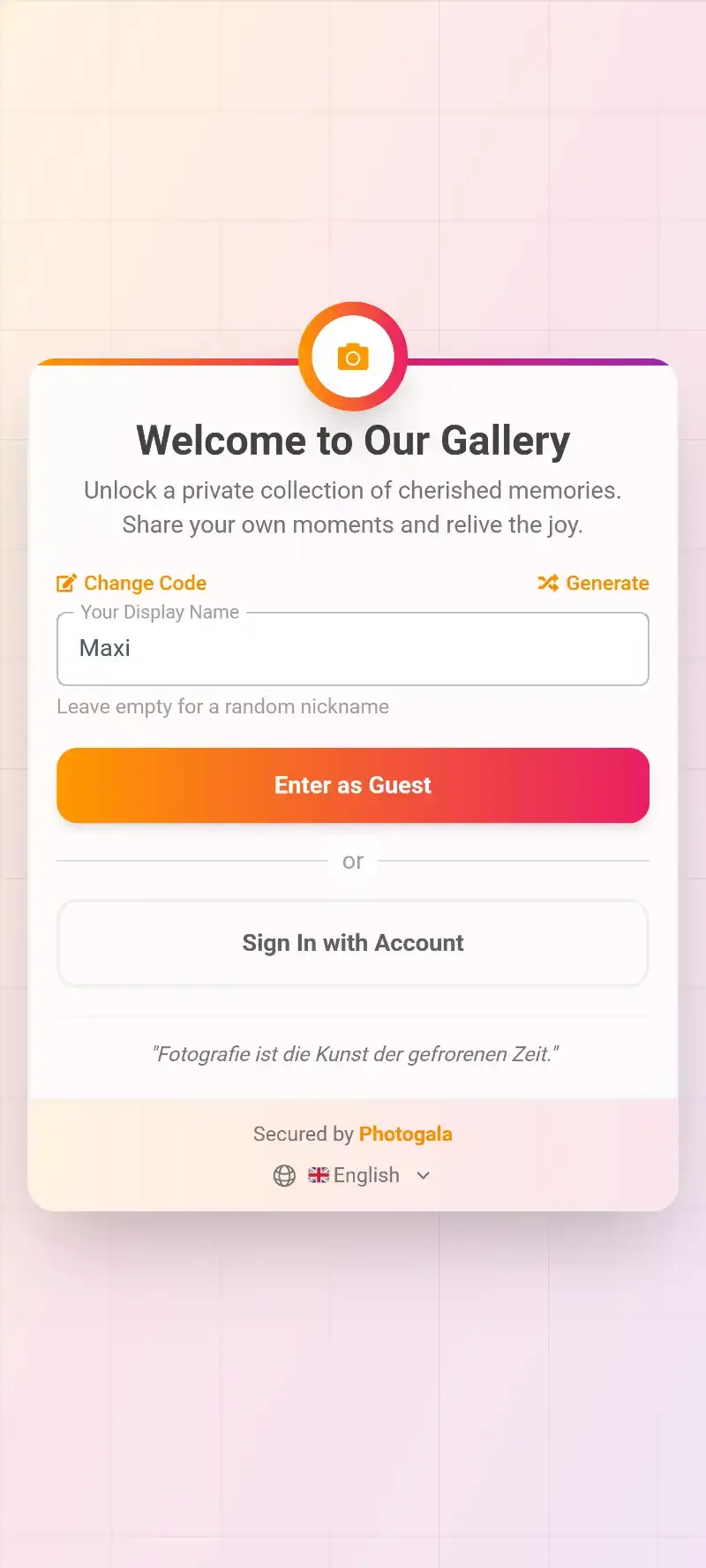
1.One scan opens the gallery. No app, no sign-up.
The difference between an image QR code and a photo sharing QR code is the difference between a flyer and a conversation. One broadcasts. The other invites participation.
See it in action
Every guest photo in one album – no app.
What Happens After the Scan
Say you're setting up a gallery for a corporate team event with 40 people. You create the gallery, customize the branding (company colors, logo), and print the QR code on table cards. That's maybe 10 minutes of setup.
Guests arrive, scan the code, and the gallery starts filling up. No coordinator needed. No "please send your photos to this email address." By the end of a 4-hour event, you might have 80-200 photos from 25-30 contributors. The quiet colleague from accounting who never posts on social media? They uploaded 7 photos of the scavenger hunt because the leaderboard made it feel like a game.
That last part is worth pausing on. A plain shared album collects photos passively. Add photo challenges ("snap a photo with someone from a different department") and a points-based leaderboard, and suddenly people are actively looking for moments to capture. Research from AmplifAI shows gamification increases engagement by 48% in workplace settings. Events aren't workplaces, but the psychology is identical: give people a goal and a score, and participation goes up.
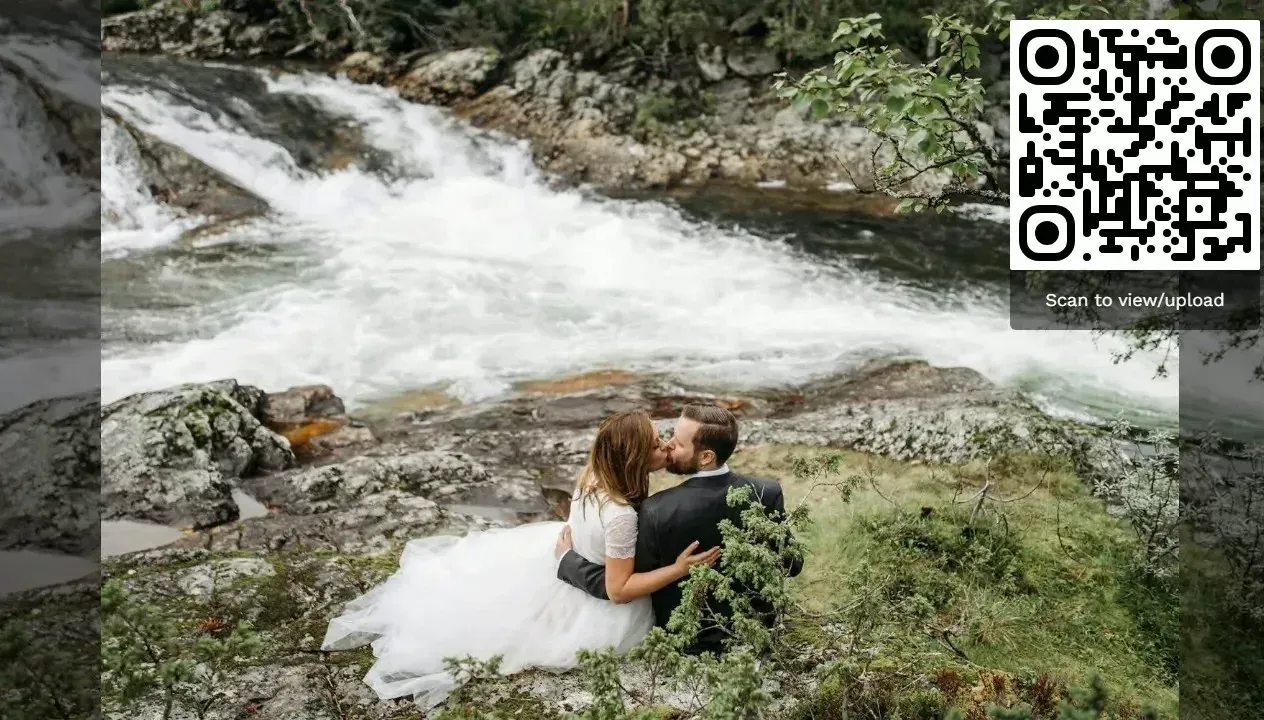
1.Challenges give guests specific photo missions.
Static QR Code vs. Event QR Code: What You Actually Get
Here's a honest comparison between the two approaches. Both use QR codes. The similarity ends there.
Image QR Code vs. Event Photo Sharing QR Code
| Feature | Image QR Code Generator | Event Photo Sharing (e.g. Photogala) |
|---|---|---|
| Direction | One-way (host → viewer) | Two-way (everyone uploads) |
| Guest uploads | ||
| Number of photos | 1-20 (manual upload) | Unlimited |
| Real-time gallery | ||
| Photo challenges / gamification | ||
| Live photo wall on TV | ||
| Works without app install | ||
| AI face recognition | find your own photos | |
| Content moderation | approve/reject queue | |
| Cost | Free - $15/mo | One-time from €39 |
The image QR code generators are great tools for what they do: sharing a specific photo or small gallery in a scannable format. If that's all you need, use them. MobiQode has a solid guide on creating basic image QR codes for restaurant menus, flyers, and business cards.
But if you're here because you're planning an event and wondering how to get everyone's photos into one place, that's a fundamentally different problem. And it needs a different tool.
The Trade-offs Nobody Mentions
One thing worth noting: event photo sharing platforms like Photogala aren't free. The Plus plan is €39 (one-time, not a subscription), which is obviously more than a free QR code generator. If you literally just want to share three photos of a product with customers at a trade show, a free image QR code is the right call. Don't overcomplicate it.
The flip side: free generators often have limits on views, require monthly subscriptions for dynamic QR codes (ones you can update after printing), and some slap their own branding on the landing page. You get what you pay for, in both directions.
Another honest limitation: Photogala is browser-based, not a native app. For 95% of use cases that's an advantage (no download friction for guests). But if you want push notifications reminding guests to upload, the browser can't do that as aggressively as a native app. Something to consider if you're running a multi-day event where you need sustained engagement.
For weddings and parties: Print QR codes on table cards, napkin holders, or even attach them to bottles and props. The more visible the code, the more people scan it. One couple printed the QR code on the back of the menu card, and it became the most natural touchpoint of the evening.
When to Use Which
The decision tree is actually simple:
- Sharing 1-5 specific images (portfolio, product shots, menu): Use a free image QR code generator. QR Code Generator PRO or MyQRCode work well.
- Collecting photos from a group of people at an event: Use an event photo sharing platform with a QR code entry point.
- Displaying a live photo slideshow at a venue: You need real-time sync, which only event platforms offer.
- Running photo challenges or competitions: You need gamification features built into the gallery.
Most people searching "can you put an image in a QR code" fall into one of those four buckets. The first group is well-served by free tools. The other three groups need something more, and they usually don't realize it until they've already printed 200 table cards with a static QR code that can't accept uploads.
What a QR-Powered Photo Gallery Looks Like in Practice
Imagine a 180-guest wedding. The couple sets up a Photogala gallery the night before, picks a gallery layout that matches their invitation design, and prints QR codes on small cards for each table. During the ceremony and reception, guests scan the code when they feel like it. No announcement needed. No "please download this app."
By 10 PM, the gallery has 400+ photos from 60 different contributors. The live photo wall behind the bar is cycling through the newest uploads, and every few minutes someone points at the screen and laughs. The couple's favorite touch: a challenge called "recreate this pose" with an example photo of the bride and groom doing a silly face. 23 groups attempted it. The results were chaotic and perfect.
Two weeks later, the professional photographer delivers 280 beautifully edited shots. Gorgeous work. But the gallery that gets passed around at the next family dinner? The one with 400 unfiltered, candid guest photos. Because those are the moments nobody posed for.
Getting Started Takes 3 Minutes
Create your gallery
Pick your event type, set a name, customize colors and branding. Takes about 2 minutes.
Share the QR code
Print it on table cards, project it on a screen, or text the link. Guests scan and they're in.
Photos roll in automatically
Guests upload from their browser. Photos appear in the shared gallery and on the photo wall in real time.
All of this comes with your own event.
Setting it up takes five minutes. You can build and view everything before you decide.
Starting from €39 one-timeOne-time payment — No subscription
- No App Required
- Setup in 5 Minutes
- 30-Day Money Back
“We were really thrilled, and everything went so much more smoothly, from the seating plan all the way to the photo games! Simply great! Highly recommended!”
Written by

I believe event photos should be more than static galleries. They should be live, playful, and unforgettable.
Categories
Related Posts

Company Retreat Photo Sharing: How to Actually Keep the Memories
Most offsite photos die on individual phones. Here's how to collect, share, and actually use every photo from your next company retreat.
Neighborhood Block Party Photo Sharing: How to Turn 40 Strangers Into One Shared Album
Block parties create great photos — and zero way to share them. Here's how a QR code gallery turns your street into a connected community.
Why Upload Limits Ruin Event Galleries (and What Unlimited Actually Changes)
Upload caps at events create anxiety, reduce participation, and leave gaps in your photo collection. Here's what happens when you remove the ceiling.