Photo Sharing in 2026: What It Actually Means (and Why You're Probably Doing It Wrong)


Last weekend, a friend showed me her camera roll. 4,312 photos. She scrolled past birthdays, vacations, a friend's wedding from October, a work retreat from November. "I keep meaning to send people their photos," she said. She won't. We both know it.
That gap between taking a photo and actually sharing it with the people in it is the entire problem. Photo sharing sounds like a solved problem. It's not. Not even close.
The term is simple. The reality is a mess.
At its most basic, photo sharing means getting photos from one device to another person. That's it. You took a photo, someone else wants it. The concept predates smartphones by decades: printed doubles at the photo lab, burned CDs, emailed attachments with a 5MB limit.
But here's what photo sharing looks like in practice in 2026. Someone takes a great photo at dinner. They AirDrop it to the person next to them. The two people across the table don't have iPhones, so they get it via WhatsApp. The host asks for it tomorrow, forgets, and never follows up. Three weeks later, the photo exists on exactly two phones and one WhatsApp thread nobody will ever scroll back to.
Multiply that by every event, every group trip, every family gathering. Smartphones account for 94% of all photos taken globally. We're producing roughly 5 billion photos per day. And the vast majority of those photos stay trapped on the device that captured them.
Why existing solutions fall short
The obvious answer is "just use Google Photos" or "make a shared iCloud album." And for small groups of tech-savvy friends, that works fine. But the moment you scale beyond 5-6 people, things break down fast.
- Shared albums require everyone to be on the same platform. Half your guests don't have Google accounts. Or they have iPhones but never set up iCloud sharing.
- WhatsApp groups compress images to unrecognizable mush and become chaotic within hours.
- AirDrop only works for iPhone-to-iPhone, in person, one person at a time.
- Email has attachment limits, and nobody wants 47 separate emails with "IMG_4291.jpg" in the subject line.
- USB sticks and Dropbox links get lost, expire, or require more effort than anyone is willing to invest after the event.
The core problem isn't technology. It's friction. Every extra step between "I took this photo" and "the right people have it" means fewer photos actually get shared. One tap is fine. Three taps is tolerable. Downloading an app, creating an account, finding an invite link? Forget it.
Photo sharing has evolved. Most people haven't noticed.
The photo sharing market is projected to hit $8.34 billion by 2030, growing at 8.2% annually. That growth isn't coming from people posting to Instagram. It's coming from a new category: purpose-built platforms that solve specific sharing problems, especially at events.
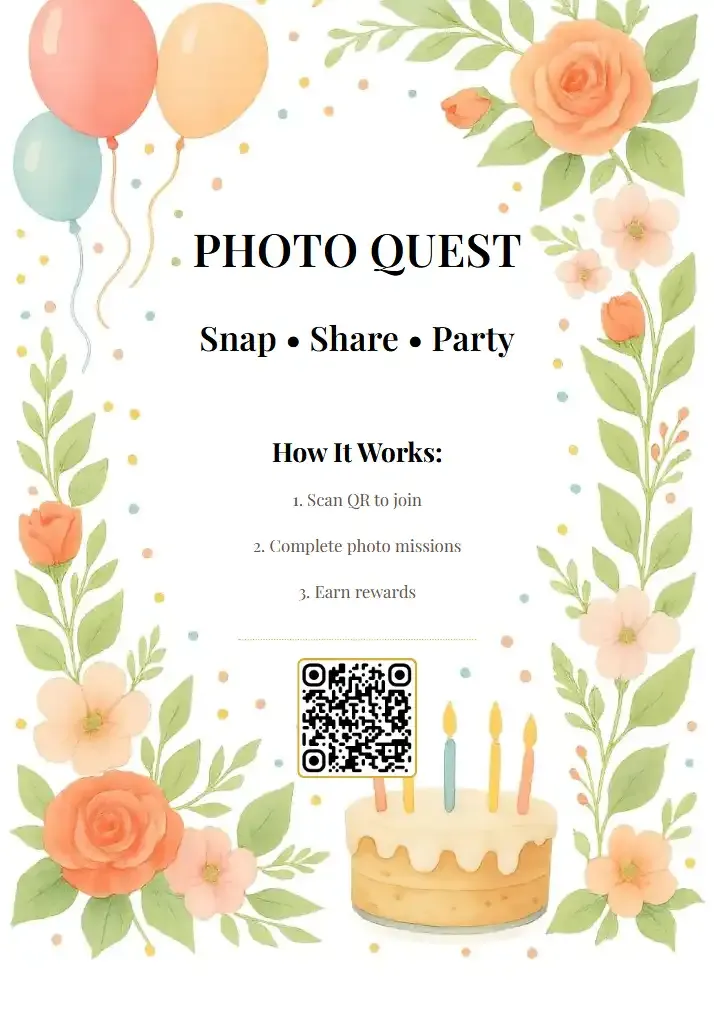
The shift happened quietly. Instead of asking 150 wedding guests to download an app or join a shared album, you put a QR code on the table. Guests scan it with their phone camera. A browser-based gallery opens. They upload. Done.
No app install. No account creation. No "which platform are we using again?" confusion.
This is what modern photo sharing looks like at events: a QR code that opens a gallery in the browser, guests upload their photos and videos in original quality, and everything appears in one shared collection that everyone can access.
Guests pick photos directly from their camera roll
What actually matters in a photo sharing platform
After testing several options (from Rompolo to PicturesQR to full-featured platforms), the differences come down to a few things that matter more than you'd expect.
Zero friction for guests
This is non-negotiable. If guests need to download anything, you'll lose half of them before a single photo is uploaded. Browser-based access via QR code is the baseline now. Photogala does this: guests scan, a gallery opens in their phone's browser, and they're uploading within seconds. No sign-up, no app store detour.
Original quality (not compressed garbage)
WhatsApp compresses photos so aggressively that you can sometimes count the pixels on people's faces. Any serious photo sharing solution needs to preserve original quality. The photos from your wedding or your company retreat deserve better than 480p thumbnails.
Something that makes people actually want to participate
Here's the part most platforms miss entirely. Getting the technology right is the easy part. The hard part is convincing a room full of people to stop what they're doing and upload their photos.
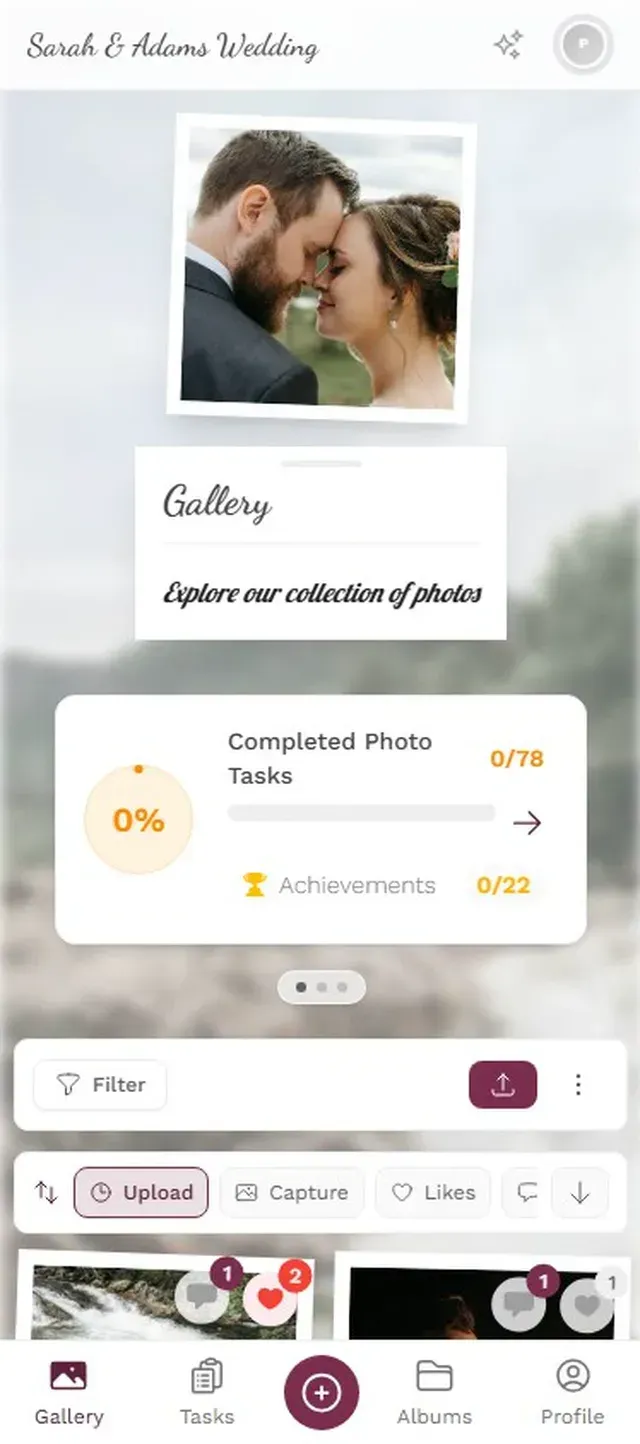
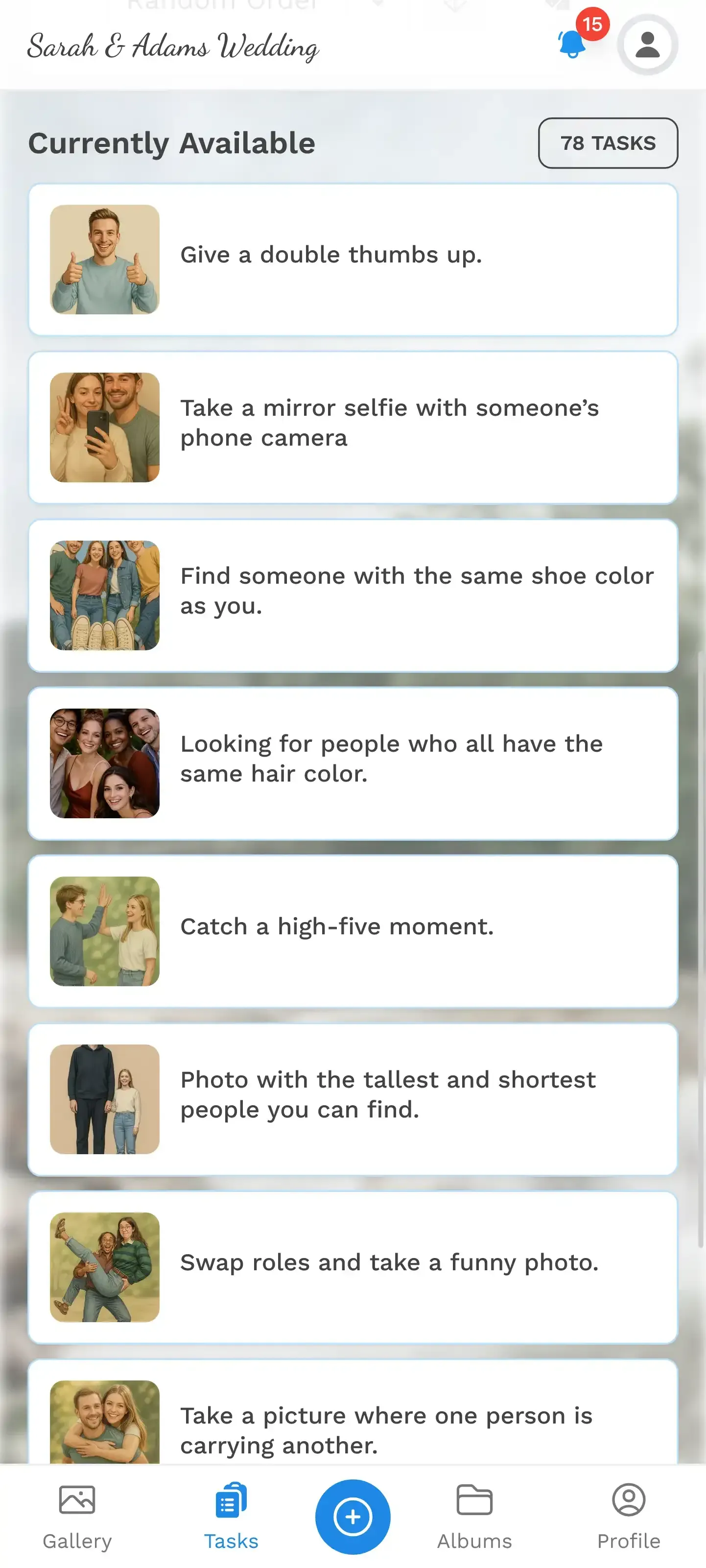
Picture a 200-guest wedding reception. The QR code is on every table. Maybe 30 guests scan it in the first hour. Not bad, but not great either. Now picture that same wedding with photo challenges: "Capture the best dance floor moment" or "Find the oldest guest and take a selfie together." Suddenly people are competing, laughing, hunting for specific shots. A leaderboard tracks who's contributed the most. The uncle who never takes photos has uploaded 15 because he wants to beat his wife's score.
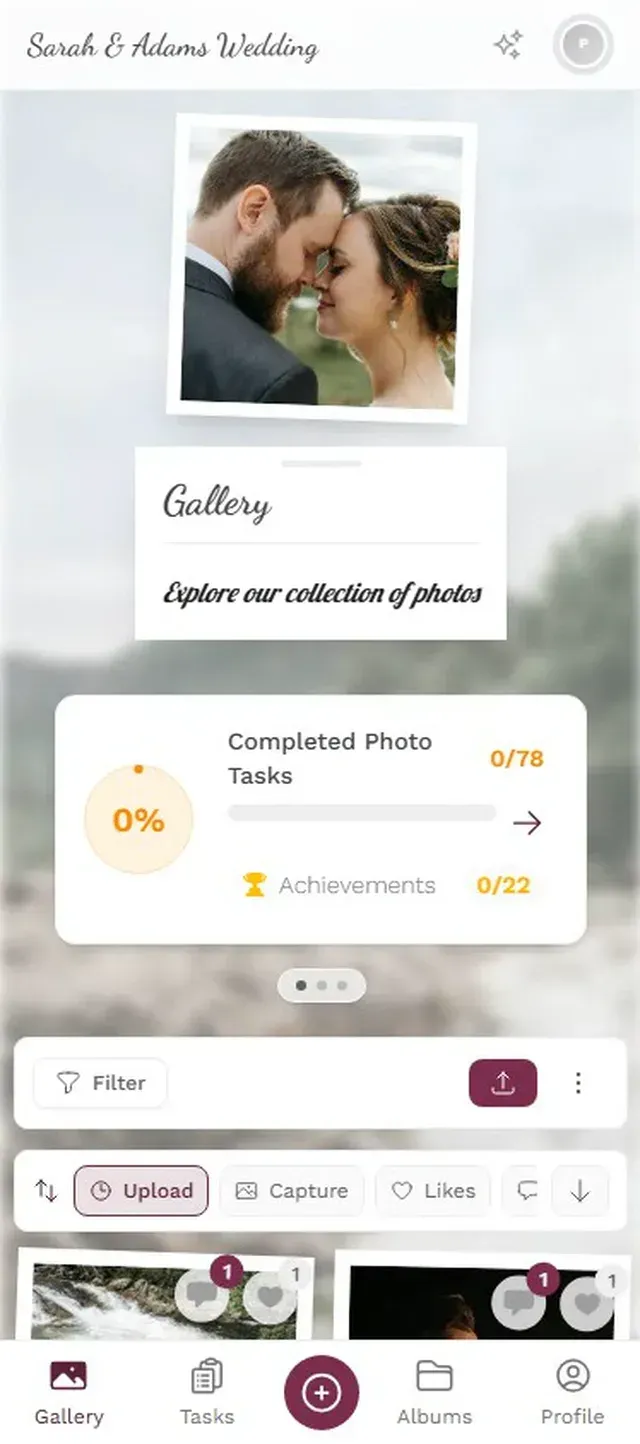
That's gamification, and it transforms photo sharing from a passive ask into an active part of the event. Photogala builds this in with photo challenges, achievements, leaderboards, and even real-world rewards you can redeem at the event. Challenges can include example preview photos too, so you can set up creative formats like "recreate this movie poster" or "mimic this funny pose."
The engagement trick: Start challenges early and keep them visible. A TV screen showing the live photo wall near the bar or dance floor reminds guests to keep uploading. When they see their own photo pop up on the big screen, they want to upload more.
Ready to create your gallery?
The live photo wall changed the game
Imagine this: a 55-inch screen next to the DJ at a wedding reception, cycling through guest photos in real time. Someone uploads a blurry but hilarious dance floor shot, and ten seconds later it's on the big screen. The entire table points and laughs. Three more people pull out their phones to upload.
The photo wall turns passive photo sharing into a live, interactive experience. It creates a feedback loop: upload → see it on screen → want to upload more. It's the single biggest driver of participation at events.
Challenges give guests a reason to keep shooting
One honest caveat
Photogala isn't free. The Plus plan costs €39, which is a one-time payment (not a subscription), but it's still more than a shared Google Photos album, which costs nothing. If you're sharing photos with three friends after a hike, you don't need a dedicated platform. A shared album or even a group chat works fine.
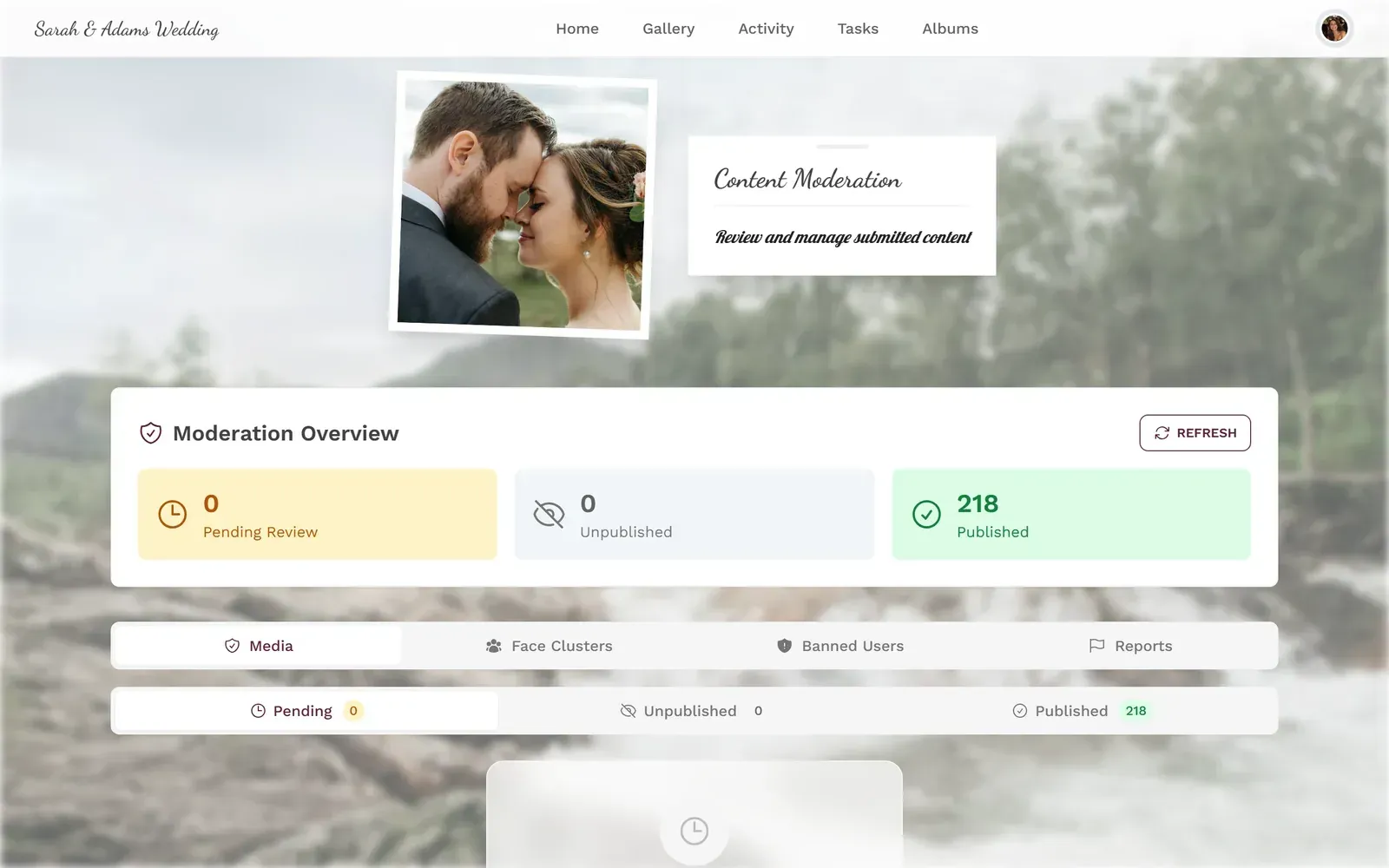
Where dedicated photo sharing platforms earn their price is at scale. Once you're past 15-20 people, the friction of coordinating through generic tools becomes the bottleneck. At 50+ guests, it's practically unmanageable without something purpose-built. And features like content moderation (reviewing photos before they appear on a live screen) simply don't exist in consumer photo apps.
The photo sharing problem, reframed
Photo sharing isn't really about the technology. It's about the gap between photos that exist and photos that reach the people who'd love to have them. A 2023 survey by Deseret News found that 80% of people have photos on their phone they haven't looked at since taking them. Eighty percent. Those aren't just forgotten files. They're moments that someone, somewhere, would genuinely treasure.
The wedding couple who never saw the candid shot of their flower girl twirling. The colleague who doesn't know someone captured the exact moment she got promoted on stage. Your grandmother who'd frame that photo of all four grandchildren together if she only had it.
That's the real cost of broken photo sharing. Not storage. Not technology. Moments that slip away because the friction between "I have this photo" and "you should see this" is just high enough that people never bother.
My friend with the 4,312 photos? She still hasn't sent any of them. But the next time she hosts a dinner party, I'm going to suggest she put a QR code on the table. Not because the technology is impressive, but because it removes the one thing that's been stopping her all along: having to remember to do it later.
Ready to create your gallery?
Start sharing your event photos with guests in minutes.
Create GalleryWritten by

I believe event photos should be more than static galleries. They should be live, playful, and unforgettable.
Categories
Related Posts

How to Collect Photos From Event Guests Automatically
Stop chasing guests for photos after the event. A QR code, a shared gallery, and a few smart settings can do the collecting for you.

Club Event Photos: How to Stop Losing Member Moments to WhatsApp Chaos
Sports clubs, hobby groups, and societies generate hundreds of photos at every event. Most vanish into WhatsApp threads nobody scrolls back through. Here's a better system.
Housewarming Party Photo Sharing: How to Capture Your New Place Through Everyone's Eyes
Your housewarming is the only time your home will look this good and feel this new. Here's how to collect every guest's photos without lifting a finger.