Nobody Sends the Holiday Party Photos. Here's What Works.


Monday morning after the company holiday party. HR sends the all-hands email: "Hey everyone, please share your photos from Friday!" By end of day, two people have replied. One attaches three blurry shots of the buffet. The other sends a WeTransfer link that expires in seven days. Nobody downloads it in time.
Three weeks later, marketing needs photos for the internal newsletter. They have none. Or rather, 47 people have them. Scattered across 47 phones, in 47 camera rolls that will never be opened again.
The Photo Black Hole
This happens at every company, every December. Organizations spend thousands on holiday parties. They book venues, hire caterers, rent sound systems, maybe even spring for a DJ. The event is great. And then the photos vanish.
The usual recovery attempt: someone creates a shared Google Drive folder and emails the link. Five people upload something within the first 48 hours. The rest mean to, get buried under year-end deadlines, and forget by Wednesday.
WhatsApp groups are arguably worse. Someone creates "Holiday Party 2025 Photos 🎄" and adds 60 colleagues. Three enthusiastic people dump their photos. Everyone else mutes the group immediately. Six months later it's still sitting there, unmuted by no one, scrolled past by everyone. (Sound familiar? There's a deeper look at why group chats fail for photo sharing.)
The problem isn't laziness. It's friction. Uploading photos to a shared folder means opening a link, navigating to the right directory, selecting files, waiting for the upload. Four steps between "I should share that photo" and actually doing it. Gallup reports that only 23% of employees worldwide feel engaged at work. Expecting people to proactively engage with a voluntary photo upload request sent via email? Good luck.
A QR Code on Every Table
Here's what works: a printed QR code on each table at the party.
Guests scan it with their phone camera. A browser gallery opens. No app download, no account creation, no sign-up form. They tap upload, select their photos, done. The entire interaction takes about 15 seconds. Most people do it between conversations, while waiting for a drink, or during that slightly awkward toast from finance.
The key insight: photo sharing has to happen at the event, not after it. Once people leave the venue, the motivation to share drops off a cliff. But in the moment, when the photo is fresh and the QR code is sitting on the table right in front of them, the barrier is basically zero.
And the photos guests take are fundamentally different from what a hired photographer captures. Professional shots are polished: group poses in front of the company banner, the CEO cutting a cake. Guest photos are the ones people actually want to see. The terrible karaoke attempt. The accounting team's suspiciously synchronized dance move. Someone's kid who somehow ended up wearing the DJ's headphones. These are the photos that become Slack legends.
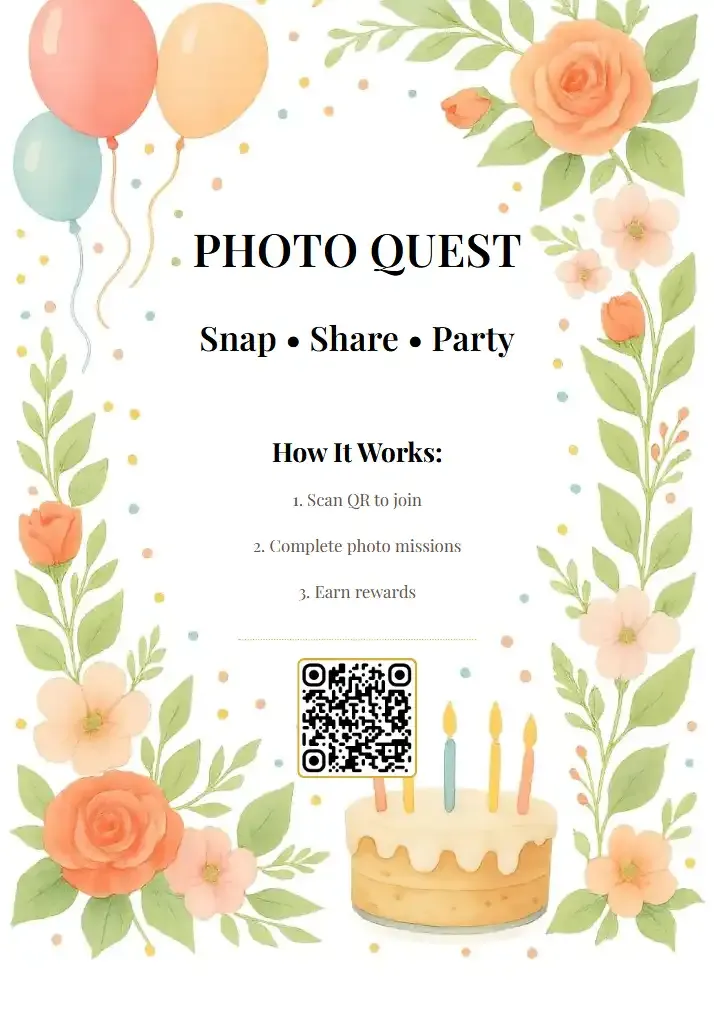
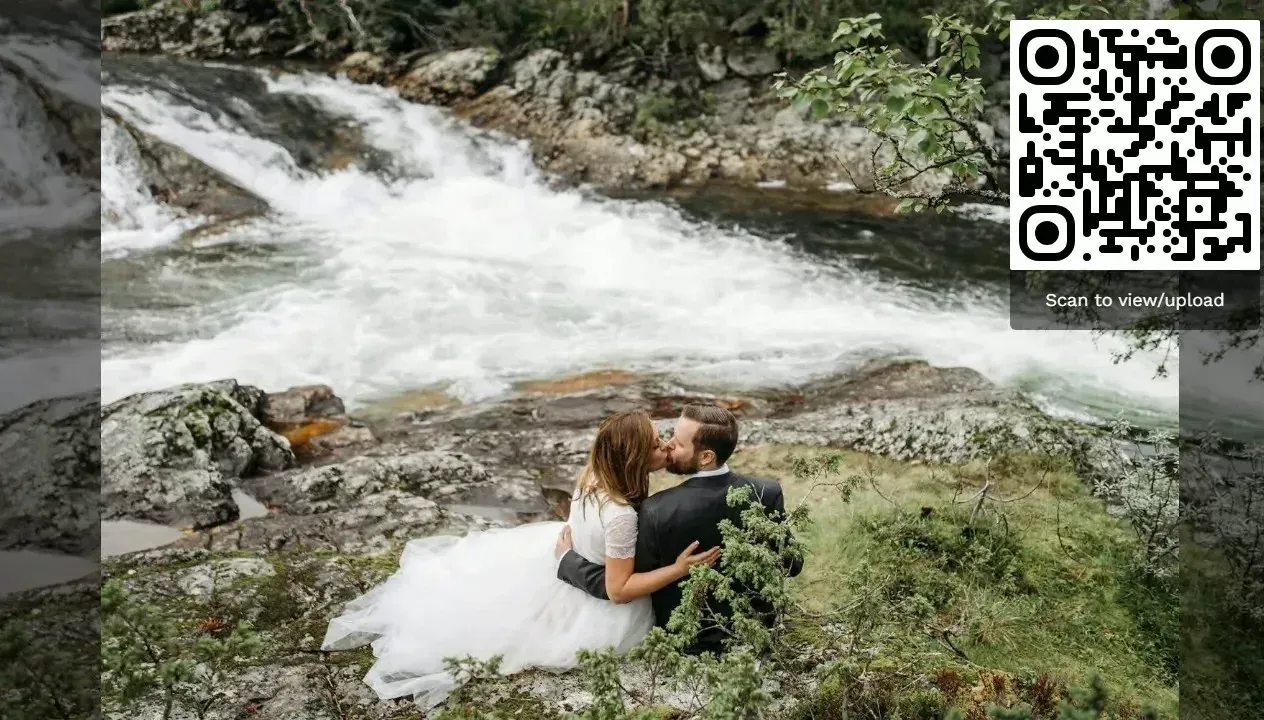
1.Guests scan the QR code to open the gallery instantly
Say you're organizing a holiday party for 60 people. Print a handful of QR codes, stick them on table tents or tape them near the bar and the entrance. No setup speech required. Curiosity does the work. Someone scans, uploads a photo, tells the person next to them. Within an hour, the gallery is filling up on its own.
Photo Challenges Turn Uploads Into a Game
Getting people to scan a QR code is step one. Getting them to upload more than one obligatory group selfie is the real challenge.
This is where photo challenges come in. Think of them as a photo scavenger hunt: a set of specific photo prompts that give people a reason to look around, interact with colleagues they don't usually talk to, and keep uploading.
For a holiday party, challenges might include:
- "Capture the ugliest Christmas sweater in the room"
- "Photo with someone from a department you've never worked with"
- "The dessert table before it gets destroyed"
- "Best group photo with at least 5 people"
- "Find the most festive desk decoration in the building"
Now add a leaderboard. Imagine the quiet developer from backend uploading 15 photos because she's three points behind the new intern. The marketing director trying to reclaim his lead during dessert. People who would never voluntarily share a single photo suddenly care, because there's a score attached. It sounds silly. But research shows that challenge-based gamification improves participation by 89% compared to passive approaches. A holiday party leaderboard taps into the exact same psychology.
The trick is making challenges specific and un-corporate. Nobody gets excited about "capture a moment of collaboration." But "photo with the person who's been at the company the longest"? That sends people on a mini-quest across the room.
5-8 challenges is the sweet spot for a 3-4 hour holiday party. More than that and people stop reading the list. Keep them fun: "Photo with the CEO holding a candy cane" works. "Document a moment of cross-departmental synergy" sounds like mandatory training.
See it in action
Every guest photo in one album – no app.
Put the Gallery on a Big Screen
One thing that changes the dynamic completely: put the gallery on a TV or projector near the bar.
Photos appear on the screen in real time as people upload them. Someone takes a selfie, and ten seconds later it's on a 55-inch display for everyone to see. People notice, they point, they laugh, they take more photos to see themselves up there. It works especially well during the awkward first hour when everyone is standing around with a drink, not sure if it's too early for the dance floor. The photo wall gives people something to look at, talk about, and participate in. (For a detailed walkthrough, there's a step-by-step guide to live photo slideshows.)
One practical note: if you're projecting photos at a work event, enable moderation. Not because your colleagues are likely to upload anything inappropriate, but because the one time someone does, you don't want it on screen in front of the entire leadership team. Pre-approval mode lets a designated moderator review each photo before it goes live. One tap to approve, one tap to reject.
The Week After: Where the Real Value Shows Up
The real payoff comes on Monday. Instead of chasing photos through email chains and expired download links, you have one gallery with everything. Download the full set as a ZIP. Pick the best shots for the company newsletter. Share a highlight reel in the next all-hands meeting.
Here's something most companies overlook: those holiday party photos are employer branding gold. Your recruiting page probably has stock photos of diverse teams high-fiving in a suspiciously well-lit office. Real photos from a real party where people are genuinely laughing? That's infinitely more convincing. A single gallery from one holiday party can fuel a quarter's worth of social media posts. With 76% of American companies planning to increase event spending in 2025, the content those events generate deserves better than sitting on 47 locked phones.
One honest caveat: Photogala is browser-based, not a native app. For a single event like a holiday party, that's actually an advantage, because nobody wants to install and uninstall an app for one evening. But if you were expecting push notifications or offline mode, that's a trade-off worth knowing about. The Plus plan (€39) includes both photo and video uploads, so you're covered from the start.
Setup Takes 10 Minutes
How to Get Started
Create a gallery
Pick a name for your event, choose a theme if you want. The whole setup takes about two minutes.
Print QR codes
Table tents, posters near the bar, stickers on napkin holders. Photogala generates the QR code for you.
Let the party do the rest
Photos appear in the gallery as guests upload them. Download everything as a ZIP afterward.
That's the whole process. No IT department involvement. No "please download this app before the party" email. No shared folder with a link nobody will remember next week.
Next December, when the holiday party wraps up and 47 phones are full of photos, they won't vanish into 47 camera rolls. They'll be in one place, shared before the last drink is finished. No email chains. No dead WeTransfer links. No forgotten Drive folders.
All of this comes with your own event.
Setting it up takes five minutes. You can build and view everything before you decide.
Starting from €39 one-timeOne-time payment — No subscription
- No App Required
- Setup in 5 Minutes
- 30-Day Money Back
“We were really thrilled, and everything went so much more smoothly, from the seating plan all the way to the photo games! Simply great! Highly recommended!”
Written by

I believe event photos should be more than static galleries. They should be live, playful, and unforgettable.
Categories
Related Posts

Bridal Shower Photo Sharing: Collect Every Sweet Moment in One Gallery
Bridal shower photos end up scattered across 15 phones. Here's how to get them all into one gallery before the mimosas wear off.

Maternity Photo Sharing: How to Keep Every Announcement, Bump Shot, and Memory in One Place
Pregnancy announcements land on 4 different apps. Maternity photos get lost in group chats. Here's how to keep every photo in one shared gallery your whole family can access.

Sales Kickoff Photo Sharing: How to Turn a Mandatory Meeting Into a Team Memory
Sales kickoffs are expensive. The photos from them usually disappear into 14 different camera rolls. Here's how to fix that.