WhatsApp Groups Are Where Event Photos Go to Die


The wedding was two weeks ago. The WhatsApp group, created with so much enthusiasm ("Share your pics here!! 📸"), has exactly 43 photos from 6 people. Out of 120 guests. The last message landed nine days ago: "Great party!" with a champagne emoji. Then nothing.
So where did the other 500+ photos go? Nowhere. They're sitting in camera rolls, scattered across 100+ devices, unsorted and unshared. The WhatsApp group was supposed to fix that. It didn't. If this sounds painfully familiar, this breakdown of what actually happens to wedding guest photos nails why.
Why WhatsApp Feels Like the Right Call
It makes sense on paper. Everyone has WhatsApp. No new app to download, no sign-up flow to explain to your uncle who still types with one finger. You create a group, share the invite link, and type "Post your photos here!" Simple, free, familiar.
For the first 20 minutes after the event, it works beautifully. The maid of honor shares a ceremony selfie. Someone posts a blurry but hilarious dance floor clip. Three people react with heart emojis. The group feels alive, like it's doing its job.
Give it 48 hours. The group is silent. It stays that way.
Where WhatsApp Breaks (With Specifics)
WhatsApp is a great messaging app. Nobody disputes that. But using it to collect event photos is like using a hammer to turn a screw. You can force it, but the results aren't pretty. Here's what actually goes wrong.
Compression eats your photo quality. Every image sent through WhatsApp gets compressed. That golden-hour portrait your cousin captured with her iPhone 16 Pro? Downgraded to roughly half its original resolution. The Nuptial describes it bluntly: "photos compressed, videos blurry, files buried in endless threads." You can technically send images as documents to preserve quality, but try explaining that workaround to 120 wedding guests. One by one.
Photos live inside a chat timeline. There's no gallery view in a WhatsApp group. Photos are mixed with messages, reactions, questions about the afterparty location, and someone's voice message thanking the hosts. Finding a specific shot means scrolling through the entire conversation. Saving them means tapping each image individually. For 200 photos, budget about 45 minutes of repetitive, soul-crushing tapping.
Most guests never share anything. This is the real killer. Out of 120 wedding guests, maybe 6-10 will post photos. The rest saw 47 unread messages in the group, muted it, and moved on with their week. They had great shots on their phones. The barrier wasn't willingness; it was the friction of opening a noisy chat and uploading into it.
Zero organization. No albums. No tags. No way to filter by person or time. No bulk download. Everything is a single stream, and once a photo scrolls past, it's effectively buried.
What a QR Code Gallery Actually Looks Like
Dedicated event photo apps take a completely different approach. Instead of inviting guests to a group chat, you give them a QR code. They scan it with their phone camera, a browser-based gallery opens (no app download, no account creation), and they upload photos directly. The images land in a shared gallery that looks and works like a gallery, not a chat thread. Sorted by time. Browsable. Downloadable in bulk, in original quality.
That single change collapses the friction to almost nothing.
Compare the steps: in a WhatsApp group, a guest has to be added to the group, open it, navigate past all the messages, find photos on their phone, send them one by one or in batches, and accept that they'll be compressed. With a QR code gallery, it's: scan, select photos, upload. Three steps. Less friction means more people actually participate, not just the same five extroverts who post in every group chat.
A real gallery with albums, not a chat timeline
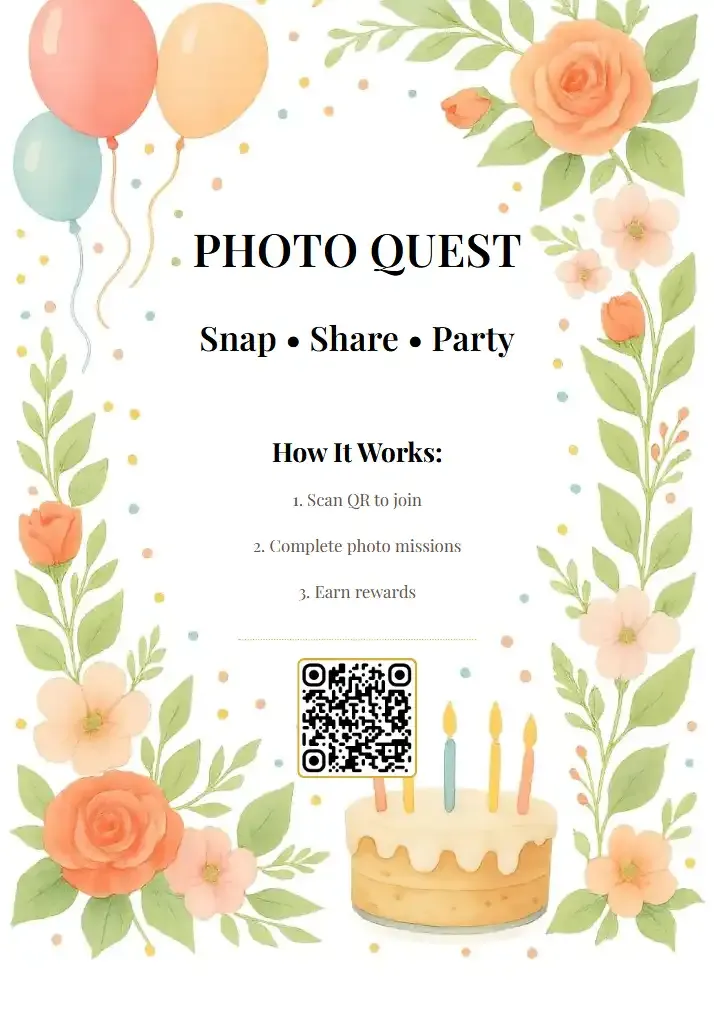
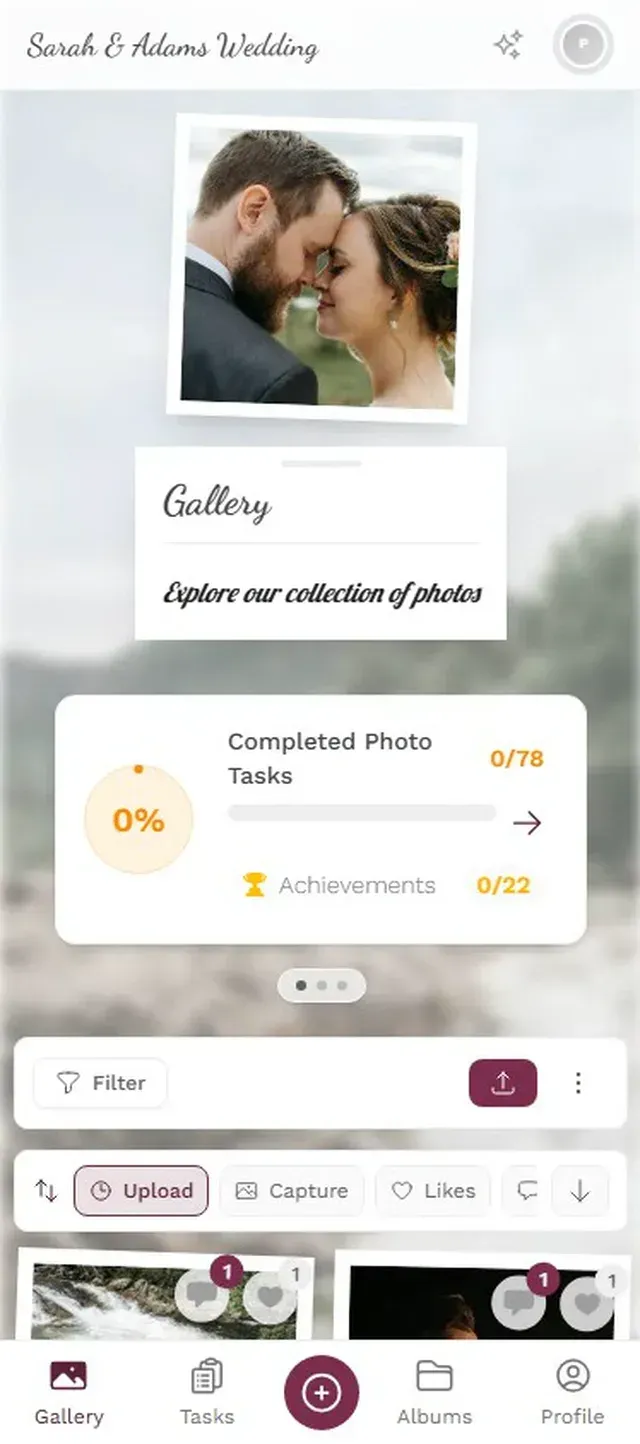
The difference in results is usually stark. Instead of 43 photos from 6 people, a 120-guest wedding with QR code table cards typically collects 300-600 photos from 30-50 different guests. The quiet majority, the ones who muted the WhatsApp group, will scan a code and upload 5-8 photos without thinking twice. The barrier was never motivation. It was convenience.
Place QR codes where people are already sitting or waiting. Table cards, the bar counter, the bathroom mirror, the welcome sign. Every additional placement increases uploads. The best spots are where guests have their phones out and a free hand.
Ready to create your gallery?
The Side-by-Side Comparison
Abstract arguments only go so far. Here's what each tool actually offers for the specific job of collecting and organizing event photos.
WhatsApp Group vs. Photogala
| Feature | Photogala | |
|---|---|---|
| No app install needed | browser-based | |
| Original photo quality | always preserved | compressed |
| Video support | compressed, 16MB max | |
| Gallery with albums | 4 layouts | chat timeline only |
| Bulk download (ZIP) | save one by one | |
| Photo challenges | ||
| Leaderboard & points | ||
| Content moderation | approve/reject queue | |
| AI face recognition | Deluxe plan | |
| Live photo wall on TV | ||
| Guest limit | unlimited | 1,024 per group |
| Cost | From €39 one-time | Free |
WhatsApp wins on exactly one thing: price. It's free. Everything else, from photo quality to organization to the features that actually get people participating, goes to the dedicated tool. For a small dinner party, free is all that matters. For an event you've spent months planning, the 43-photos-in-a-dead-group outcome isn't worth the savings.
Getting People to Actually Upload (The Hard Part)
Here's the part that surprises most event hosts. The technical challenge of photo sharing was solved years ago. Upload, store, display. Easy. The real challenge is psychological: most guests take photos for themselves. Sharing them is a conscious decision, and that decision gets postponed until it's forgotten.
WhatsApp can't solve this because it has no tools for it. Photogala, for example, adds photo challenges: specific prompts like "capture the best dance move" or "photograph the couple cutting the cake." These give guests a reason to upload in the moment, not "later." And "later," as every event host knows, means never.
Add a leaderboard showing who's uploaded the most, and something interesting happens. Imagine a 150-guest wedding where the bride's uncle, a guy who normally takes three photos on a good day, uploads 15 because he noticed his nephew is beating him on the ranking. He checks his position between courses. That's not a stretch. It's basic gamification psychology, and CloudFace AI's research on corporate events confirms that even business settings now adopt AI and engagement tools because the old "please share your photos" request simply doesn't scale.
Challenges give guests specific reasons to take and upload photos
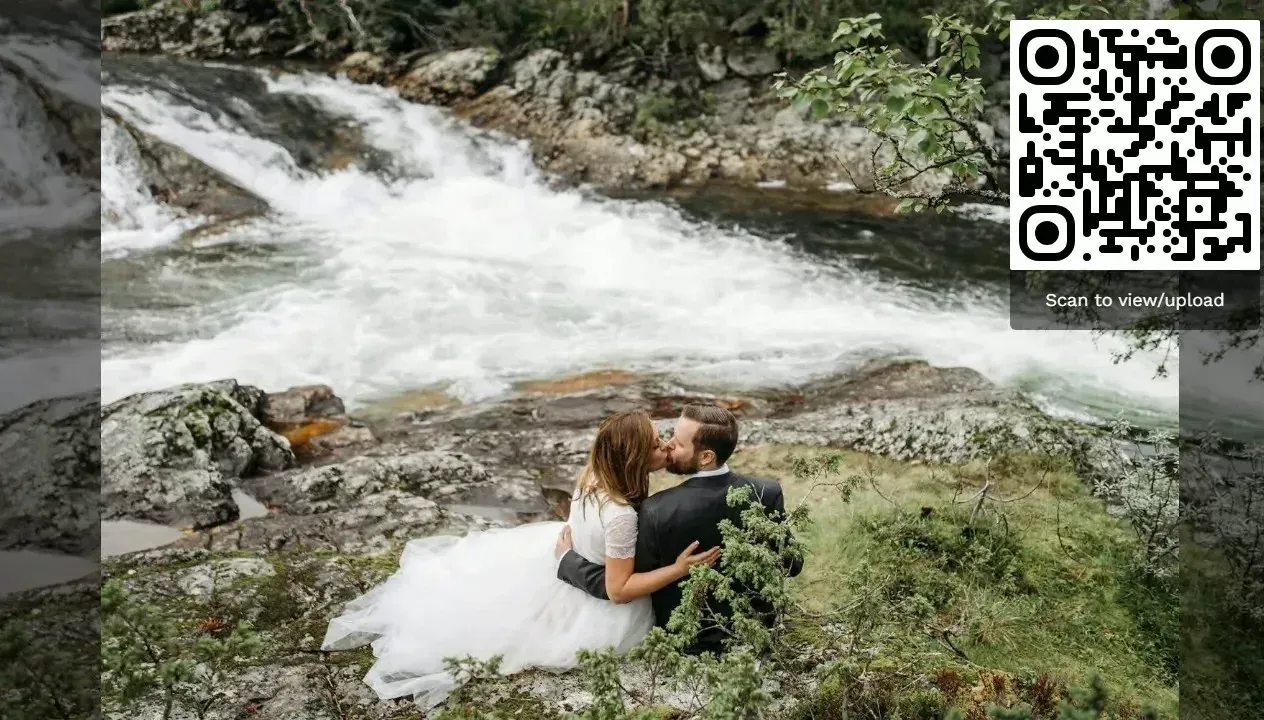
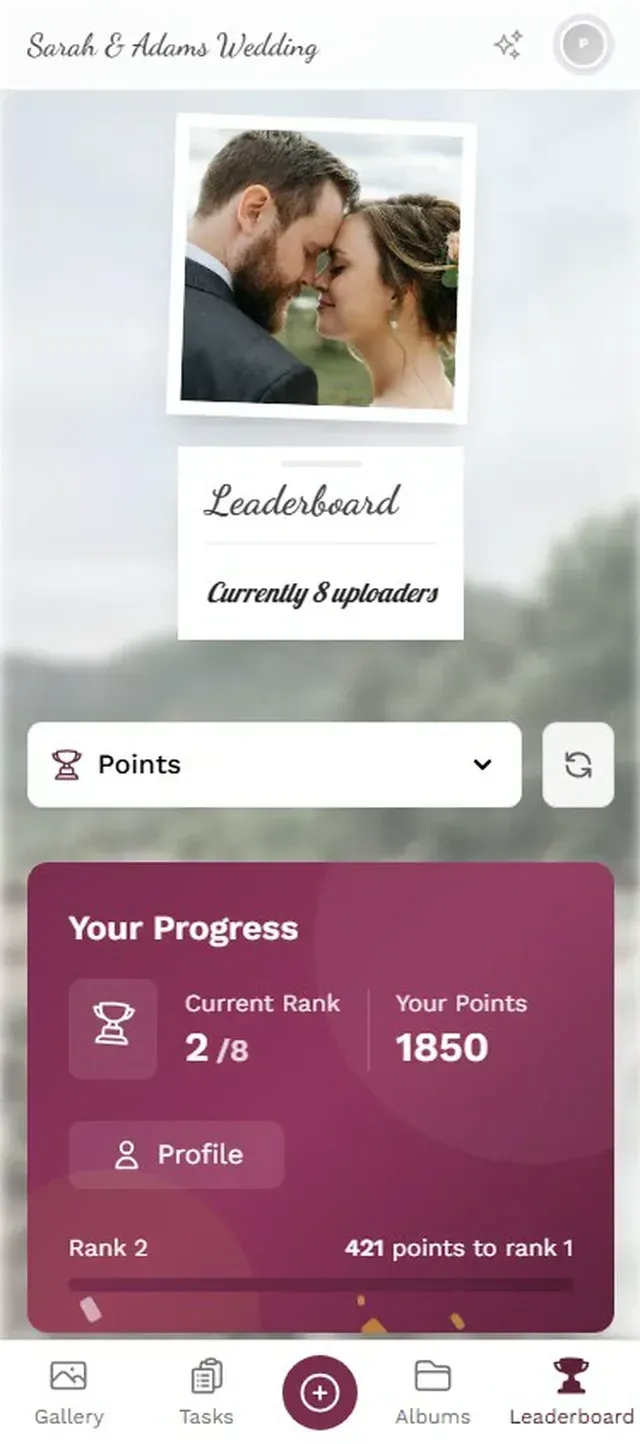
The photo wall adds another layer. When guests see their photos pop up on a big screen at the venue, it creates a feedback loop: upload a photo, see it on the wall, feel a little hit of pride, upload more. WhatsApp groups can't create that kind of visible, real-time engagement. Not even close.
The Honest Trade-offs
A dedicated photo sharing app isn't free. Photogala starts at €39 for a one-time payment (Plus plan) with photo and video uploads included. More advanced features like content moderation and AI face recognition are available at €69-139. WhatsApp costs nothing. That's a real consideration, not a footnote.
For a birthday dinner with 8 close friends who already text each other daily, WhatsApp is fine. You don't need QR codes and leaderboards for a group that shares memes at 11 PM on a Tuesday.
But for events with 40+ guests, especially ones you've invested real time and money into, the calculus changes. A couple spending €15,000+ on a German wedding or $36,000 on an American one will barely notice €69. What they will notice: 400 organized, full-quality photos instead of 43 compressed ones in a silent group.
One more honest point: Photogala runs entirely in the browser. There's no native app. For 99% of guests that's actually better (nothing to install, works on any phone). But if you strongly prefer native app experiences, that's worth knowing upfront.
When WhatsApp is the right choice: Small gatherings under 15 people where everyone already knows each other. Quick, informal photo swaps where quality doesn't matter much. Groups that already have an active chat going. For anything bigger or more important, a dedicated tool pays for itself in photos collected.
What WhatsApp Simply Can't Do
Some features require infrastructure WhatsApp was never designed to provide. A live photo wall on a TV at the venue, cycling through newly uploaded photos in real-time? That needs a dedicated platform with a display mode. Content moderation, where a designated person reviews each photo before it goes public? Not possible in a group chat. AI face recognition that lets each guest filter the entire gallery to find only photos they appear in? WhatsApp doesn't even know who's in the photos.
These aren't must-haves for every birthday party. But for weddings with 100+ guests, or corporate events where brand safety matters, or multi-day trips where a thousand photos accumulate, they transform a photo dump into something guests actually enjoy browsing. If you're specifically planning a work event, this guide on sharing photos at corporate conferences covers the professional side in detail.
The WhatsApp group became the default because there wasn't a simple alternative. Now there is. And the gap between the two is wider than most people expect until they've tried both.
Find the right plan for your event
Flexible pricing for weddings, parties and corporate events.
View PricingWritten by

I believe event photos should be more than static galleries. They should be live, playful, and unforgettable.
Categories
Related Posts
Multicultural Wedding Photo Sharing: Honoring Every Tradition in One Gallery
When your wedding blends two (or more) cultures, collecting guest photos gets complicated fast. Here's how to make it work without losing a single moment.

Free Event Planning Tools Every Organizer Should Bookmark
The best free tools for budgets, guest lists, timelines, photo sharing, and more. No subscriptions, no bloated software suites.

Milestone Birthday Photo Sharing: 30th, 40th, 50th and Beyond
At milestone birthdays, decades of relationships converge in one room. Here's how to collect every guest's photos before they vanish into 40 separate camera rolls.