Your Wedding Produces 400 Pounds of Trash. Your Photos Don't Have To.

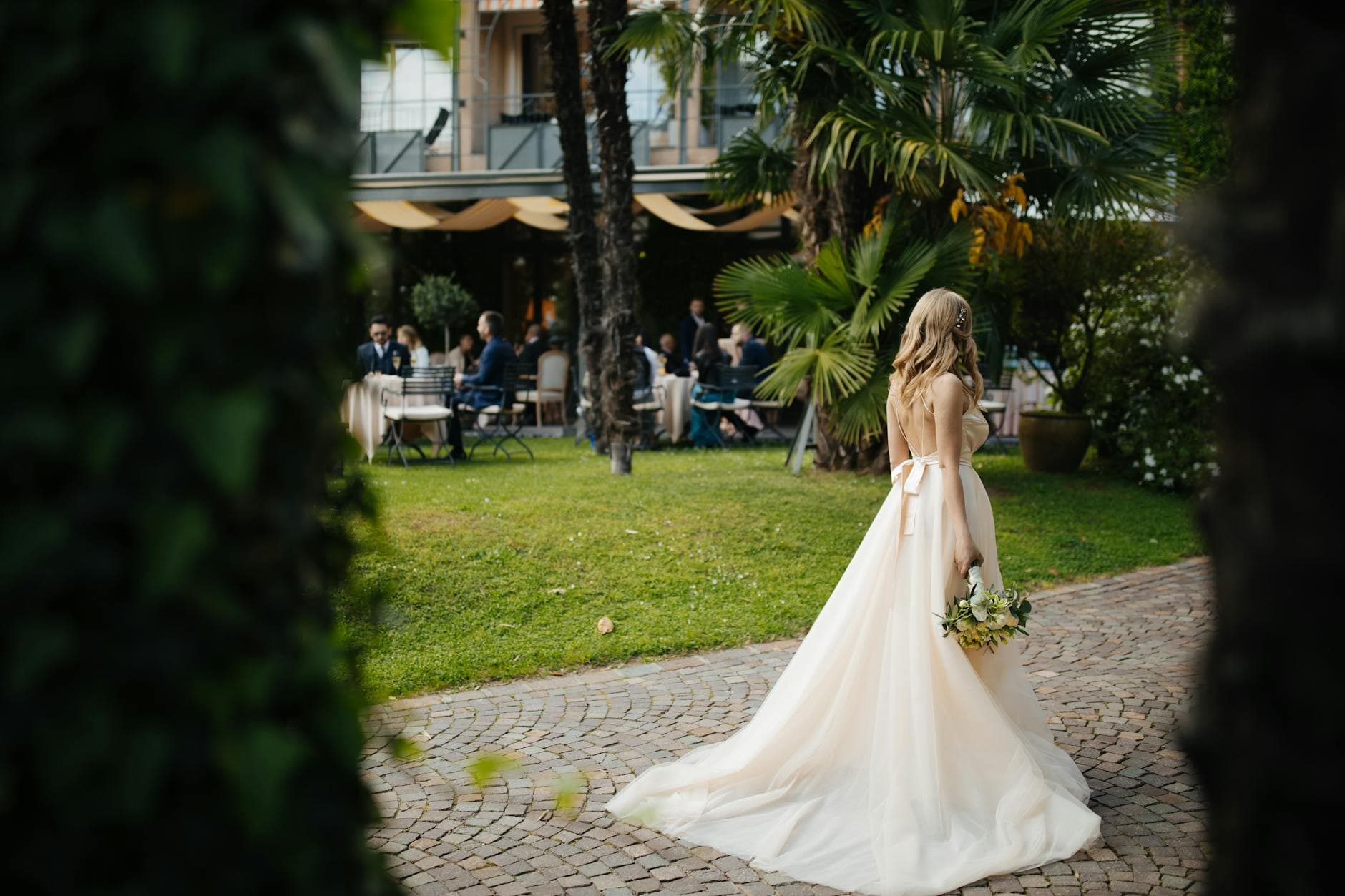
Four hundred pounds. That's how much trash the average wedding produces, according to the zero-waste wedding research compiled by Eunice Beck Photography. Multiply that across 2.3 million U.S. weddings a year, and you get more than 1.5 billion pounds of wedding waste annually. The flowers, the food waste, the single-use decor: it adds up fast.
But there's one waste stream most couples never even think about: photography materials. Disposable cameras on every table. Printed QR cards that get tossed. USB sticks mailed to guests who never plug them in. Photo booth print strips crumpled in purses. It's a surprisingly large pile of stuff that exists for one reason: getting guest photos. And most of it ends up in the trash before the honeymoon is over.
Here's what's interesting. Going digital with your event photos isn't just the greener choice. It's actually the better one. More photos, higher quality, zero waste. No trade-off required.
The Hidden Waste of Event Photography
Picture a typical wedding reception with 150 guests. On each table sits a disposable camera. That's maybe 15 cameras, each wrapped in plastic, each containing a film canister, each powered by a battery. After the reception, someone collects them (hopefully). Then comes developing: chemical processing, plastic negatives, printed photos nobody asked for, envelopes, packaging.
The math is bleak. Fifteen cameras produce roughly 400 exposures. Maybe 80 are usable. The rest? Blurry shots of tablecloths, accidental flashes, a thumb over the lens. You've generated a small mountain of physical waste for 80 okay-ish photos.
And disposable cameras are just the start. Think about the printed table cards with QR codes or upload instructions. The USB drives some couples mail as "digital guestbooks." The photo booth rental that prints two strips per session on thermal paper (not recyclable, by the way). Each of these adds weight to the 400-pound total.
A single wedding produces emissions equivalent to 4-5 people's entire annual carbon footprint, according to research compiled by LBF Photography. Photography waste is a small slice of that pie, but it's one of the easiest slices to eliminate entirely.
What Digital Photo Sharing Actually Replaces
When people hear "digital photo sharing at events," they often think it just means a shared Google Photos album. It can mean that, sure. But a purpose-built QR code gallery replaces several physical items at once:
- Disposable cameras (15-20 per wedding × plastic, batteries, film, chemical processing)
- Printed instruction cards (replaced by a single QR code guests scan with their phone)
- USB drives (replaced by a shared gallery everyone can access and download from)
- Photo booth thermal prints (replaced by a digital gallery guests browse on any screen)
- SD cards and card readers (the photographer's photos go into the same gallery)
That's not a small list. For a 150-guest wedding, you're looking at roughly 2-3 kilograms of material that simply doesn't need to exist. Scale that up to corporate events, conferences, and festivals, and the numbers get meaningful.
The sustainability angle is real, but honestly? Most couples switch to digital sharing because it's just easier. The environmental benefit is a bonus they can feel good about.
How QR Code Photo Sharing Works (30-Second Version)
The concept is simple. You create a digital gallery for your event. The gallery generates a QR code. You put that QR code somewhere visible: on a table card, the welcome sign, the bar menu, a napkin. Guests scan it with their phone camera, a browser-based gallery opens (no app to download, no account to create), and they start uploading.
That's it. No film. No batteries. No developing. No envelopes. Every photo lives in a shared gallery that everyone can access during and after the event.
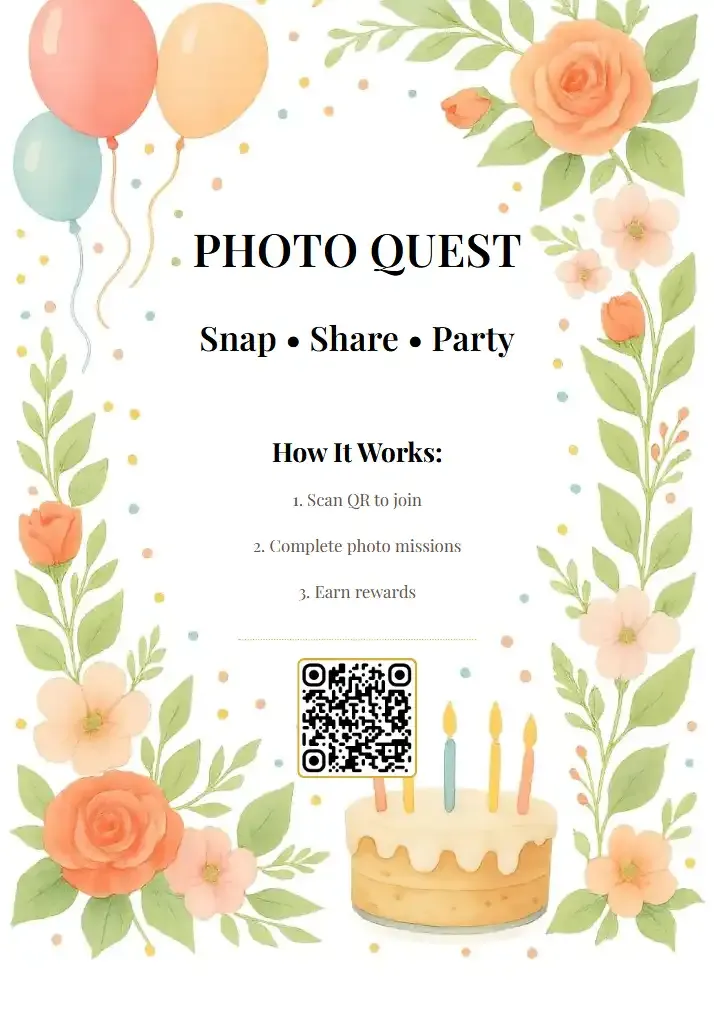
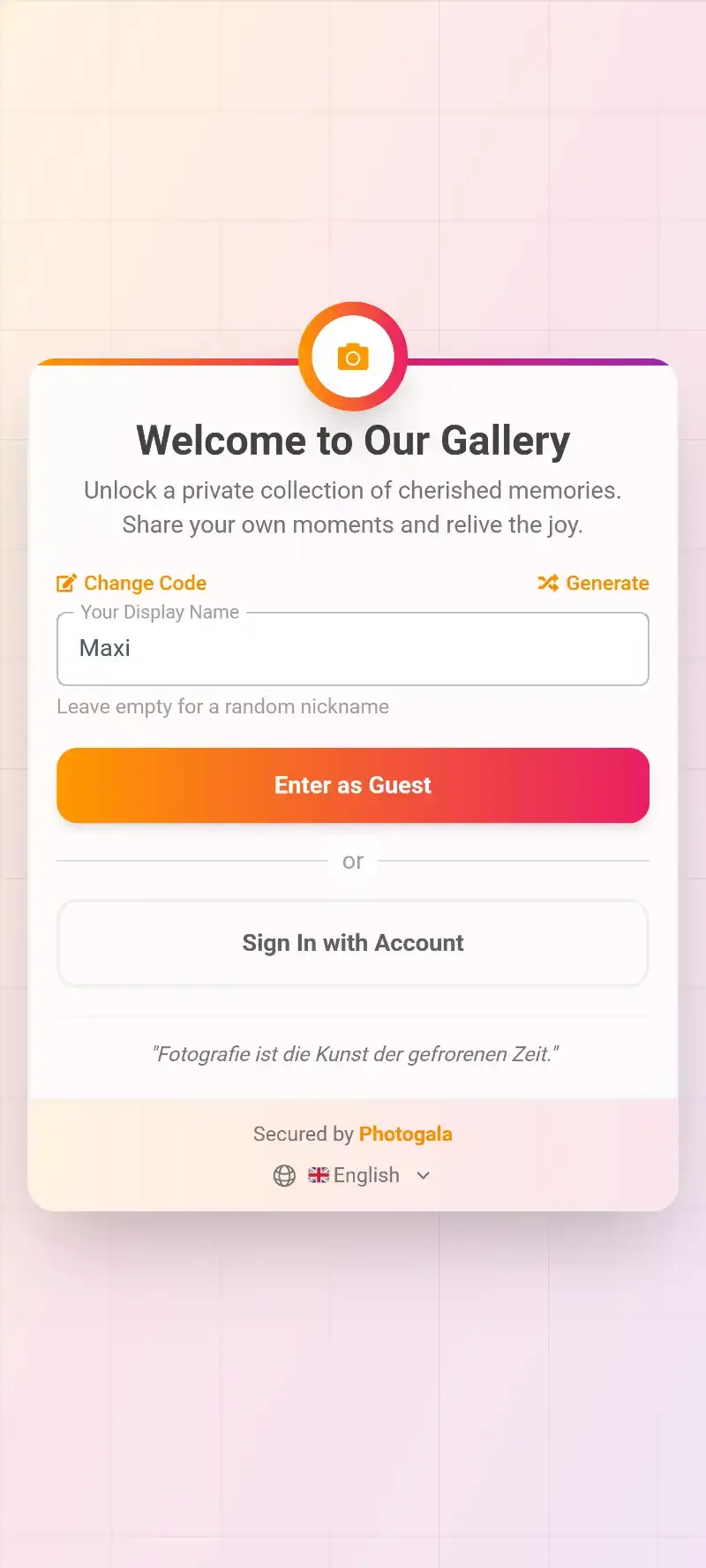
1.Guests scan the QR code with their phone camera
A WedPicsQR survey found that 65% of wedding guests skip downloading new apps entirely. Browser-based QR sharing sidesteps that friction. Guests don't install anything. They don't create accounts. They just scan and upload.
Imagine a 200-guest wedding using this setup. Instead of 80 blurry disposable camera shots, you might end up with 400-600 photos from dozens of different angles and moments the photographer missed. The candid shot of grandma on the dance floor. The kids sneaking cake. The best man's face during the speech. All captured on phones that were already in people's pockets.
See it in action
Every guest photo in one album – no app.
The Quality Gap Nobody Talks About
Here's something that surprised me when I looked into it. People defend disposable cameras for the "aesthetic" (that grainy, nostalgic film look). Fair enough. But modern phone cameras shoot at 12-48 megapixels. A disposable camera shoots at roughly 3-4 megapixels equivalent, with a fixed plastic lens and no autofocus.
You can add a film grain filter to a digital photo in two taps. You can't add sharpness to a blurry disposable camera shot.
There's also the delay problem. Disposable cameras need to be collected, mailed for developing, and scanned (if you want digital copies). That's 2-4 weeks minimum. With a digital gallery, photos are available instantly. Guests can browse them on the drive home. The couple can flip through them at brunch the next morning.
If you're curious about the real math on disposable cameras versus digital sharing, we broke it down in detail: 10 Disposable Cameras. 270 Shots. Maybe 80 Keepers.
Beyond Photos: The Bigger Sustainability Picture
Replacing disposable cameras is the obvious move. But digital event tools eliminate other waste streams too.
Take guestbooks. A traditional paper guestbook weighs about a pound, uses roughly 50 sheets of premium paper, and collects maybe 30 short messages. A digital photo guestbook collects the same messages alongside photos and videos, accessible forever, shareable with anyone, taking up zero physical space.
Or consider printed invitations. Sustainability is now integral to event design across weddings and corporate events in 2026. Digital invitations with embedded QR codes save paper and postage while giving guests instant access to event details and photo galleries.
The 5 Rs framework from zero-waste planning (Refuse, Reduce, Reuse, Replace, Recycle) applies perfectly here. You're not just reducing waste. You're refusing the disposable items altogether and replacing them with something that works better.
What This Looks Like at the Venue
Say you're planning a 120-guest garden wedding. Instead of placing disposable cameras on tables, you print one elegant card per table with a QR code. That's 12 cards instead of 12 cameras. The QR code opens a shared gallery where guests upload photos from their phones.
On a screen near the bar (or behind the DJ booth), a live photo wall cycles through the latest uploads. Guests see their photos appear in real time. It becomes part of the entertainment, not just a collection tool.
1.Guest photos appear on the big screen in real time
By the end of the night, you might have 350-500 photos from 40+ different contributors. No film to develop. No batteries to dispose of. No SD cards to lose. Everything is already organized, backed up, and downloadable.
One honest trade-off: a QR code gallery requires wifi or cell service at the venue. Most venues in 2026 have this, but a remote barn or forest clearing might not. Worth checking beforehand. If signal is spotty, guests can still take photos and upload them later when they're back online.
Making It Happen: The Practical Steps
Go Waste-Free with Your Event Photos
Skip the disposable cameras
Create a digital gallery with a QR code instead. One QR code replaces 15-20 cameras, batteries, and rolls of film.
Place QR codes strategically
Print one card per table, add a code to the welcome sign, and include it on the bar menu. Five placement spots cover the whole venue.
Set up a live photo wall
Connect a TV or projector to display guest uploads in real time. It doubles as entertainment and encourages more uploads.
Download and share digitally
After the event, share the gallery link. Guests download their favorites. No USB sticks, no mailed prints, no waste.
Pro tip for table cards: Use recycled or seed paper for the QR code cards. After the event, guests can plant the card and it grows into wildflowers. Zero waste, maximum charm.
The Numbers That Matter
Those numbers are for a typical 150-guest wedding using a QR code gallery. The exact photo count varies (we've seen anywhere from 200 to 800 depending on how engaged guests are), but even the low end beats 80 usable disposable camera shots.
The waste reduction scales linearly. A corporate event with 300 attendees that would've used 30 disposable cameras? That's 6+ kilograms of photography waste gone. A multi-day festival with 500 guests? The savings multiply across every day.
Not Everything Needs to Be Digital
Full transparency: I'm not arguing that every physical element at an event should be eliminated. A beautiful printed menu, a hand-lettered seating chart, a real flower arrangement: these things have emotional value that digital can't replicate. Some physical elements are worth their environmental cost because they make people feel something.
Photography waste is different. Nobody gets emotionally attached to a disposable camera. Nobody frames the USB stick. Nobody treasures the photo booth thermal strip that faded to blank within six months (thermal paper does that). These are functional items, not sentimental ones. When a digital alternative does the job better, faster, and with zero waste, the switch is obvious.
That garden wedding I described earlier? The 12 QR code cards on recycled paper, the live photo wall on a rented screen, the shared gallery everyone could access from their phones. No film chemicals, no batteries, no plastic. And 400+ photos instead of 80.
That's the kind of trade-off where sustainability and quality point in the same direction. Which, honestly, makes the decision easy.
Four hundred pounds of wedding waste. You can't fix all of it with one decision. But you can eliminate an entire category of it, the photography waste, while ending up with more photos, better quality, and instant access. No trade-off. No compromise.
That's rare in sustainability. Usually "greener" means "worse in some way." Not here.
All of this comes with your own event.
Setting it up takes five minutes. You can build and view everything before you decide.
Starting from €39 one-timeOne-time payment — No subscription
- No App Required
- Setup in 5 Minutes
- 30-Day Money Back
“We used the software at my mum's birthday party. It went down really well 😊”
Written by

I believe event photos should be more than static galleries. They should be live, playful, and unforgettable.
Categories
Related Posts

Bridal Shower Photo Sharing: Collect Every Sweet Moment in One Gallery
Bridal shower photos end up scattered across 15 phones. Here's how to get them all into one gallery before the mimosas wear off.

Maternity Photo Sharing: How to Keep Every Announcement, Bump Shot, and Memory in One Place
Pregnancy announcements land on 4 different apps. Maternity photos get lost in group chats. Here's how to keep every photo in one shared gallery your whole family can access.

Sales Kickoff Photo Sharing: How to Turn a Mandatory Meeting Into a Team Memory
Sales kickoffs are expensive. The photos from them usually disappear into 14 different camera rolls. Here's how to fix that.