Cloud Albums vs QR Code Galleries: Which One Actually Works at Events

Picture a 150-guest wedding. The couple sets up a shared Google Photos album, drops the link in the group chat, and figures the photos will just roll in. By the end of the night, 23 people have joined. The rest either don't have a Google account, got confused by the permissions screen, or simply forgot. Two weeks later, someone starts a WhatsApp group called "Wedding Pics!!!" and it goes exactly how you'd expect: 47 blurry screenshots, a few voice messages that got sent by accident, and maybe 30 decent photos from 8 people.
This is the cloud album problem. Not a tech problem. A people problem.
On the other side, QR code galleries have quietly become the standard at events where organizers actually want photos from everyone, not just the five people comfortable navigating cloud storage. The question isn't which technology is better in a vacuum. It's which one gets your specific group of guests to actually participate.
The Cloud Album Approach: Familiar but Flawed
Shared albums from Apple, Google, or Dropbox are the default choice because they're free and everyone already has the apps (sort of). You create a shared album, send the link, and hope for the best. For a group of tech-savvy friends sharing vacation photos, this works fine. For events with mixed audiences, though, the cracks show fast.
The biggest issue is account friction. Google Photos requires a Google account. iCloud requires an Apple device (or at least an iCloud login). Dropbox requires either the app or a clunky web interface. According to a comparison by Qoleq, cloud tools block participation through account requirements and permission prompts, especially for mixed or less tech-savvy audiences. That uncle who still uses a flip phone? He's out. The colleague who uses a work phone with restricted app installs? Also out.
Then there's the organizational chaos. Photos land in one big pile with no structure. If you want albums for "ceremony" vs. "reception" vs. "dance floor," you're creating multiple shared links and hoping people use the right one. Duplicate uploads pile up. There's no moderation, so someone's accidental screenshot of their banking app sits right next to the first kiss photo. And forget about seeing photos on a big screen in real time: cloud albums aren't built for live photo walls.
Cloud albums work best for small, tech-homogeneous groups (under 20 people, all on the same platform). Once you cross 30-40 guests or mix iPhone and Android users, participation drops significantly.
The QR Code Gallery Approach: Built for Crowds
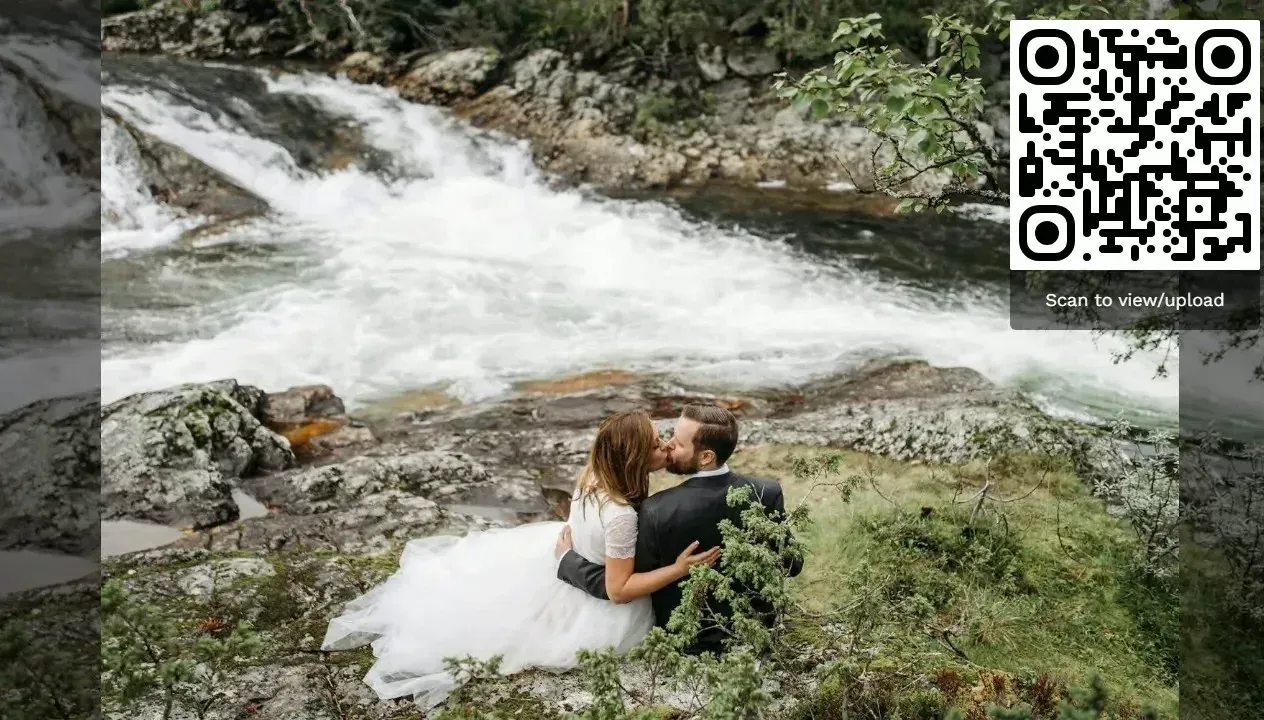
QR code galleries flip the model. Instead of asking guests to find an app, log in, accept permissions, and navigate to the right album, you give them a QR code. They scan it with their phone camera (no app needed, since every modern phone has a built-in QR scanner), a browser opens, and they start uploading. Two taps. Done.
This isn't a theoretical improvement. As EventPlanner.net notes, participation "skyrockets" when you replace shared links with a QR code on a poster or table card because the barrier drops to nearly zero. No accounts. No app installs. No "which link was it again?" messages in the group chat.
The practical difference shows up in numbers. Imagine a corporate team event with 60 people. With a shared Google Photos album, you might get 15-20 contributors if you're lucky, mostly the younger employees. With a QR code on every table, you're looking at 35-45 contributors because the 55-year-old department head can participate just as easily as the intern. That's where the photo count jumps from maybe 80 shots to 250+.
The upload flow takes under 30 seconds
Where Cloud Albums Still Win
Honesty time. Cloud albums aren't useless. They have genuine advantages in specific situations, and pretending otherwise would be dishonest.
Cost: literally free. Google Photos, iCloud Shared Albums, and Dropbox all offer shared albums at no cost (within storage limits). QR code gallery platforms typically cost €25-€139 depending on features. For a casual dinner party with 12 friends who all use iPhones, spending money on a dedicated platform would be overkill.
Long-term storage. Cloud albums live in your existing cloud ecosystem. They don't expire. A QR gallery from most platforms has an active window (Photogala's ranges from 6 to 12 months depending on plan, for example). If you want photos accessible for years without thinking about it, cloud albums win.
Editing integration. Google Photos and iCloud have built-in editors. You can crop, filter, and adjust photos right where they're stored. QR galleries are for collecting and displaying, not editing. If post-processing matters, cloud albums connect to workflows you already use.
For small, same-platform groups who want a permanent album, cloud sharing is the right call. The problems start when your audience grows beyond your immediate circle.
Discover what Photogala can do
Where QR Code Galleries Pull Ahead
Once you're organizing an event with more than 20-30 guests, the math changes. Here's where QR galleries solve problems that cloud albums simply can't.
Guest Experience at Scale
A 2026 industry overview points out that shared cloud albums require one person to own the album while guests deal with app installs and platform-specific IDs. At scale, this creates a bottleneck. Someone always has the wrong device, the wrong account, or no patience for setup.
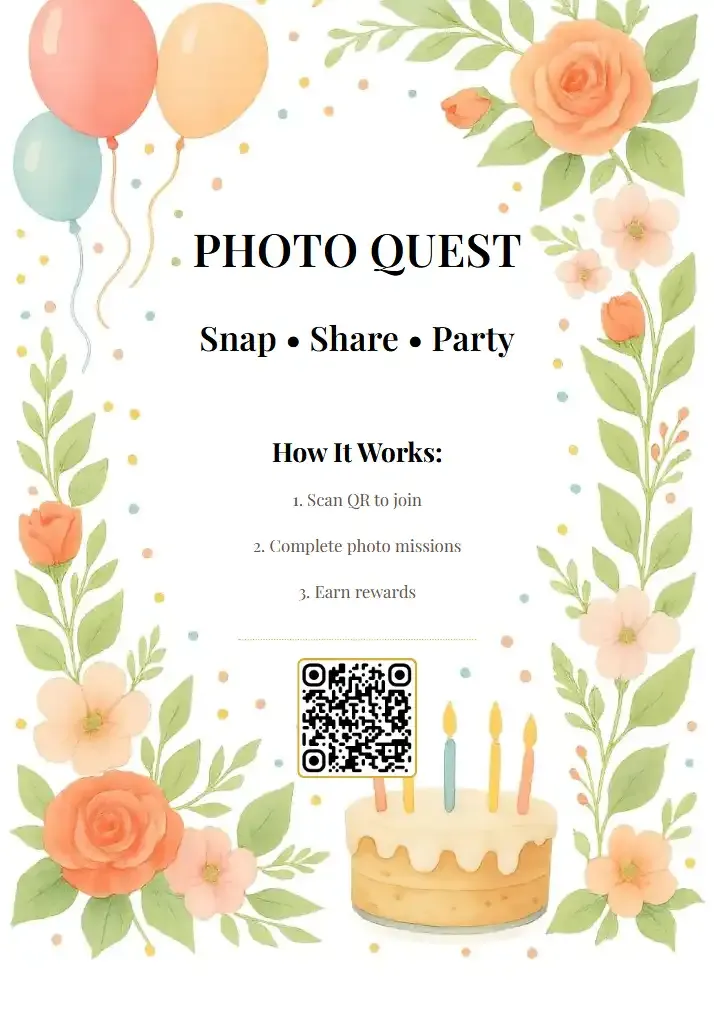
QR galleries get rid of this problem entirely. Print the code on a table card or poster, and the setup conversation becomes "point your camera at this." At a wedding, you might put QR codes on the table napkins, at the bar, and on the ceremony program. Multiple touchpoints, zero explanation needed. You can even design your own codes with Photogala's free QR code generator.
QR Code Generator
Create custom QR codes for your event — link guests directly to your photo gallery.
Real-Time Display
This is the feature gap that surprises most people. Cloud albums are designed for async viewing: someone uploads, someone else checks later. QR galleries can feed uploads directly to a live photo wall on a TV or projector. Imagine a 55-inch screen behind the DJ cycling through guest photos as they come in. People spot themselves, laugh, and immediately upload more. It creates a feedback loop that cloud albums can't replicate.
Organization and Moderation
With cloud albums, every photo goes into one bucket. With a platform like Photogala, you get content moderation (approve photos before they hit the big screen), albums and smart albums that auto-sort by rules, and on the Deluxe plan, AI face recognition that lets guests find their own photos with a selfie. If you're running a corporate event, moderation alone is worth the switch. Nobody wants a NSFW photo appearing on the projector during the CEO's speech.
Gamification and Engagement
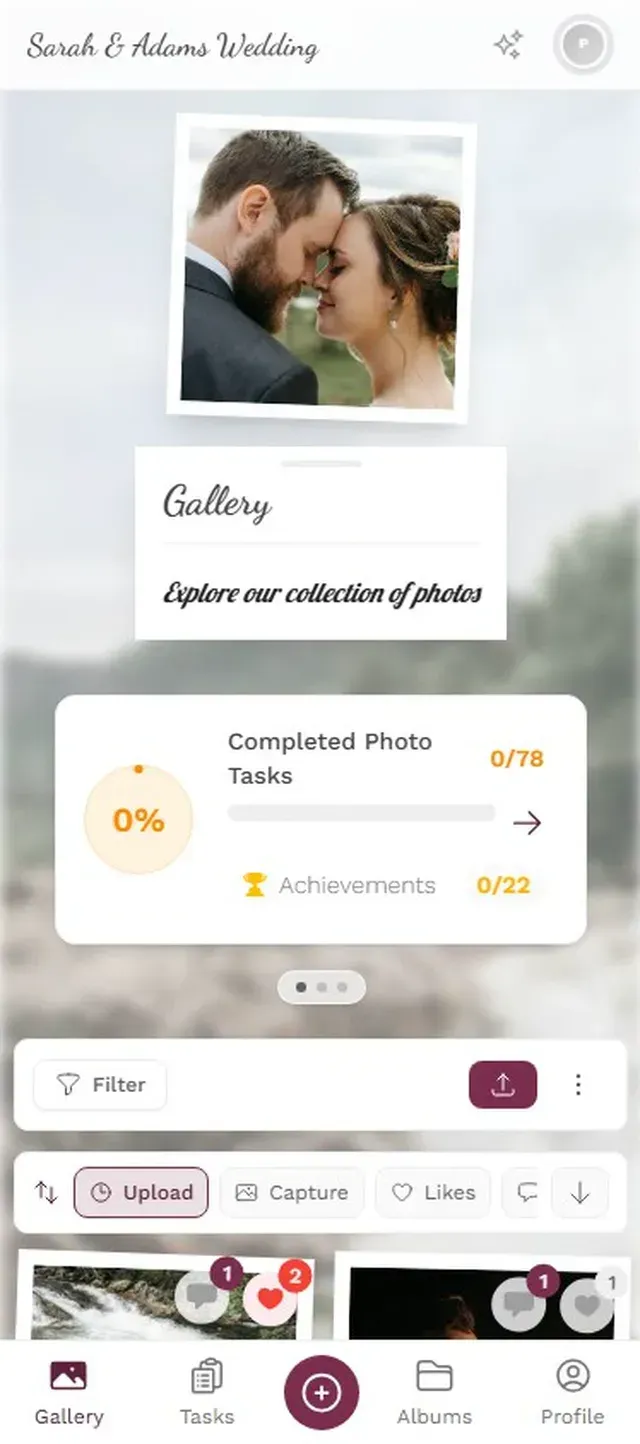
Here's where the comparison gets uneven. Cloud albums are passive. Upload, done. QR gallery platforms can add photo challenges, leaderboards, achievements, and even real-world rewards. Challenges can include example preview photos, so you can set up creative formats: "recreate this movie poster pose" or "take a photo that matches this meme." The result is guests uploading 3-4x more than they would with a plain album. Our guide on how to collect photos from guests automatically covers the mechanics in detail.
Side-by-Side: The Honest Comparison
Rather than arguing in abstracts, here's a concrete breakdown. The "QR Gallery" column reflects what a mid-range platform like Photogala offers across its plans, since most event organizers pick Premium or Deluxe.
Cloud Albums vs. QR Code Galleries
| Feature | QR Code Gallery | Google Photos | iCloud Shared |
|---|---|---|---|
| Guest account required | Google account | Apple ID | |
| App install required | on Android | on non-Apple | |
| Works on any device | |||
| Upload from browser | |||
| Live photo wall / TV display | |||
| Content moderation | |||
| Photo challenges / gamification | |||
| AI face recognition | Deluxe plan | private only | private only |
| Smart albums (auto-sort) | |||
| Download all as ZIP | |||
| Custom branding | |||
| Cost | €39-€119 one-time | Free | Free |
| Storage limit | Unlimited (paid plans) | 15 GB shared | 5 GB shared |
| Active period | 6-12 months | Permanent | Permanent |
Two things stand out. First, cloud albums win on cost and permanence. Second, QR galleries win on everything related to the actual event experience: participation, display, moderation, engagement.
The Hybrid Approach Nobody Talks About
Here's a thought worth considering: you don't have to pick just one.
Use a QR code gallery for the event itself. It captures the energy, feeds the photo wall, runs the challenges, and gets grandma uploading next to the best man. After the event, download the full archive as a ZIP and drop it into a Google Photos or iCloud album for long-term storage. Best of both worlds.
This is especially smart for weddings. The QR gallery handles the night-of chaos, and the cloud album becomes the permanent archive the couple revisits on anniversaries. If you're curious how this fits into your broader photo strategy, our piece on wedding hashtags vs. QR code galleries breaks down the full decision matrix.
Pro tip: After your event, use bulk download to grab everything in original quality. Then import into your preferred cloud service for permanent backup. The gallery stays online for 6-12 months, so there's no rush.
Which Should You Choose?
The decision tree is simpler than it seems.
Cloud album territory: your group is under 20 people, everyone uses the same platform (all iPhones or all Google), you don't need real-time display, and you want free permanent storage. Save your money.
QR code gallery territory: your event has 30+ guests, your audience is mixed (ages, devices, tech comfort), you want a live photo wall, you want photo challenges or gamification, or you need content moderation. The participation jump alone usually justifies the cost.
Or just do both. QR gallery for the event, cloud archive afterward. Maximum participation during, permanent storage after. This is what most wedding couples end up doing.
One honest limitation of QR galleries: they cost money. Photogala's paid plans start at €39 (one-time, not a subscription), and you can try it free with the demo plan first. But for a casual game night with 8 friends, that's money you don't need to spend. Our cost guide for event photo sharing has the full breakdown if budget is your main concern.
Getting Started with a QR Code Gallery
Create your gallery
Sign up and set your event name, date, and style. Takes about 2 minutes. No credit card needed for the free demo.
Print or share the QR code
Put it on table cards, posters, or the event invite. Photogala generates the code and printable templates for you.
Watch the gallery fill up
Guests scan and upload from their phones. Photos appear in the gallery (and on the photo wall) in real time.
Common Questions
The photographer delivers the polished shots. The cloud album stores the memories long-term. But the QR gallery? That's what captures the 250 unscripted moments from 60 different perspectives that make the event feel alive when you look back at it. Different tools, different jobs.
Ready to create your gallery?
Start sharing your event photos with guests in minutes.
Create GalleryWritten by

I believe event photos should be more than static galleries. They should be live, playful, and unforgettable.
Categories
Related Posts
How to Moderate Guest Photos at a Public Event (Without Losing Your Mind)
Public events with open photo uploads need a plan. Here's how to keep your gallery clean, your guests happy, and your legal team calm.

How to Print Photos From a Shared Event Gallery
You collected hundreds of guest photos. Now what? Here's how to turn your shared event gallery into prints, books, and keepsakes worth keeping.

How to Archive and Back Up Your Event Photos for the Long Term
Most event photos disappear within two years. Here's how to preserve them properly, from the 3-2-1 backup rule to choosing the right file format.