Networking Event Photo Sharing: Putting Faces to Names


Picture this: it's 9 AM on a Monday, two days after a great industry mixer. You're staring at a stack of business cards on your desk. There's a "Sarah" from a fintech company, a "Marcus" who does something with supply chains, and a card with a coffee stain that could belong to anyone. You had a really useful conversation with someone about a potential partnership. You remember the conversation. You remember they were wearing a blue blazer. You cannot, for the life of you, remember their name.
This is the networking event paradox. You invest time and energy to meet people, exchange ideas, and build connections. Then you walk out the door and half of those connections dissolve because human memory is terrible at pairing faces with names.
Why We Forget Names (but Remember Faces)
There's a neuroscience reason this keeps happening. As Common Events explains, our brains are wired to remember information we perceive as meaningful, and names are often arbitrary. They don't trigger strong mental images. At a busy networking event, where you're shaking hands every three minutes, there's simply too much competing for your attention. The name gets dropped before it ever makes it to long-term memory.
Faces, though? We're remarkably good at recognizing faces. You'll spot someone from a conference across a crowded airport six months later. The problem isn't recognition. It's retrieval: connecting that familiar face to the right name, company, and conversation.
This is where event photos stop being a nice-to-have and start being a real professional tool.
The After-Event Photo Problem
Most corporate events have a photographer. The photographer takes 300-500 shots. Those photos end up... somewhere. A shared Google Drive folder nobody bookmarks. An email attachment that gets buried. A company intranet page from 2024 that nobody visits. Getting event photos to the people who actually need them is a problem most organizers haven't solved.
And that's just the professional photographer's shots. What about the candid moments between sessions, the group photo at the rooftop bar, the whiteboard sketch someone snapped? Those live on individual phones and never get shared. According to Spoken Motion Studio, professional event photography captures moments that become powerful business assets. But those assets are worthless if nobody can access them.
The real missed opportunity, as The Happy Manager points out: the conversations, team moments, and shared experiences that brought people together "often disappear as soon as everyone returns to work the next morning." For networking events specifically, photos are the bridge between a forgotten handshake and a LinkedIn connection that actually goes somewhere.
A Gallery That Everyone Can Reach in 30 Seconds
The simplest fix is also the most effective. Instead of collecting photos after the event and emailing them to a distribution list two weeks later, you set up a shared gallery before the event starts. Guests contribute to it in real time. No app installs, no account signups, no friction.
With a QR code gallery, you print codes on name badges, table tents, or the event signage. Attendees scan with their phone camera, type their name, and start uploading. That's it. The professional photographer can upload their shots to the same gallery. So can the CEO who snapped a candid group photo. Everything ends up in one place, accessible to everyone who attended. If you want to share photos across attendees, staff, and even press, a single link covers all of them.
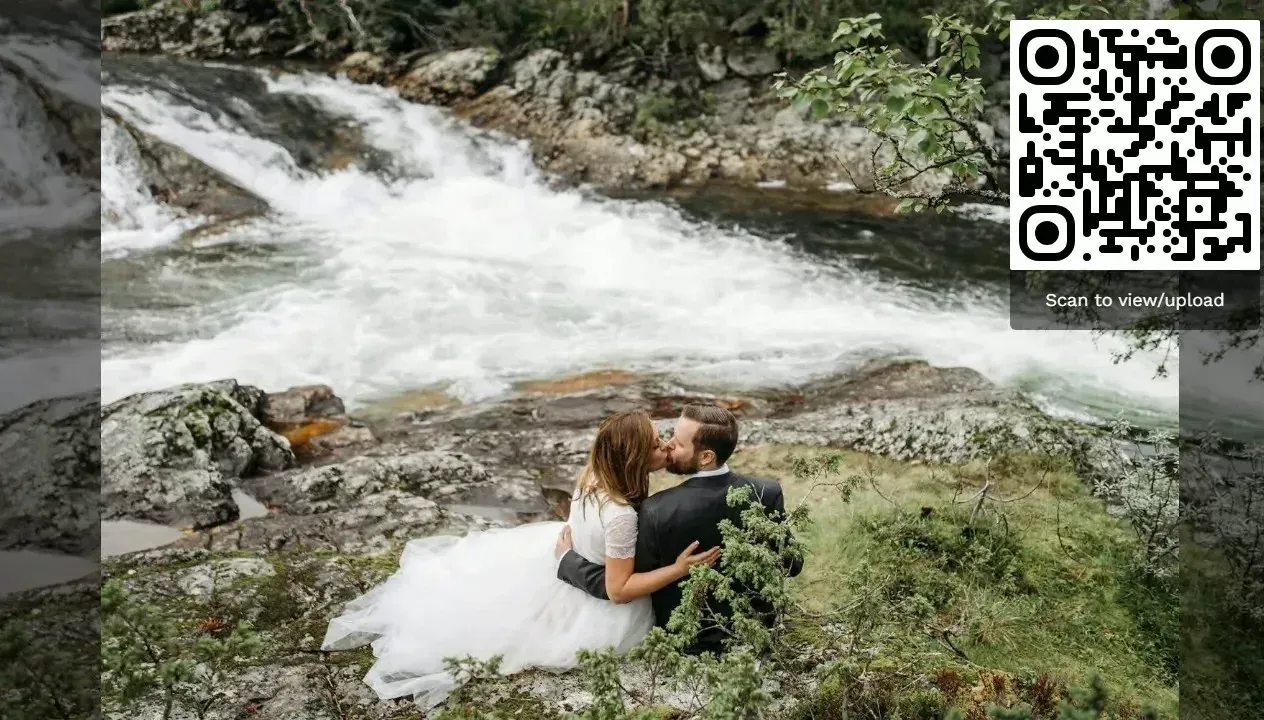
1.No app needed. Scan, name, upload.
The key difference from a WhatsApp group or shared album: the gallery is organized, browsable, and permanent. No one needs to be added to a chat. No photos get lost in a thread. And if you want to find that person in the blue blazer three weeks later? You can scroll through or, with AI face recognition, just upload a selfie and let the system find every photo of you (or anyone else you're looking for).
See it in action
Every guest photo in one album – no app.
Putting Faces to Names: The Practical Workflow
Here's how this actually plays out at a networking event. Say you're organizing a 60-person industry meetup at a coworking space. You create a branded QR code and print it on the check-in desk signage and a few standing banners around the venue.
The Face-to-Name Workflow
During the event
Attendees scan the QR code and upload photos as they mingle. The photographer uploads their shots too. A live photo wall near the bar shows uploads in real time, which encourages more people to contribute.
That same evening
You send a follow-up email with a link to the gallery. Attendees browse through while the event is still fresh. They spot the person they spoke to and finally connect name + face + conversation.
The follow-up
Three days later, someone uploads a selfie to find all their photos. They download a great group shot for LinkedIn. They tag the connection they wanted to remember. The event keeps paying dividends.
QR Code Generator
Create custom QR codes for your event — link guests directly to your photo gallery.
This isn't theoretical. The psychology is straightforward: seeing a photo of someone you spoke with reactivates the memory of the conversation. The name on the photo (because every uploader enters their name) does the rest. It's the same principle behind remembering names through mental imagery, except the photo does the heavy lifting for you.
When AI Does the Matching for You
Here's where it gets interesting in a practical way. Browsing a gallery of 200 photos to find one person is tedious. But selfie search flips the process. An attendee uploads a quick selfie, and the AI finds every photo they appear in across the entire gallery. Every group shot, every candid moment, every background appearance.
For networking events, this solves a specific problem. You met someone. You don't remember their name, but you vaguely remember being photographed near them during the keynote. Search your own face. Find photos from that time window. There they are, two people to your left, and now you can check the uploader name or ask the organizer.
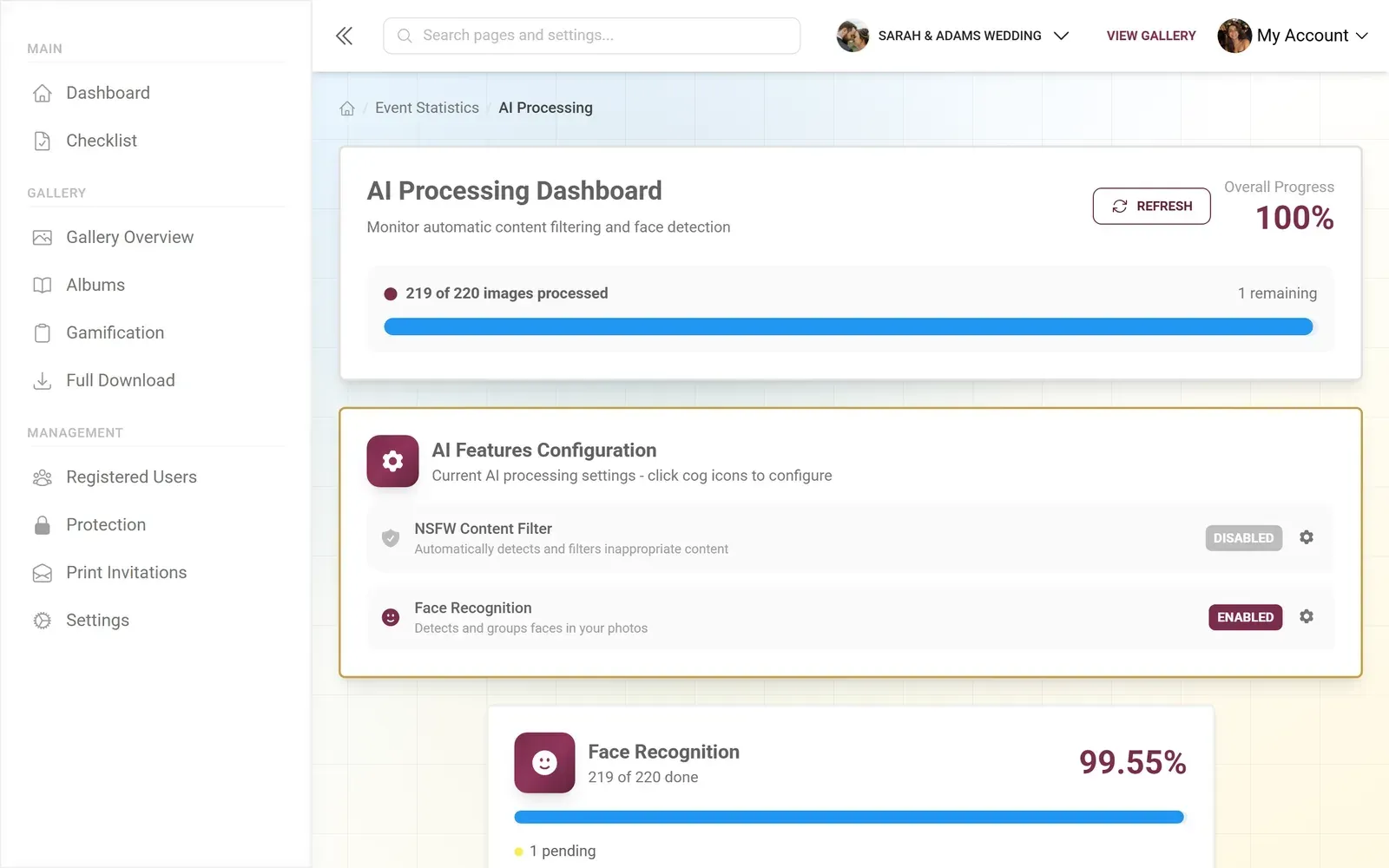
1.Filter the entire gallery by face with one selfie
The face recognition system also powers person albums, which automatically group all photos of a specific person. For recurring networking series, this means attendees can build a visual history of their participation over multiple events.
Pro tip for organizers: Set up the QR code gallery a day before and upload a few venue/setup photos yourself. When the first attendees scan the code, they'll see the gallery already has content, which lowers the barrier to upload. Nobody wants to be the first person to post in an empty gallery.
The Live Wall Effect
There's a secondary benefit to networking event photo sharing that organizers often underestimate: the live photo wall. Mount a screen near the registration desk or the drinks station. As photos get uploaded, they appear on the screen in real time.
At networking events, this creates an unexpected icebreaker. People cluster around the screen. They point at photos. They laugh at candid shots. "That's a good one of you!" becomes a conversation starter between two people who haven't met yet. The photo wall doesn't just display content; it creates new connections. As Koma Productions notes, candid photography captures real emotions and "communicates far more than posed shots." A live wall filled with authentic moments gives people something real to talk about.
One honest limitation: photo walls work best at events where people are already comfortable (industry mixers, alumni meetups, team offsites). At more formal conferences with 500+ attendees, a photo wall might feel out of place unless it's positioned in the social/break area rather than the main hall.
What About Privacy?
This comes up at every corporate event, and it should. Not everyone wants their photo taken and displayed on a screen. A proper setup handles this through content moderation: every photo goes through an approval queue before it appears on the wall or in the public gallery. You assign a team member as moderator (takes about 10 seconds per photo to review), and nothing gets published without explicit approval.
For GDPR-conscious European events, this isn't optional. The photo sharing etiquette rules we've covered before apply doubly at professional events. Brief your photographer. Add a note to the event signage that photos may be shared in a gallery. Give attendees the choice to opt out. A moderation dashboard with an AI-powered NSFW filter as a safety net catches anything inappropriate before it ever goes live.
Making It Work for Your Next Event
If you're organizing corporate events with a networking component, here are the practical details that matter. Sharing corporate event photos with staff and press is straightforward once the gallery is set up. The same link works for everyone.
- Print QR codes on name badges. This is the highest-conversion placement. Every time someone looks at a badge, they see the code. At trade shows, badge placement consistently outperforms table tents. You can use Photogala's free QR code generator to create branded codes in minutes.
- Time your follow-up. Send the gallery link within 2 hours of the event ending. Memory decay is steep. A same-day link gets 3-4x more engagement than a next-week email.
- Include the gallery link in your LinkedIn post. When you post about the event, link the gallery. Attendees share it, non-attendees feel FOMO, and your next event gets more signups.
- Use photo challenges strategically. A challenge like "Best business card exchange moment" or "Keynote speaker selfie" gives people a fun reason to upload rather than just documenting.
- Download the full gallery afterward for your event recap blog, internal newsletter, or next year's promotional materials.
For multi-track conferences with breakout rooms, a single gallery works better than separate ones. Attendees move between tracks, and one shared space means the developer who sat next to the marketing lead at lunch can find that photo regardless of which track either attended. We wrote a full guide on conference photo sharing across multiple tracks if your event is larger.
The honest trade-off: Photogala is browser-based, not a native app. That's a feature for networking events (zero install friction), but it means push notifications don't work the same way. Attendees won't get a ping when new photos appear unless they have the gallery tab open. The live photo wall compensates for this at the venue, but for post-event engagement, you'll need that follow-up email with the gallery link.
The blue-blazer person from the opening scenario? With a shared gallery and face search, you'd have their name, their photo, and a conversation starter for the follow-up email. That's the difference between a networking event that felt productive and one that actually was.
All of this comes with your own event.
Setting it up takes five minutes. You can build and view everything before you decide.
Starting from €39 one-timeOne-time payment — No subscription
- No App Required
- Setup in 5 Minutes
- 30-Day Money Back
“We were really thrilled, and everything went so much more smoothly, from the seating plan all the way to the photo games! Simply great! Highly recommended!”
Written by

I believe event photos should be more than static galleries. They should be live, playful, and unforgettable.
Categories
Related Posts

Bridal Shower Photo Sharing: Collect Every Sweet Moment in One Gallery
Bridal shower photos end up scattered across 15 phones. Here's how to get them all into one gallery before the mimosas wear off.

Maternity Photo Sharing: How to Keep Every Announcement, Bump Shot, and Memory in One Place
Pregnancy announcements land on 4 different apps. Maternity photos get lost in group chats. Here's how to keep every photo in one shared gallery your whole family can access.
Sales Kickoff Photo Sharing: How to Turn a Mandatory Meeting Into a Team Memory
Sales kickoffs are expensive. The photos from them usually disappear into 14 different camera rolls. Here's how to fix that.