Real-World Rewards at Events: Gamification Beyond the Screen

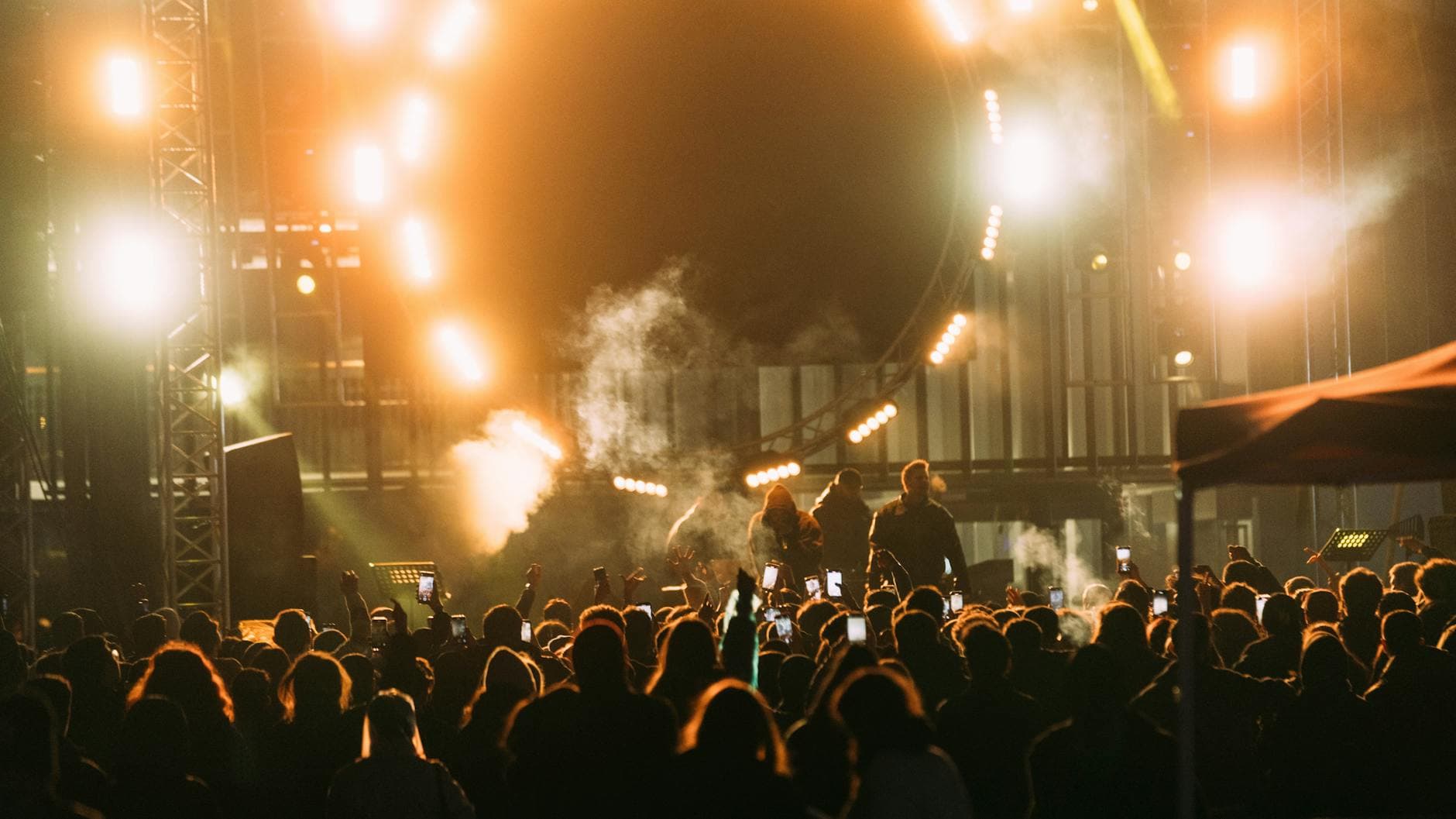
Picture a corporate summer party. There's a DJ, a buffet, and somewhere in the corner, a screen showing a leaderboard nobody's looking at. Forty people stand around in clusters they already know, checking their phones, counting down until it's polite to leave. The event planner spent weeks organizing this. The engagement? Flat.
Now picture the same party, but with one twist: a printed card on every table that reads "Upload 5 photos, show the barkeeper your achievement badge, get a free cocktail." By 9 PM, 34 out of 40 people have uploaded at least one photo. The leaderboard is suddenly interesting because the top three uploaders win a half-day off work on Monday.
The difference isn't the technology. It's the reward.
Why Digital Points Alone Don't Work
Gamification has a credibility problem. The word conjures images of meaningless badges, arbitrary point systems, and progress bars that track nothing anyone cares about. And honestly? Most implementations deserve that reputation.
A 2024 Gartner-referenced study by Momencio found that gamification strategies can double participation metrics at events. But the key word is can. Slapping a points counter on an app doesn't automatically make people care. The research consistently shows that gamification works when rewards are meaningful to the audience, and fails when they're generic or purely digital.
Think about it from the guest's perspective. You're at a company event. Someone tells you there's a photo challenge. You can earn 50 points for uploading a team selfie. Great. What do 50 points get you? Nothing? A spot on a leaderboard that disappears tomorrow? Why would you bother pulling out your phone, interrupting a conversation, posing for a photo, and uploading it?
Now change the incentive: that team selfie earns you a raffle ticket for a €100 restaurant voucher. Suddenly the math is different. The effort is the same, but the payoff is real. That's the gap between gamification that decorates an event and gamification that changes how people behave at it.
The Psychology: Why Tangible Beats Virtual
There's a reason scratch-off lottery tickets outsell digital lottery apps. Humans are wired to respond more strongly to things they can touch, hold, or consume. Behavioral economists call this the "tangibility effect," and it's well-documented: people assign higher value to physical rewards than equivalent digital ones, even when the monetary value is identical.
At events, this plays out in predictable ways. A digital badge for "Most Creative Photo" might get a screenshot shared on Slack. A physical trophy, a bottle of wine, or a printed polaroid of the winning shot gets carried around the venue, shown to colleagues, and talked about for weeks. The reward becomes a conversation piece, which means the gamification system becomes visible to people who haven't participated yet. It's a feedback loop: real rewards create social proof, social proof drives more participation.
Research from beamian supports this: events using gamification with tangible incentives saw a 30% increase in information retention and 40% more interactions between participants. Those aren't small numbers. And they're specifically tied to reward structures that go beyond screen-based recognition.
The sweet spot for event rewards: low monetary value, high fun value. A custom cocktail, a silly trophy, a printed photo in a frame, an extra break at a conference. The best rewards feel like treats, not transactions.
What Real-World Rewards Look Like in Practice
"Real-world rewards" sounds vague until you see it in action. Here's what it means concretely: guests complete photo challenges, earn achievements, and then redeem those achievements for something physical at the event. Not later. Not via email. Right there, at the bar, at a redemption table, or from the host.
Photogala's reward system works like this: event hosts create achievements ("Upload 5 photos," "Complete the scavenger hunt," "Get 10 likes on a single photo") and attach real-world rewards to them. When a guest unlocks the achievement, they show it on their phone. The host or barkeeper marks it as claimed. Done. No app download needed, no complicated redemption codes.
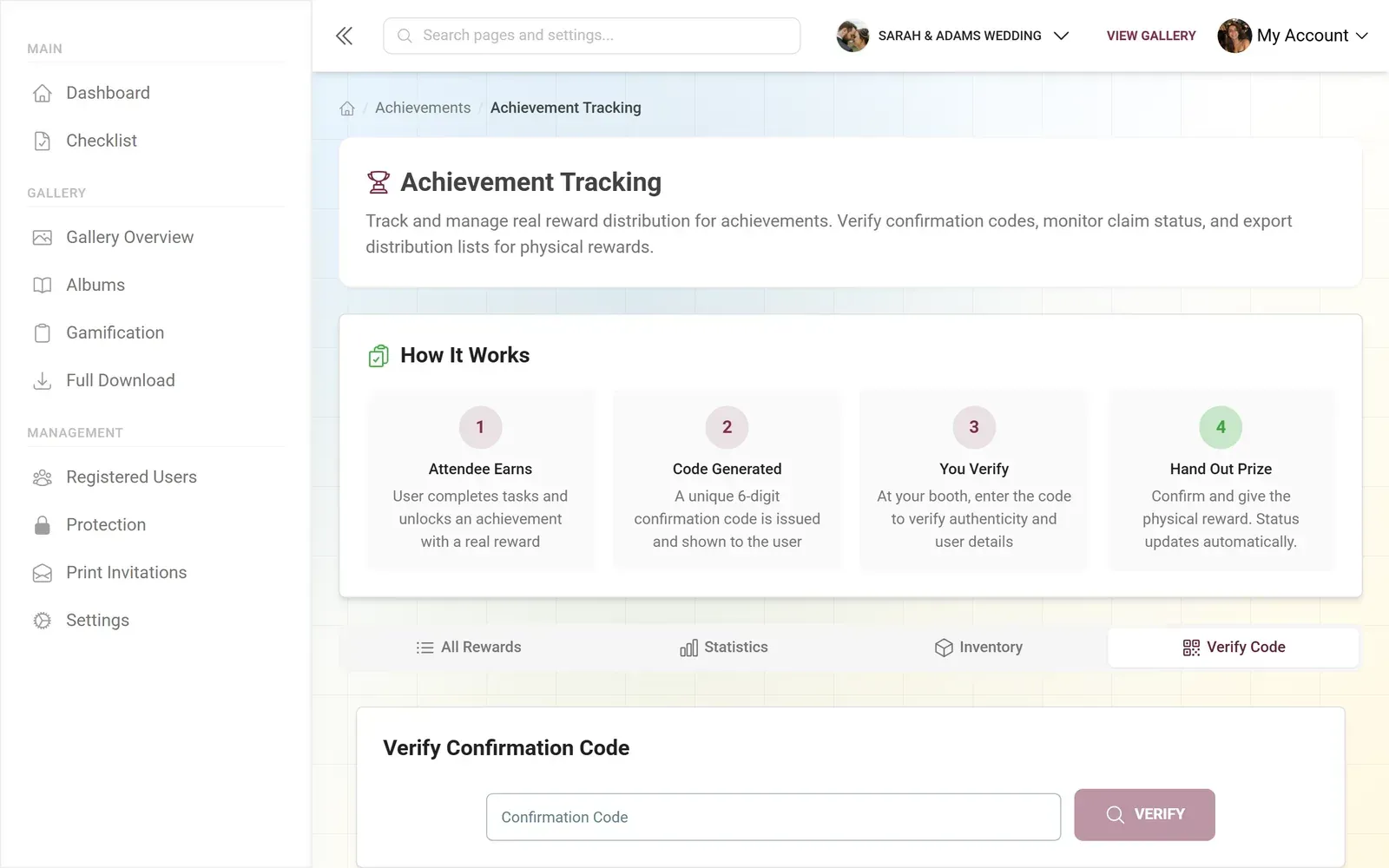
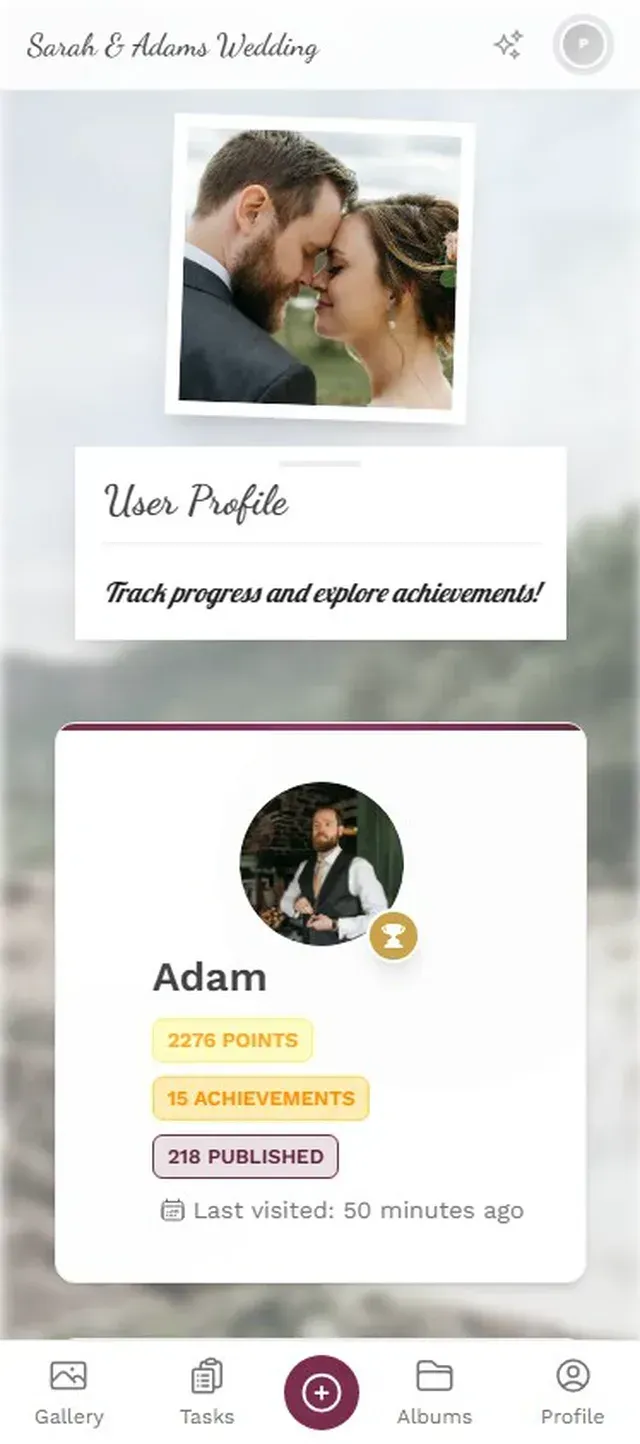
1.Guests show their unlocked achievement to claim the reward
The inventory management is the detail that surprised me when I first saw it. Hosts set how many of each reward are available (say, 20 cocktail vouchers), and the system tracks claims in real time. When the cocktails run out, the achievement still exists but the reward shows as "claimed out." No awkward conversations at the bar about promises you can't keep.
See it in action
Every guest photo in one album – no app.
Reward Ideas That Actually Work (Tested at Real Events)
Not all rewards are created equal. Some drive a frenzy of participation. Others sit untouched. After looking at how different corporate events and celebrations use reward systems, clear patterns emerge.
Tier 1: Instant Gratification (Low Effort, Quick Reward)
These work for getting people into the system. The effort is minimal, the reward is immediate, and the goal is to get guests comfortable with the upload flow.
- Free drink voucher for uploading your first 3 photos
- Skip-the-line pass for the dessert buffet after completing one challenge
- Custom sticker or pin from a redemption table after earning your first badge
- Extra raffle ticket for every 5 uploads (stackable)
The key insight: the first upload is the hardest. Once someone has scanned the QR code and uploaded once, they'll typically upload again without prompting. The instant reward removes the friction of that first interaction.
Tier 2: Social Competition (Medium Effort, Visible Reward)
These tap into competitive instincts and create visible social dynamics at the event. They work best when the leaderboard is displayed on a screen where everyone can see it.
- "Photographer of the Night" trophy for the person with the most likes on their photos
- Custom printed photo in a frame for the top 3 leaderboard finishers
- Priority seating or VIP upgrade at a conference for the most active participant
- Gift card for the overall winner of a photo scavenger hunt
The trick with competition rewards is visibility. If the prize is announced but nobody can see the standings, the competitive energy fizzles. Put the leaderboard on a TV near the entrance or behind the bar. People check it compulsively. One event planner described guests refreshing the leaderboard between courses at dinner.
Tier 3: Experience Rewards (High Effort, Memorable Payoff)
These are for guests who go all-in. They're the ones who complete every challenge, rally their table to participate, and upload 30+ photos. They deserve something special.
- Half-day off work (for internal company events, this is the ultimate reward)
- Dinner for two at a nice restaurant (for weddings or celebrations)
- VIP experience at the next company event
- Featured in the company newsletter with their best event photo
Experience rewards don't need to cost much. A half-day off costs the company nothing but means everything to the employee. A featured spot in the newsletter costs zero but gives genuine recognition. The best rewards at team building events are creative, not expensive.
Setting Up Rewards Without Overcomplicating It
Here's where most event planners overthink it. You don't need 15 achievement tiers with complex unlock conditions. Three to five rewards at different effort levels is plenty for a typical event of 50-150 people.
A Simple Reward Setup That Works
One easy reward
Upload 3 photos = free drink. Gets 80% of guests into the system. Set inventory to match your bar tab.
One challenge reward
Complete a specific photo challenge = custom printed photo or a small prize. Drives engagement with the creative tasks.
One grand prize
Top of the leaderboard at the end of the night = the big reward. Gift card, experience voucher, or bragging rights trophy.
That's it. Three rewards, three effort levels, three different motivations (ease, fun, competition). You can add more if the event is large or multi-day, but most events don't need more complexity than this.
The moderation dashboard lets you monitor everything from one screen. You can see who's uploading, which challenges are being completed, and how many rewards have been claimed. If the cocktail vouchers run out faster than expected, you can adjust on the fly.
One honest trade-off: real-world rewards require someone at the event to handle redemptions. At a wedding, that's usually a bridesmaid or groomsman. At a corporate event, it's whoever runs the bar or a designated "game master." It's not a lot of work, but it's not zero work either. Budget 2-3 minutes per redemption in your event planning.
Why Most Event Gamification Fails (and How Rewards Fix It)
I keep coming back to a stat from Fielddrive's 2026 research: 64% of event attendees prefer immersive, hands-on experiences over passive formats. Sixty-four percent. That means nearly two-thirds of your guests are actively hoping for something more engaging than "sit and listen" or "stand and mingle."
Most gamification attempts fail not because the mechanics are wrong, but because the incentive structure is invisible. Points accumulate in an app nobody opened. Badges unlock with no fanfare. The leaderboard exists but nobody mentioned it during the welcome speech. There's no bridge between the digital system and the physical event.
Real-world rewards are that bridge. They make the digital game visible in the physical space. When one person walks up to the bar, shows their phone, and gets a free cocktail, three people nearby ask "how did you get that?" That question is worth more than any push notification.
If you've seen how photo challenges work at Christmas parties or non-tech-savvy guests engage when the barrier is low enough, you know the pattern: the technology needs to disappear behind the experience. QR code, browser-based upload, no app. And the reward needs to be something you can see, taste, or hold.
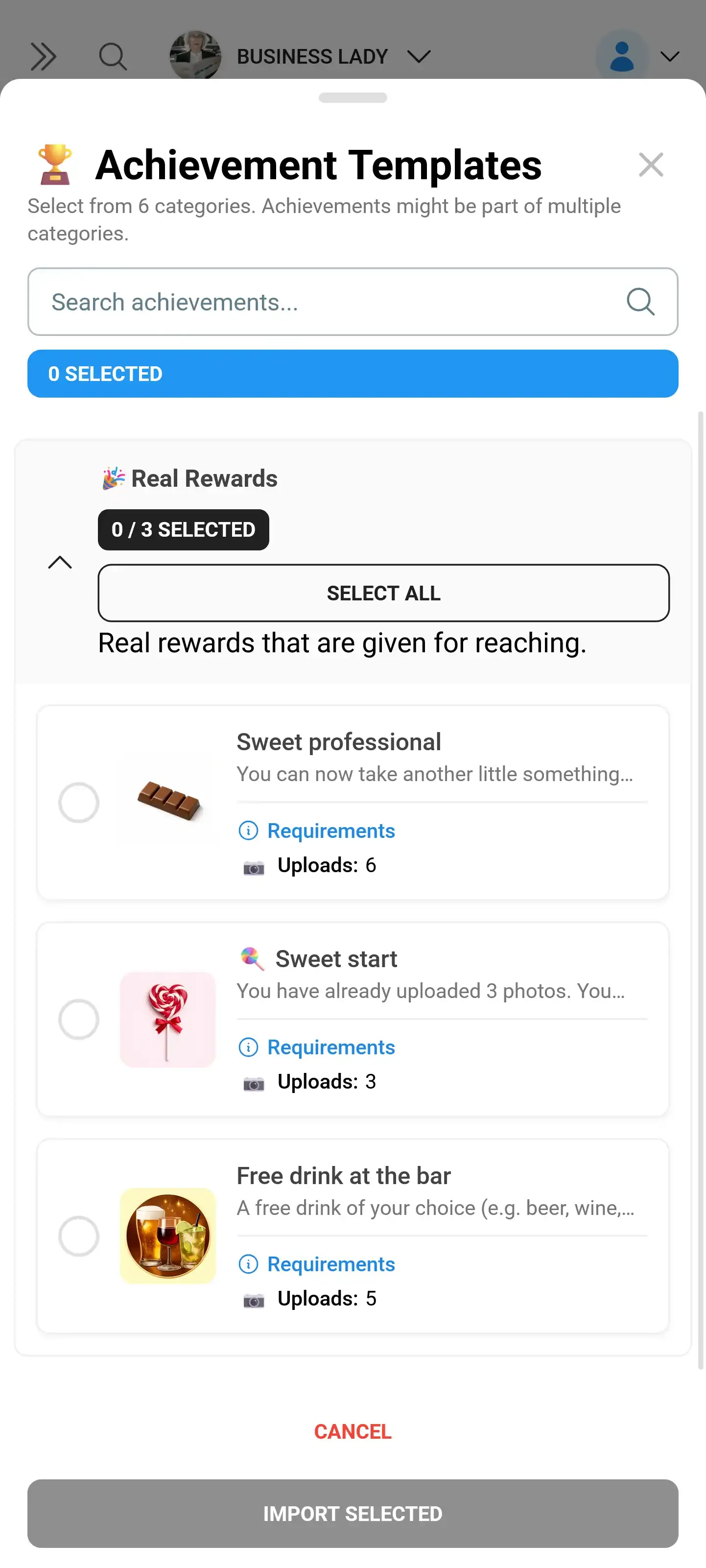
1.Guests track their progress toward rewards
Numbers That Make the Case to Your Boss
If you're reading this because you want to pitch gamified rewards at your next corporate event, you need data. Here's what the research says, translated into language your CFO cares about.
The participation numbers come from Gartner-referenced research on event gamification. The retention and interaction data from beamian's analysis of gamified trade fairs and corporate gatherings. And the 64% preference stat is from Fielddrive's 2026 survey of corporate event attendees.
But here's the number I find most compelling for the budget conversation: the cost. A reward system using Photogala's Deluxe plan costs €119 total. Not per month. Not per attendee. One payment for up to 500 uploaders, unlimited photos and videos, plus the full gamification stack with real-world reward management. Add maybe €200-400 in actual reward costs (drinks, gift cards, printed photos), and you're running a complete engagement program for under €600.
Compare that to hiring an event entertainer (€500-1,500), renting a photo booth (€400-800), or buying branded swag nobody wants (€5-15 per person × 100 people = €500-1,500). Gamified rewards cost less and create more lasting engagement.
Find the right plan for your event
Beyond Corporate: Rewards at Weddings, Birthdays, and Festivals
Corporate events are the obvious use case for structured reward systems, but some of the most creative implementations happen at personal celebrations.
Imagine a birthday party where the host sets up three challenges: "Best throwback photo with the birthday person," "Funniest group selfie," and "Most creative use of a party hat." The reward for completing all three? A goodie bag waiting at a table by the exit. No announcement needed. No game master required. Guests figure it out from the printed QR cards on the tables, complete the challenges at their own pace, and grab their reward on the way out.
At weddings, the reward doesn't even need to be physical. "Complete all 5 photo challenges and your favorite photo gets printed in the couple's wedding album" is motivation enough. The reward is inclusion in something permanent. That's more powerful than any gift card.
Festival organizers have started using multi-day reward structures: upload photos across all three festival days, and the top contributor wins backstage passes or VIP upgrades for next year. The multi-day format works because it keeps engagement alive across the entire event instead of spiking on day one and dying off.
The Detail Nobody Thinks About: Reward Timing
When you award the reward matters almost as much as what the reward is.
Instant rewards ("show this badge, get a drink") work throughout the event and create ongoing motivation. They're the workhorse of your reward system. End-of-event prizes ("top 3 on the leaderboard") create a dramatic finale but don't motivate participation in the middle of the event. The best setup uses both: instant small rewards to build momentum, and a big finish to keep the competitive energy alive until the end.
One mistake to avoid: don't announce the grand prize too early. If guests know at 7 PM that the top prize goes to whoever has the most uploads by midnight, the serious competitors start gaming the system immediately. Blurry photos, duplicates, quantity over quality. Announce the category early ("there will be a prize for the best contributor"), but reveal the specific criteria later ("best contributor = most likes on their photos, not most uploads"). This keeps photo quality high and gaming low.
The social features help here too. When likes determine the winner instead of raw upload count, guests start commenting on and liking each other's photos. That creates a second wave of engagement beyond just uploading. The gallery becomes a social feed, not just a dumping ground.
The gap between events people attend and events people remember usually comes down to one thing: did they participate, or did they spectate? Real-world rewards tip the scales toward participation every time. Not because people are greedy, but because a tangible incentive gives them permission to be playful, competitive, and engaged in a way that "just take some photos" never does.
The cocktail at the bar isn't really about the cocktail. It's about the moment someone walks up, shows their phone, and feels like they won something. That feeling is what turns a forgettable Thursday evening into the event people talk about on Friday morning.
All of this comes with your own event.
Setting it up takes five minutes. You can build and view everything before you decide.
Starting from €39 one-timeOne-time payment — No subscription
- No App Required
- Setup in 5 Minutes
- 30-Day Money Back
“I use PhotoGala Deluxe and I'm absolutely thrilled. It was the perfect solution for documenting a sports event. Uploading and downloading via the link is a breeze for every participant. What won me over most were the photo wall and the slideshow – both are quick to set up and look really professional. Big praise also to Peter from the PhotoGala team: he's very easy to reach by email, replies quickly and even took my suggestions on board and added new features that made my slideshow even better. You rarely get support this dedicated. A clear 5-star recommendation!”
Written by

I believe event photos should be more than static galleries. They should be live, playful, and unforgettable.
Categories
Related Posts

Bridal Shower Photo Sharing: Collect Every Sweet Moment in One Gallery
Bridal shower photos end up scattered across 15 phones. Here's how to get them all into one gallery before the mimosas wear off.

Maternity Photo Sharing: How to Keep Every Announcement, Bump Shot, and Memory in One Place
Pregnancy announcements land on 4 different apps. Maternity photos get lost in group chats. Here's how to keep every photo in one shared gallery your whole family can access.

Sales Kickoff Photo Sharing: How to Turn a Mandatory Meeting Into a Team Memory
Sales kickoffs are expensive. The photos from them usually disappear into 14 different camera rolls. Here's how to fix that.