Team Building Photo Activities That Actually Engage Employees

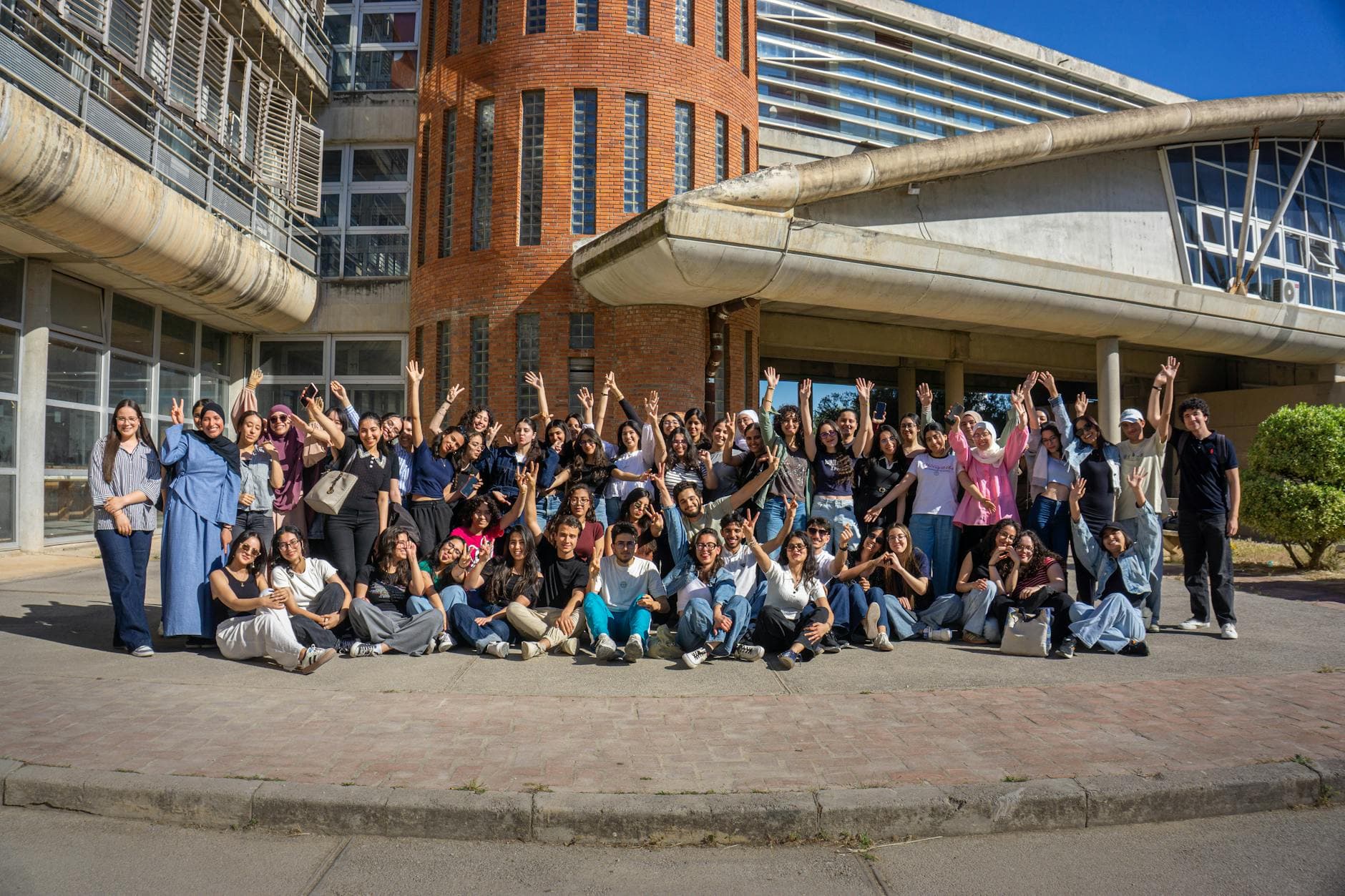
Picture this: a conference room, thirty people, and someone from HR explaining that the next hour will be spent doing trust falls. Half the room is already checking their phones under the table. The other half is looking for the emergency exit.
Now picture the same thirty people, split into teams of five, racing around the office building trying to photograph their CEO's parking spot, a colleague's hidden snack drawer, and the ugliest coffee mug in the kitchen. There's trash talk in the group chat. Someone from accounting is sprinting down the hallway. The CFO is laughing so hard she's holding a wall.
Same company. Same people. Completely different energy. The difference isn't budget or planning time. It's that one activity asks people to be vulnerable in front of coworkers (terrible idea), while the other gives them a creative mission with a built-in excuse to be silly.
Why Most Team Building Falls Flat
Here's what nobody in HR wants to admit: 73% of employees wish their company would invest more in team building, but most of them dread the actual events. That's not a contradiction. People want connection with their coworkers. They just don't want forced fun.
The problem with traditional team building is the vulnerability gap. Trust exercises, personal sharing circles, improv games: they all require people to drop their professional guard in front of colleagues who decide their promotions. That's not bonding. That's anxiety.
Photo-based activities sidestep this entirely. Instead of asking people to be something (vulnerable, funny, open), you ask them to find something or capture something. The camera becomes a buffer. The mission becomes the focus. And the competitive element (who found it first? whose photo is funnier?) creates natural, unforced interaction.
Research from Harvard Business School backs this up: regular group bonding rituals led to a 16% increase in how meaningful employees judged their work to be. The key word is ritual, not ordeal. People need activities they can repeat, look forward to, and actually enjoy.
The Photo Scavenger Hunt: Still the Gold Standard
There's a reason photo scavenger hunts keep showing up in every team building recommendation list. They work across ages, job levels, and personality types. The introvert who wouldn't survive an improv exercise will happily spend twenty minutes tracking down a specific object to photograph.
The format is simple. Teams get a list of things to find and photograph. First team to complete the list (or the team with the most creative shots) wins. That's it. But the simplicity is deceptive. A good scavenger hunt creates exploration, problem-solving, time pressure, and creative interpretation, all without anyone having to share their childhood trauma.
What separates a great hunt from a forgettable one comes down to the prompts. Generic prompts ("take a photo of something blue") get generic results. Specific, slightly absurd prompts get memorable ones.
Prompts That Actually Work
- The impossible selfie: "Get a selfie with someone from a department you've never spoken to." Forces cross-department mingling without making it weird.
- The recreation challenge: Give teams a famous painting or movie scene and ask them to recreate it with whatever they can find. The results are always hilarious.
- The hidden detail: "Photograph the third-floor emergency exit sign" or "Find the serial number on the printer in room 204." Sends people to parts of the building they've never noticed.
- The human challenge: "Photograph someone demonstrating their hidden talent" or "Capture the most dramatic fake sneeze." Low stakes, high entertainment.
- The team portrait: "Create a group photo that tells a one-sentence story without words." This one gets surprisingly creative.
The key insight from SceneDisposable's research on photo hunts: they turn passive guests into active participants. Instead of hoping people take photos, you give them specific reasons to. That shift from passive to active is what makes the difference between "team building" and actual bonding.
Pro tip for prompt design: Include 2-3 prompts that require interaction between teams ("photograph another team's best pose" or "swap one team member for 5 minutes and document their reaction"). These cross-team moments create connections that wouldn't happen otherwise.
Going Digital: Why Paper Lists Don't Cut It Anymore
Paper-based scavenger hunts have one fatal flaw: nobody sees the results until the end. Half the fun is watching what other teams are doing in real time. That competitive spark ("wait, they already found that?") is what keeps energy high for the full duration.
This is where a shared photo gallery changes the game. When every team uploads their challenge photos to a live shared gallery, the event becomes a spectator sport too. People not even on teams start watching the screen, commenting, laughing at submissions. The energy compounds.
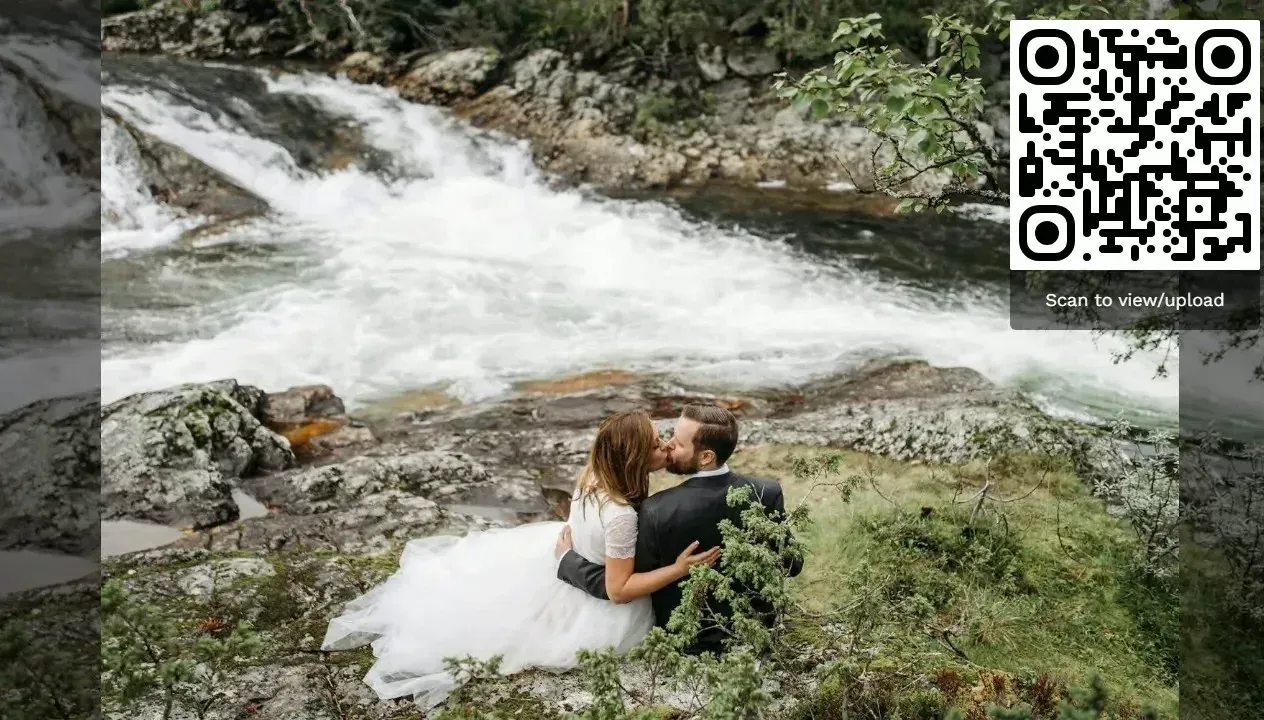
With Photogala's photo challenges, each prompt becomes a trackable task. Teams scan a QR code, see their challenge, and upload their submission directly from their phone. No app install. No account creation. The QR code approach means even the colleague who still uses a flip phone case can participate in under 30 seconds.
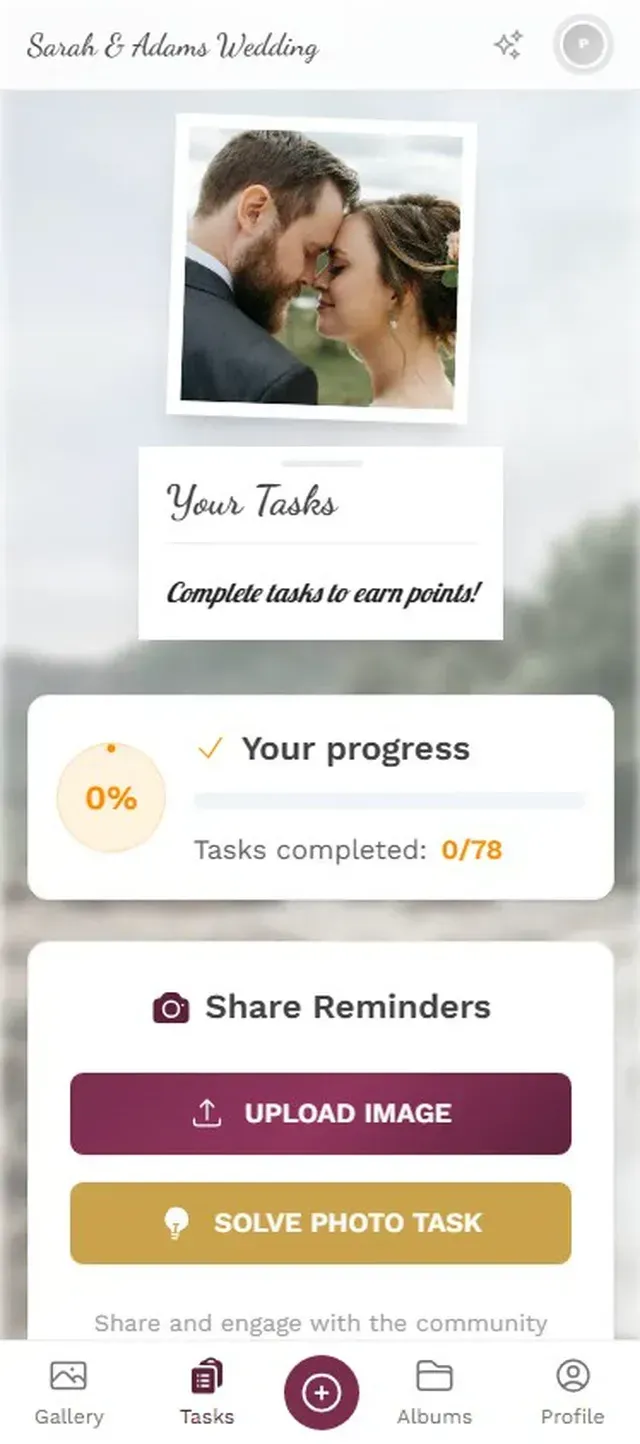
1.Teams see their challenge prompts right on their phone
The leaderboard and points system adds another layer. Suddenly it's not just about finishing the list. It's about finishing it first. Teams that were casually strolling through hallways start sprinting when they see another team pulling ahead. One EastPharma study found team-building activities with competitive elements can lead to productivity increases over 30%. Competition works, as long as the stakes are low enough to keep it fun.
See it in action
Every guest photo in one album – no app.
Beyond the Scavenger Hunt: 4 More Photo Activities Worth Trying
Scavenger hunts are the reliable workhorse, but they're not the only option. Here's what else works well for corporate events.
1. The Photo Roulette Challenge
Upload a set of reference photos (famous memes, movie scenes, vintage stock photos) as example images in your photo challenge setup. Each participant gets a random reference and has to recreate it as closely as possible using only what's available in the room. The side-by-side comparisons on the live photo wall are consistently the funniest moment of any event.
2. The Day-in-the-Life Documentary
This one works beautifully for all-hands or multi-day offsite events. Each team documents a "day in the life" of their department through photos. Marketing captures their 9 AM brainstorm chaos. Engineering shows their monitor graveyard. The shared gallery becomes a visual story of how the company actually operates, not the polished version from the careers page. It's a fantastic way to make event photos feel authentic without hiring a photographer.
3. The Photo Booth Without the Booth
Traditional photo booths cost $500-2,000 to rent and produce the same four poses every time. A QR code photo station with props, a good backdrop, and a shared gallery does the same thing for a fraction of the cost. Set up three or four themed corners (decade themes work great: 70s disco, 80s neon, 90s grunge) and let people rotate through. The variety of backgrounds keeps submissions interesting, and the shared gallery means everyone sees everyone else's photos in real time.
4. The Weekly Photo Challenge (for Ongoing Teams)
This isn't an event. It's a habit. Every Monday, post a new prompt in the team chat: "Your desk in 3 objects," "Your commute summarized in one photo," "The meal you'd serve at a dinner party." Submissions go into a shared gallery. It's low effort, asynchronous, and surprisingly effective at building the kind of casual connection that remote teams struggle with. No calendar invite required.
Making It Work for Hybrid and Remote Teams
Here's where most guides fall short. They describe activities that only work when everyone is in the same building. But 25% of remote workers report feeling isolated, according to WhenIWork's research. They need team building more than office workers, not less.
Photo challenges are one of the few team building formats that translate perfectly to remote. The scavenger hunt becomes location-independent: "photograph the view from your workspace," "capture the oldest item in your kitchen," "show us your most used app's screen time stats." Everyone participates from wherever they are, and the shared gallery creates a visual window into each other's lives that Slack messages never provide.
The trick for remote teams is keeping it asynchronous. Not everyone is in the same time zone. A 48-hour window for submissions works better than a live event. The leaderboard still drives urgency ("I need to submit before tomorrow's deadline"), but nobody misses out because they're in Singapore while the rest of the team is in Berlin.
For hybrid events where some people are in the office and others are remote, split the prompts. In-office teams get location-specific challenges ("find the hidden rubber duck someone put on the third floor"). Remote participants get home-office versions ("recreate the rubber duck using household items"). Same spirit, different execution. Everyone ends up in the same gallery, laughing at the same photos.
One honest limitation: Photo activities work best when participation is voluntary, not mandated. The moment someone feels required to take silly photos for a corporate gallery, the energy shifts from fun to compliance. Frame it as optional but make it appealing enough that opting out feels like missing out.
The Setup That Takes 15 Minutes
How to run a photo challenge for your team
Create your gallery and challenges
Set up your event gallery and add 8-12 photo challenge prompts. Mix easy ones ("team selfie") with creative ones ("recreate a famous album cover"). Include example reference photos for recreation challenges.
Share the QR code
Print QR codes for the venue or share the link in your team chat. Guests scan and start uploading from their browser. No app download, no account creation.
Display the live wall
Connect a TV or projector to show the photo wall. Submissions appear in real time. The leaderboard runs alongside it. Watch the competition heat up on its own.
That's genuinely it. The setup takes less time than writing the calendar invite. The harder part (and the part worth investing time in) is crafting good prompts. Spend your energy there, not on logistics.
If you're looking for prompt inspiration, our guide on photo scavenger hunt ideas has 15 ready-to-use prompts sorted by event type. For tips on getting more natural, less posed photos from your team, check out the piece on event photography tips that actually matter.
What Happens After the Event
Here's the part that most people skip. The photos from a team building event are valuable long after the event ends. They're content for the company newsletter. They're backgrounds for the next all-hands deck. They're the photos that show up in recruitment material, showing what the culture actually looks like (not the staged stock photos currently on the careers page).
With a shared gallery that preserves original quality, every photo is downloadable. The HR team can pull shots for internal comms. The marketing team can grab candid moments for social media (with permission, obviously). The photos become an asset, not a memory that lives and dies on thirty individual camera rolls.
And here's the thing that surprised me about the psychology behind event photos: people who participate in photo-based team building remember the event more vividly and rate it more positively than those who participate in non-photo activities. The act of capturing a moment cements it. The act of seeing your colleagues' perspectives broadens yours.
Good team building doesn't require ropes courses, escape rooms, or mandatory fun. Sometimes all it takes is a list of creative prompts, a shared photo gallery, and the permission to be a little ridiculous at work.
All of this comes with your own event.
Setting it up takes five minutes. You can build and view everything before you decide.
Starting from €39 one-timeOne-time payment — No subscription
- No App Required
- Setup in 5 Minutes
- 30-Day Money Back
“We were really thrilled, and everything went so much more smoothly, from the seating plan all the way to the photo games! Simply great! Highly recommended!”
Written by

I believe event photos should be more than static galleries. They should be live, playful, and unforgettable.
Categories
Related Posts

Bridal Shower Photo Sharing: Collect Every Sweet Moment in One Gallery
Bridal shower photos end up scattered across 15 phones. Here's how to get them all into one gallery before the mimosas wear off.

Maternity Photo Sharing: How to Keep Every Announcement, Bump Shot, and Memory in One Place
Pregnancy announcements land on 4 different apps. Maternity photos get lost in group chats. Here's how to keep every photo in one shared gallery your whole family can access.

Sales Kickoff Photo Sharing: How to Turn a Mandatory Meeting Into a Team Memory
Sales kickoffs are expensive. The photos from them usually disappear into 14 different camera rolls. Here's how to fix that.