Multicultural Wedding Photo Sharing: Honoring Every Tradition in One Gallery

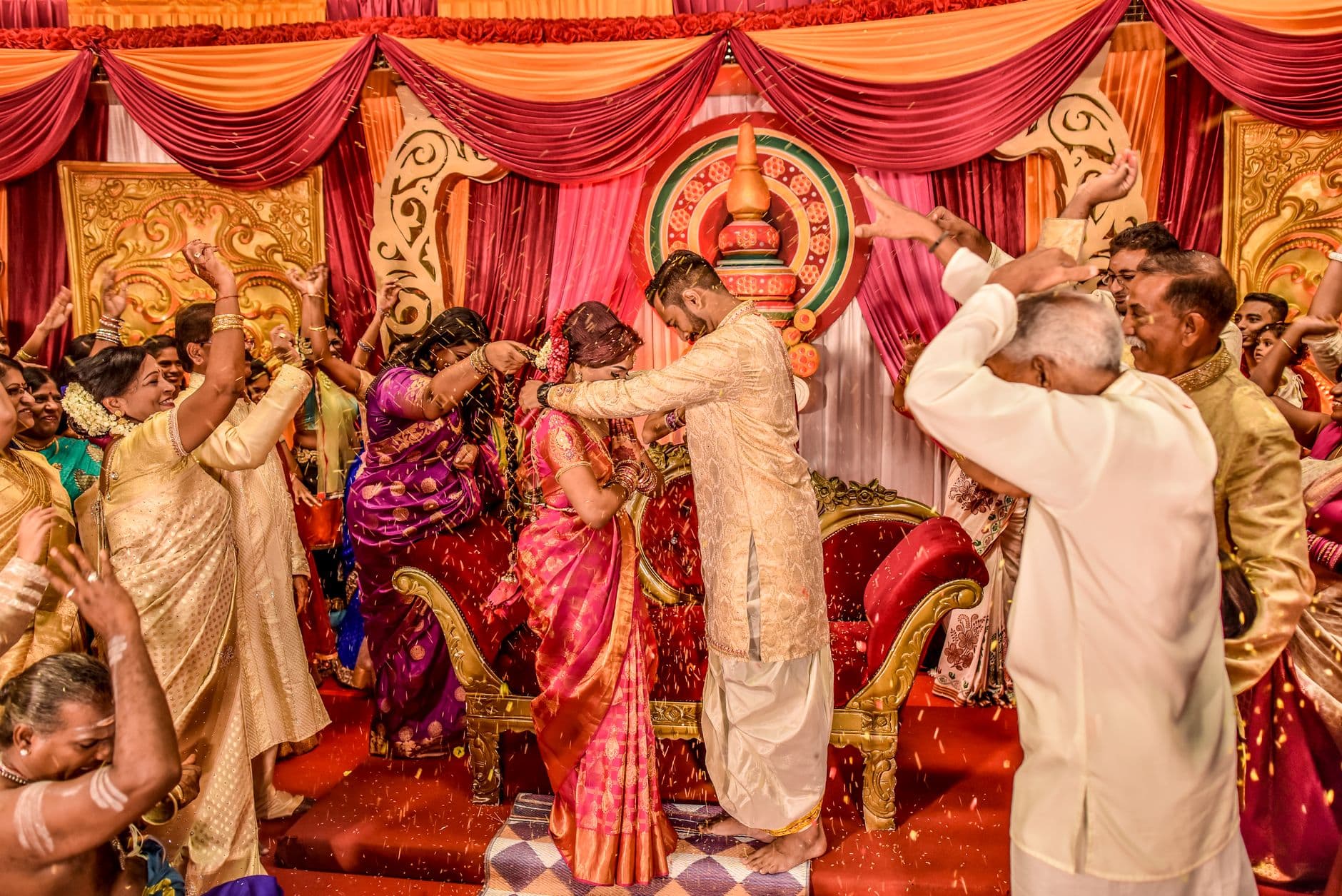
Picture a Saturday that starts with sacred mantras chanted under a mandap draped in marigolds, moves into a Christian ceremony with unity candles and hymns, and ends with 200 people on a dance floor that somehow plays both Bollywood hits and classic rock. Three outfit changes. Two families who've never met. And every single guest with a smartphone full of photos that will never leave their camera roll.
That's the reality of multicultural weddings. They're longer, more layered, and more visually rich than any single-tradition celebration. They're also a logistical nightmare when it comes to photos. The Hindu ceremony happened before half the Western-side guests arrived. The grandmother who flew in from Lagos doesn't use iCloud. The cousins from Munich are texting photos in a WhatsApp group that the couple will never see.
The professional photographer will deliver 400 polished shots in three weeks. Beautiful work. But they were focused on the main rituals, the couple, the staged portraits. The off-the-cuff moments between ceremonies, the candid laughter that guests capture in the margins, the uncle doing the Bhangra with the flower girl: those live on 150 different phones. Unless you build a system to collect them.
Why Multicultural Weddings Break Traditional Photo Sharing
A single-culture wedding is hard enough. You create a shared Google Photos album, send the link, and hope for the best. Half the guests forget. A quarter don't have Google accounts. The rest upload 3 photos each, and you end up with a thin collection that barely represents the day.
Now multiply those problems across cultures, languages, and generations. Multicultural weddings introduce friction points that most photo sharing solutions weren't designed for:
- Language barriers. Your gallery instructions are in English, but your partner's family speaks primarily Turkish, Hindi, or Mandarin. A shared album link with English-only instructions excludes people before they even start.
- Multi-day timelines. Many cultural weddings span two or three days. A Mehndi night on Thursday, a Nikkah on Friday, a Western reception on Saturday. One shared album gets chaotic fast. Multiple albums confuse everyone.
- Tech diversity. The 25-year-old cousins use AirDrop. The 70-year-old aunties have never scanned a QR code (but they will, with the right setup). Some guests are on Android, others on iPhone. Some have unlimited data, others are roaming internationally.
- Sheer volume. According to Labo.gallery's 2026 comparison, requiring an app install cuts participation roughly in half. Requiring an account drops it even further. At a multicultural wedding where you're already fighting friction, every extra step loses you dozens of photos.
The core problem isn't technical. It's cultural. Every guest experience matters equally, whether they're the bride's college roommate or the groom's grandmother who traveled 8,000 miles. If your photo sharing setup excludes anyone, you lose their perspective of the day. And those perspectives are exactly what make multicultural weddings worth documenting.
The No-App, No-Account Approach
The simplest solution is the one that removes the most barriers. A QR code that opens directly in the browser: no app download, no account creation, no language-specific instructions needed. Guests scan, tap, upload. The entire flow takes under 30 seconds, regardless of whether someone is on a Samsung from 2019 or the latest iPhone.
This matters more at multicultural weddings than anywhere else. When you're welcoming guests from three countries and two generations, you can't ask them all to download the same app. You can't assume they all have Google accounts. You can't even assume they all read the same alphabet. But you can put a QR code on every table, and that works everywhere. (If you need to generate QR codes for table cards or invitations, Photogala's free QR code generator handles that without any sign-up.)
QR Code Generator
Create custom QR codes for your event — link guests directly to your photo gallery.
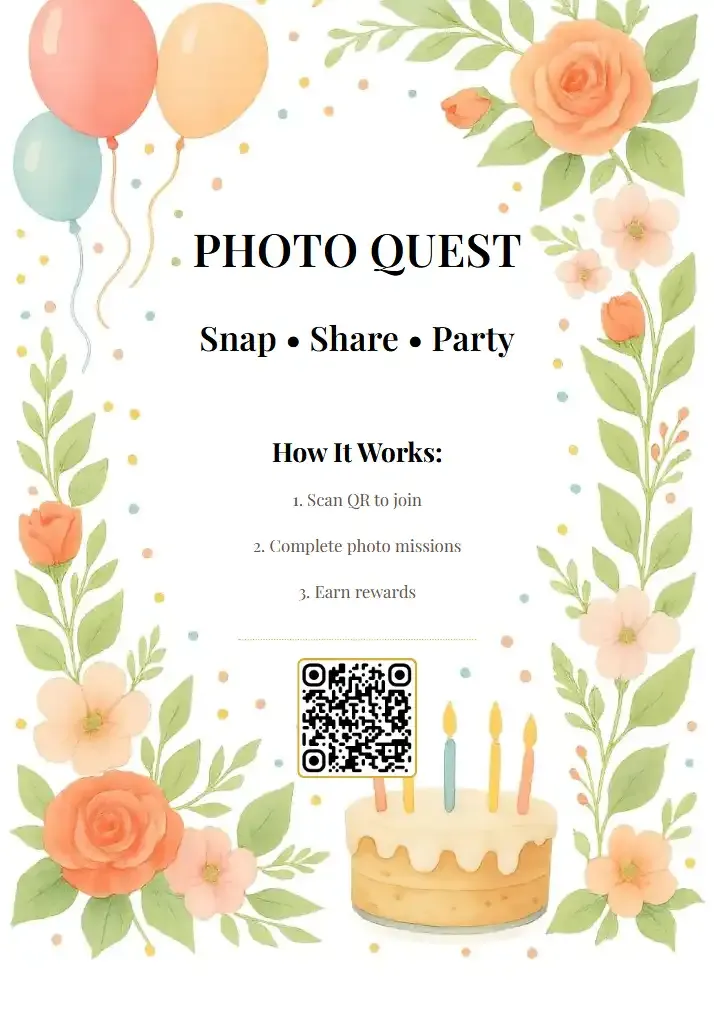
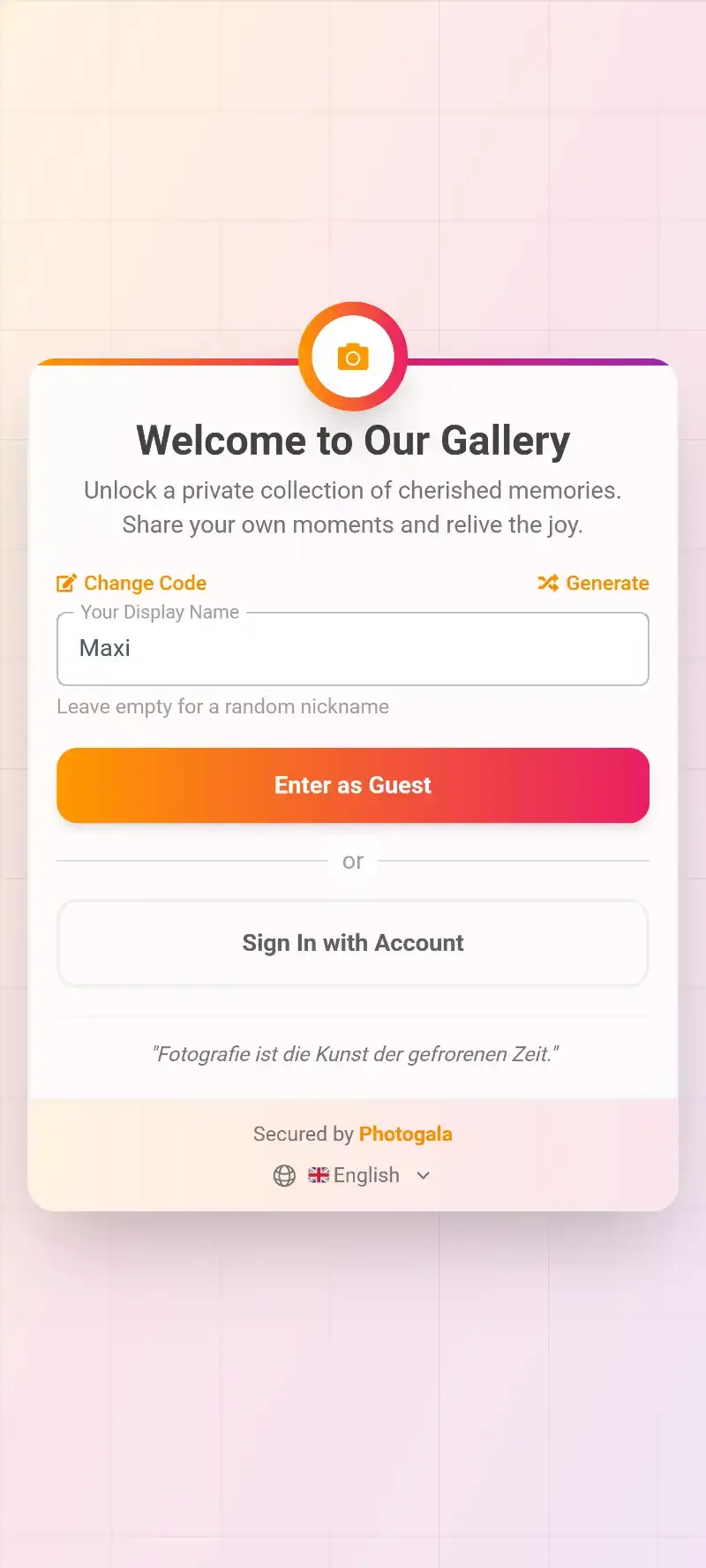
1.One scan. No app. No account. Every guest can participate.
For multicultural celebrations that span an entire weekend, from a welcome dinner on Friday through a farewell brunch on Sunday, a single gallery link covers everything. Guests don't need to join a new group or find a new album for each event. One QR code, one gallery, every ceremony.
See it in action
Every guest photo in one album – no app.
Speaking Every Guest's Language
Here's something that caught me off guard while researching this piece. Most event photo sharing apps only support English. A few add Spanish or French. Almost none think about the language combinations you actually see at multicultural weddings: English and Hindi. German and Turkish. Portuguese and Japanese.
Photogala's interface supports multiple languages and adapts to each guest's device settings, so buttons, labels, and upload instructions appear in a language they're comfortable with. It currently covers English and German natively, with more languages on the roadmap. Even where the interface language isn't a perfect match, the QR-scan-and-upload flow is visual enough that language rarely becomes a blocker. The bigger win is that event content like photo challenge descriptions and achievement names can be set up bilingually, so you can write challenge prompts in both English and Turkish, for example.
That two-minute bilingual setup makes a real difference when the groom's grandmother from Ankara is trying to figure out how to share her photos of the Kına Gecesi.
Capturing Traditions Without Reducing Them
Photography at multicultural weddings requires what ONDI Studio calls "researching and understanding cultural practices before shooting." Each culture has unique traditions, rituals, and symbolism with deep meaning. A Saptapadi isn't just "walking around a fire." Breaking the glass isn't just a dramatic gesture. As Tammy Shun writes, traditions are shaped by history, religion, and family structure, and what looks familiar externally carries entirely different meanings within the people living it.
Your professional photographer (hopefully) did this homework. But guest photography captures something different entirely. It captures perspective. The Hindu aunties photographing details of the mandap decoration that the Western photographer walked past. The groom's college friends capturing the moment he teared up during his father's speech. The flower girl's mom getting a video of the first dance from the angle only the third row could see.
That's what makes guest photos irreplaceable at multicultural weddings. Each cultural group naturally documents what matters most to them, the rituals they recognize, the family members they know, the details that carry meaning in their tradition. Collecting those photos automatically gives you a gallery that represents the wedding from every cultural perspective, not just the photographer's.
A practical tip for multi-ceremony weddings: Set up photo challenges specific to each ceremony. "Best photo of the Mehndi designs." "Capture the hora." "The most colorful sari at the reception." Challenges can include example preview photos so guests know exactly what you're looking for, even if they're unfamiliar with the tradition.
The Photo Wall That Bridges Two Families
Imagine a reception where both families are meeting for the first time. Different languages, different customs, different comfort levels. Now picture a live photo wall behind the DJ, cycling through photos that guests upload in real time. The groom's mother sees a photo of the bride's Mehndi ceremony that she missed. The bride's brother sees a candid of the groom's family doing their traditional dance. Suddenly, both families are seeing each other's traditions through each other's eyes.
This actually happens. Put a shared visual feed at the center of a cross-cultural reception and people start pointing, laughing, asking questions about what they're seeing. Photography transcends language barriers and connects people from diverse cultural backgrounds, as Toad Photo notes. A single image can convey culture, traditions, values, and way of life without a word of shared vocabulary.
1.Photos from every ceremony appear on screen in real time.
For the setup details (screen placement, display modes, timing), our guide on guest engagement beyond the photo booth covers what actually works. Short version: place the screen where both families mingle, not tucked in a corner.
Finding Everyone After the Celebration
Here's a problem unique to large multicultural weddings. Say the celebration produces 600 photos across three ceremonies and two days. The couple wants to send a thank-you to each family with photos of their relatives. Scrolling through 600 images to find every photo of Uncle Rajesh is not anyone's idea of a good time.
AI face recognition solves this quietly. Upload a reference photo of a person and the system groups every photo they appear in. The bride's mother can use selfie-to-search to find all photos of herself across both ceremonies. The couple can create person albums for key family members and send them directly. No manual sorting, no tagging 600 photos one by one.
This becomes especially valuable when sharing photos the day after, while the emotional warmth is still there. Photos delivered the same evening arrive in the glow of the celebration. Photos delivered three weeks later arrive into a completely different headspace.
What This Actually Looks Like: A Practical Setup
Setting Up Photo Sharing for a Multicultural Wedding
Create one gallery, organize by ceremony
Set up a single gallery with albums for each event: Mehndi Night, Ceremony, Reception. Guests upload to the right album. No confusion about where things go.
Print QR codes in every language that matters
Put QR cards on tables at every event. The QR code is universal but add a line in each relevant language: "Scan to share your photos." Keep it to 5 words max.
Set up tradition-specific photo challenges
"Best henna detail," "Capture the first dance," "Funniest family photo." Use example preview photos so guests unfamiliar with a tradition still know what to look for.
Turn on the photo wall at the reception
This is where both families come together. The live photo wall shows uploads from every ceremony, helping both sides see what they missed.
The whole setup takes about 15 minutes. The gallery is browser-based, so guests who couldn't attend in person can still contribute photos or follow along remotely. For weddings with guests flying in from abroad, this solves the timezone problem too.
One honest trade-off: Photogala is browser-based, not a native app. That's actually an advantage for multicultural weddings (no download barrier), but it means features like push notifications work differently than in a dedicated app. Guests get in-browser notifications instead.
Making It Last Beyond the Weekend
The best thing about collecting guest photos from a multicultural wedding isn't the quantity. It's the completeness. You end up with a gallery that shows the Sangeet and the rehearsal dinner. The mandap and the altar. The Bhangra and the waltz. Both families, both traditions, both perspectives.
With the archive and download feature, the couple can download the entire collection in original quality. No compression, no resolution loss. Photos stay in the gallery for up to 12 months, so guests can collect their favorites long after the celebration ends.
If you're weighing options for your multicultural celebration, understanding wedding photo sharing etiquette across cultures helps too. Some families prefer that ceremony photos stay private until the couple shares them. Moderation controls let you review uploads before they appear in the gallery, so nothing goes public that shouldn't.
Multicultural weddings are the most photographed, most emotional, most complex celebrations most families will ever experience. The gallery should reflect all of it: every ceremony, every family, every weird uncle dancing across cultural lines. Not just the angles one photographer could cover.
All of this comes with your own event.
Setting it up takes five minutes. You can build and view everything before you decide.
Starting from €39 one-timeOne-time payment — No subscription
- No App Required
- Setup in 5 Minutes
- 30-Day Money Back
“Excellent service and great pictures! Photogala fully met our expectations at the event. The value for money is unbeatable. Absolutely recommended! The seating plan saved us a lot of hassle!”
Written by

I believe event photos should be more than static galleries. They should be live, playful, and unforgettable.
Categories
Related Posts

How to Make a Photo Book From Your Event Photo Gallery
Your event gallery has hundreds of photos. Here's how to turn them into a photo book people actually flip through.
How to Add a Photo Gallery QR Code to Your Wedding Invitations
Your wedding invitation is the first touchpoint with guests. Here's how to turn it into a photo-collecting machine with a single QR code.
Game-Day Watch Party Photo Sharing: How to Capture 4 Hours of Chaos in One Gallery
Game-day watch parties generate wild, unforgettable moments. Here's how to make sure every photo actually ends up in one place instead of 14 different camera rolls.