How Much Alcohol and Drinks to Buy for Your Event: A Calculator Guide

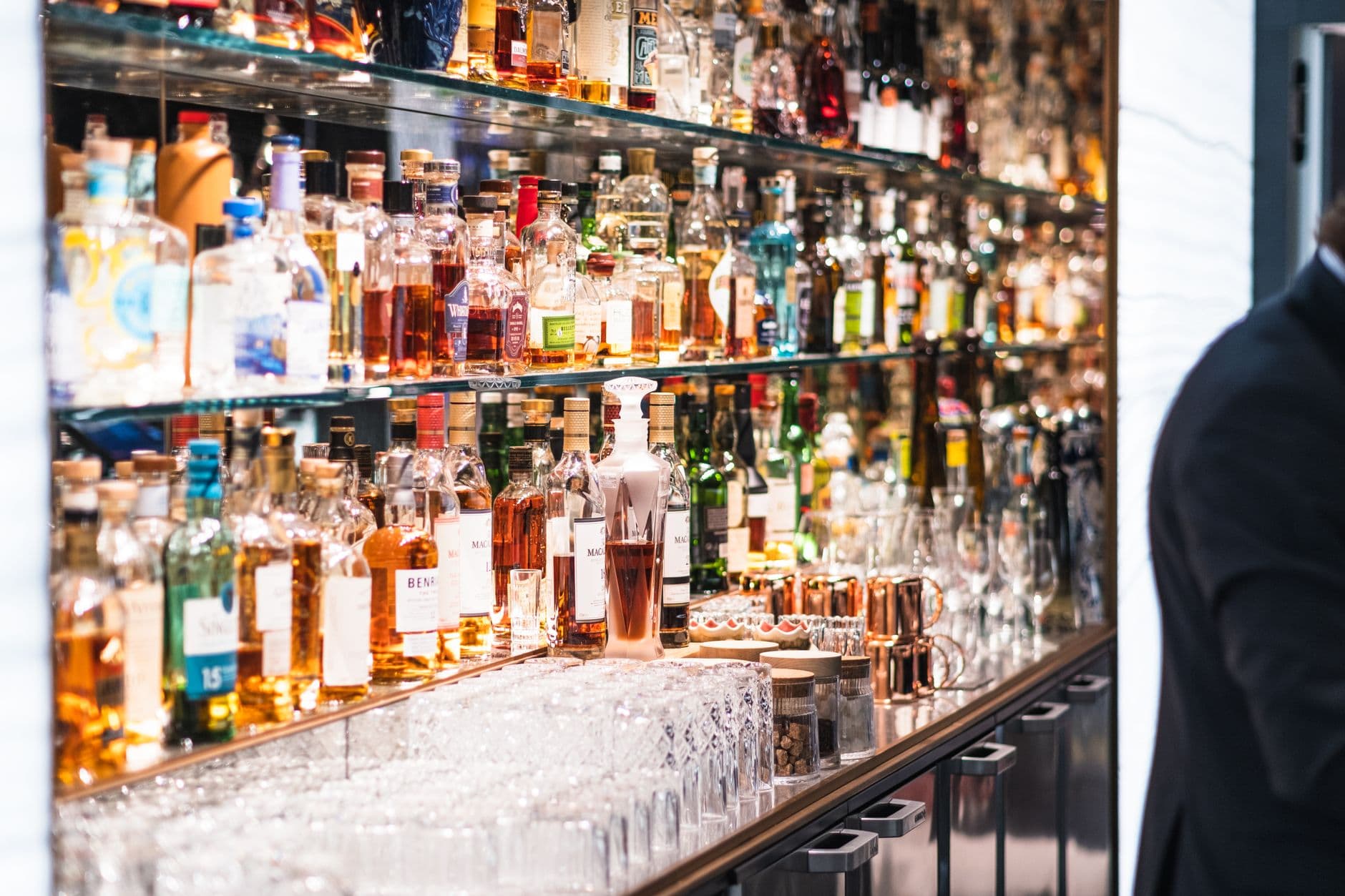
Picture this: it's 9:30 PM at a wedding reception. The dance floor just opened. The DJ is playing something everyone pretends to hate but secretly loves. And the best man walks up to the bar to discover there's nothing left but warm prosecco and a single bottle of gin. No tonic.
Running out of drinks at your own event is the kind of thing that sounds minor until it happens. Then it's all anyone remembers. The flip side is almost as bad: ordering 15 cases of beer for a cocktail-loving crowd and staring at a garage full of untouched lager for the next six months.
Getting the quantities right isn't guesswork. There's a formula. But the formula has variables most people ignore. Guest demographics, event duration, time of year, the type of bar you're running. All of it shifts the math. Here's how to get it right without a spreadsheet degree.
The One-Drink-Per-Hour Rule (and Why It's Only Half the Story)
The industry baseline is simple: plan for one drink per guest per hour. A four-hour event with 100 guests means roughly 400 drinks. That's your starting number.
But "one drink" isn't one type. Your 100 guests aren't all drinking the same thing. A common split looks like this: about 40% prefer beer, 30% go for wine, 20% want cocktails or spirits, and 10% stick to non-alcoholic options. Those percentages shift dramatically depending on your crowd. A summer garden party? Beer climbs. A formal winter gala? Wine and cocktails dominate. A family reunion with kids and grandparents? Non-alcoholic might be 30% or more.
The first hour is almost always the heaviest. People arrive, they're social, they grab a drink immediately. After that, consumption tapers. If you're planning a wedding with a seated dinner, wine at the table slows down spirits consumption. If it's a standing cocktail party, people drink more because their hands are free and there's less food.
The first-hour bump: Expect 1.5 drinks per person in the first hour, then about 0.8 per hour after that. This is especially true for events with a cocktail reception before dinner. Planning your event timeline around this pattern helps you staff the bar correctly too.
Drinks Calculator
Calculate exactly how many drinks you need for your event — no more guessing.
What to Buy: A Breakdown by Drink Type
Let's run a real example. Say you're hosting a 120-guest wedding reception, five hours total (one hour cocktails, four hours dinner and dancing). Using the one-drink-per-hour rule with the first-hour bump, you need roughly 530 drinks.
Assume a 40/30/20/10 split across beer, wine, spirits, and non-alcoholic. Here's what that actually looks like in bottles:
Beer
212 drinks at beer. One drink equals one 12 oz bottle or can. Round up to 220 bottles (about 9-10 cases of 24). Include at least two varieties, and throw in a light or alcohol-free option. Nobody wants to be the designated driver staring at water all night.
Wine
159 drinks at wine. A standard 750ml bottle pours about 5 glasses. That's 32 bottles. Experienced caterers recommend limiting variety: one sparkling, two whites, one red. This simplifies ordering, reduces waste, and keeps bar service fast. For a summer wedding, lean heavier on white and rosé. Winter? More red.
Spirits and Cocktails
106 drinks at spirits. If you're doing signature cocktails (which keeps things manageable), estimate 16-18 drinks per liter of base spirit. That's roughly 6-7 liters total. Pick two signature cocktails and stock accordingly. Don't forget mixers: tonic, soda, juice. You'll need about 1.5x the volume of spirits in mixers.
Non-Alcoholic
53 drinks at non-alcoholic. Water is separate from this count. Always have water available in large quantities, especially for outdoor or summer events. A good rule of thumb: at least 12-16 oz of water per person per hour on top of everything else. The 53 drinks here are sodas, juices, mocktails, and sparkling water. This is the category people chronically understock.
Those numbers are for 120 guests over five hours. Scale linearly for different sizes, but remember: the split percentages matter more than the total. Know your crowd.
The Variables Most People Forget
The formula gets you 80% of the way. The last 20% comes from thinking about what makes your event different.
Time of day. A brunch event uses a fraction of the alcohol a late-night party does. Mimosas and Bloody Marys at noon? Lower volume, different inventory. An after-party starting at 10 PM? Higher per-person consumption.
Season and weather. Summer heat pushes people toward lighter drinks: beer, white wine spritzers, gin and tonic. Cold water and ice consumption also spikes. Winter events see more red wine, whiskey, and warm cocktails. If you're planning an outdoor event, budget 20% more water and soft drinks than an indoor equivalent.
Food situation. A heavy seated dinner? People drink less per hour because they're eating. A cocktail party with light appetizers? Expect 20-30% more drinks because there's nothing to slow consumption down. This is also why your seating arrangement and meal format indirectly affect your bar budget.
Guest demographics. A 25-35 crowd at a birthday party will drink noticeably more than a multi-generational family reunion. If half your guests are under 21 or don't drink for religious or personal reasons, your non-alcoholic percentage might be 30-40%, not 10%. If you're hosting a corporate event, professional settings tend to moderate consumption too.
Bar format. An open bar with a full cocktail menu encourages more drinking than a beer-and-wine-only setup. Cash bars reduce consumption significantly (but can feel inhospitable at celebrations). A middle ground: host beer and wine with a cash bar for cocktails.
Skip the Spreadsheet: Use a Calculator
Doing this math by hand once is fine. Doing it three times because you changed the guest count, then the duration, then realized you forgot the champagne toast? That's when you want a tool.
Photogala has a free drinks calculator that handles the variables for you. Plug in your guest count, event duration, the percentage split across drink types, and it gives you exact bottle counts. No sign-up required. If you're also figuring out your event budget, the numbers from the drinks calculator feed directly into your cost planning.
Other useful free planning tools: the guest list manager helps nail down the headcount (because drinks math is only as good as your RSVP count), and the venue capacity calculator makes sure your space actually fits the crowd you're ordering for.
Calculate Your Drinks in 30 Seconds
Bar Format Decisions: Open, Cash, or Something In Between
Before you calculate quantities, decide what kind of bar you're running. This is a bigger decision than most hosts realize, and it affects everything from guest experience to total cost.
Full open bar means you cover everything. Guests drink freely, you foot the bill. It's the gold standard for weddings and formal celebrations. Budget for 15-20% more than the baseline formula, because open bars encourage heavier consumption. Expect to spend significantly more, but your guests will feel genuinely hosted.
Beer and wine only is the smart compromise for many events. It simplifies logistics, reduces cost by 30-40% compared to a full bar, and eliminates the need for a trained mixologist. Most guests are perfectly happy, especially at birthday parties and casual celebrations. Add one or two signature cocktails if you want a touch of personality without the full bar complexity.
Cash bar means guests pay for their own drinks. This works fine at corporate events and casual parties, but at weddings it can feel stingy. A middle approach: host beer and wine, let guests buy cocktails.
Signature cocktails save money and add personality. Instead of stocking 15 different spirits, pick two cocktails that match your event theme. A "His & Hers" pair at a wedding. A themed cocktail at a corporate party. You buy fewer ingredients, the bartender works faster, and guests love having something unique to try.
Don't Forget the Stuff Nobody Thinks About
Ice. You need so much more than you think. Plan for 1-1.5 pounds per person for drinking purposes, plus more if you're chilling bottles in buckets. For 120 guests, that's 120-180 pounds of ice. It sounds absurd until you run out at 8 PM.
Glassware or cups. If you're renting real glasses, order 2x the guest count (people set down glasses, forget them, grab new ones). If it's disposable cups, 3x. This is the kind of detail that falls through the cracks, right alongside things like making sure you have enough photos of the event.
Garnishes and mixers. Lemons, limes, mint, olives. They're cheap but forgetting them makes your bar feel unfinished. Same with simple syrup and bitters for cocktails.
The champagne toast. If you're doing one, that's an extra bottle for every 6 guests (each 750ml bottle pours 6 flutes). For 120 guests: 20 bottles of sparkling, on top of everything else.
Capture the Night, Not Just the Drinks
Here's the thing about a well-planned bar: it creates moments. The best man's terrible toast with champagne. The group of friends doing shots they'll regret. The quiet couple sharing a glass of wine at the corner table. These are the moments guests photograph.
The question is whether those photos end up lost in 120 different camera rolls or actually land somewhere everyone can see them. Setting up a shared photo gallery with a QR code takes about two minutes and means every candid from the night ends up in one place. No app download, no sign-up required for guests. Print the QR code on table cards or napkins, and people scan and upload right from their phones.
No app needed. Scan, pick photos, upload.
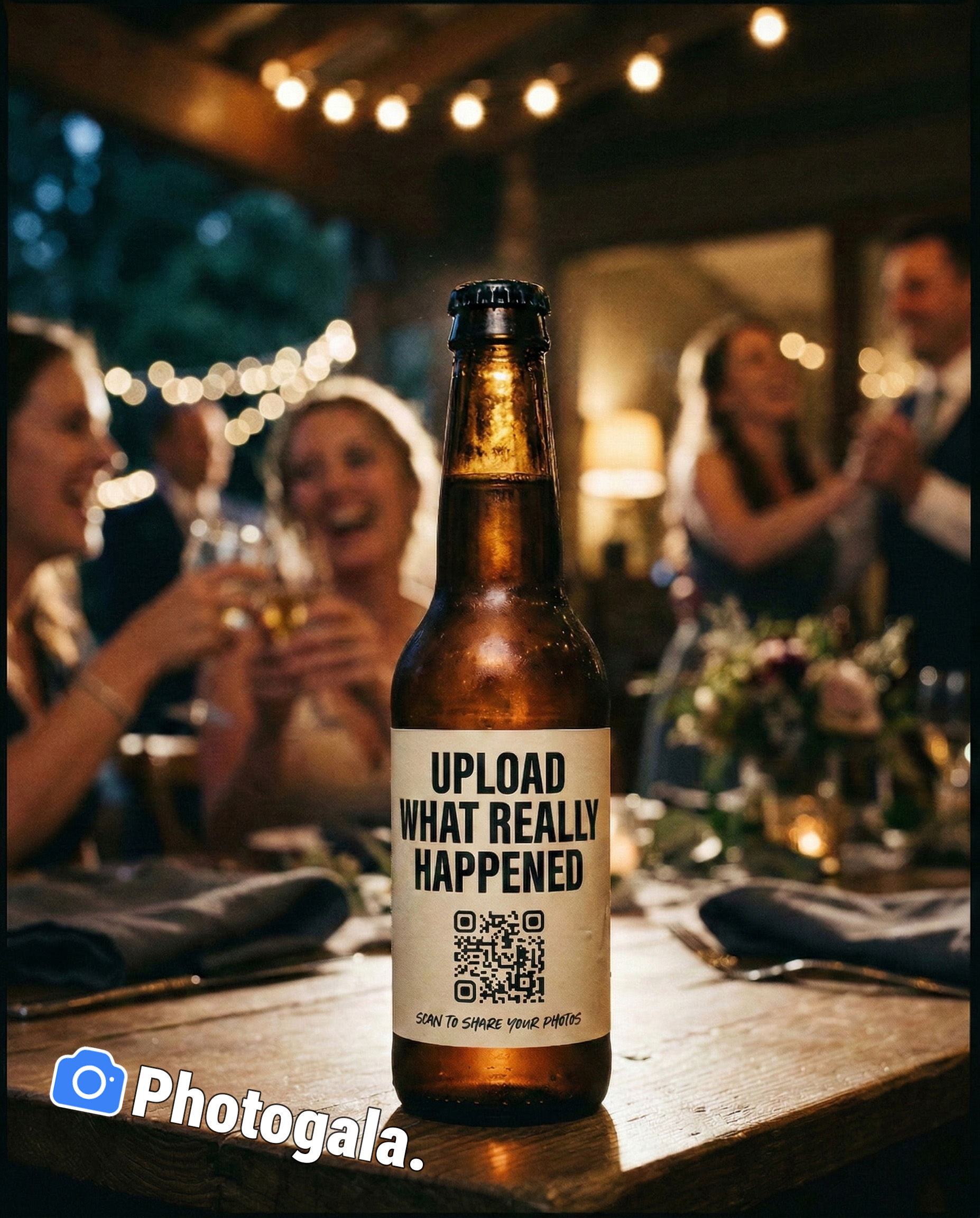
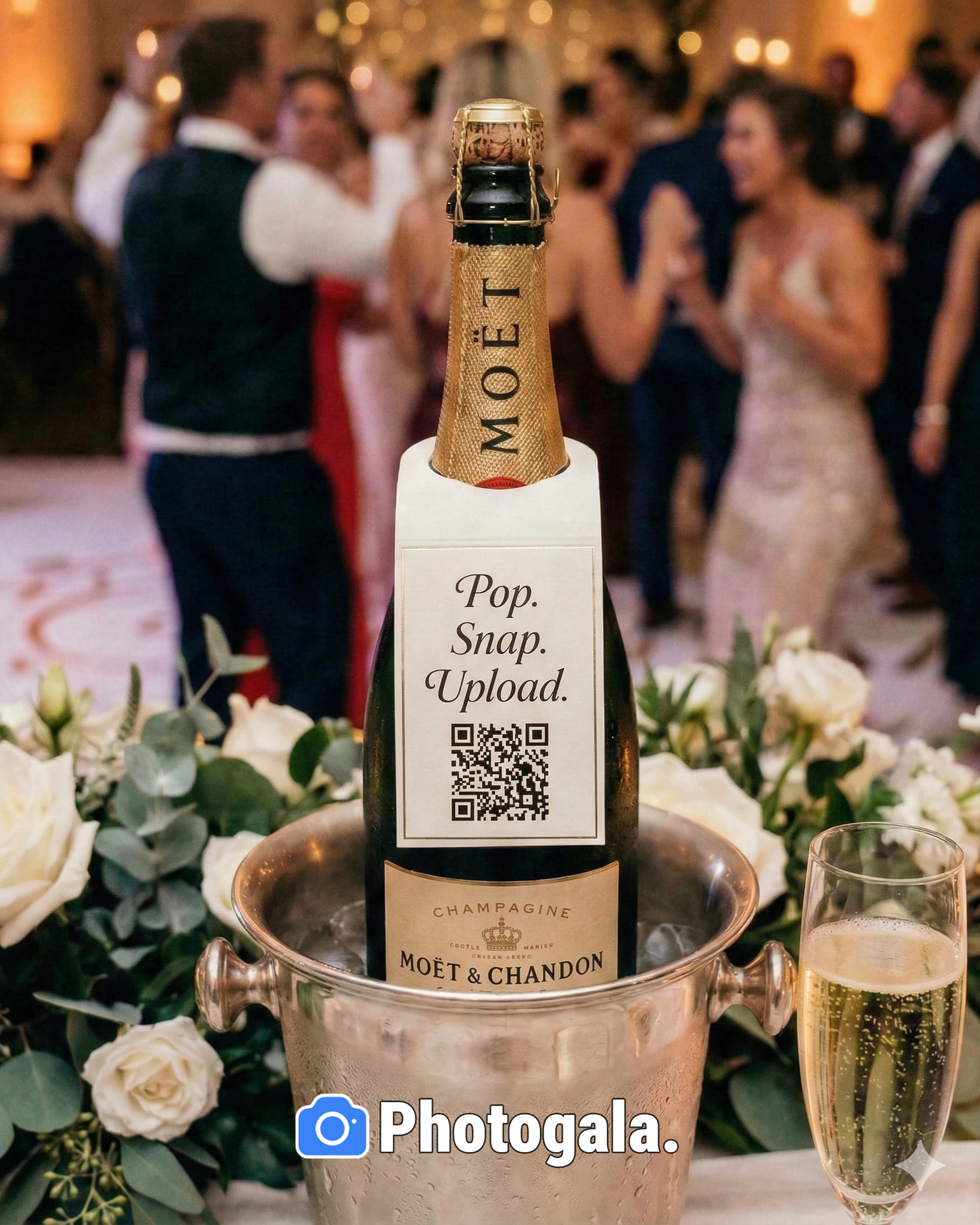
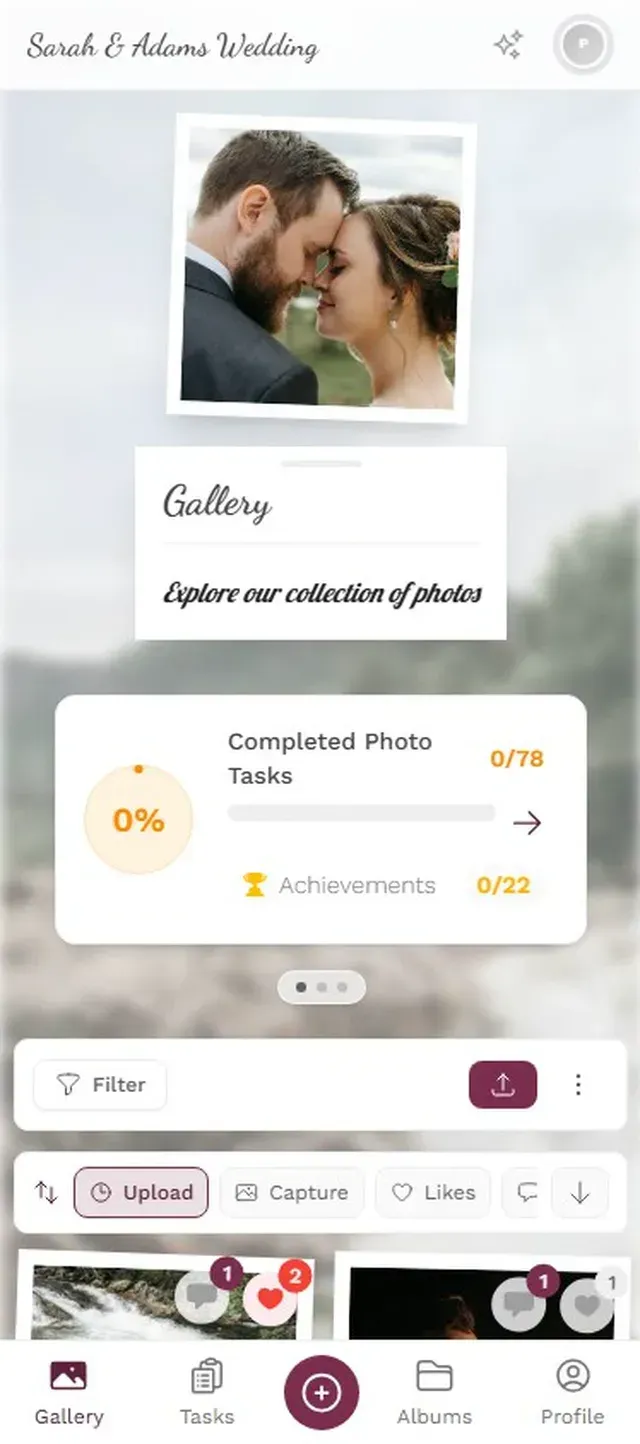
If you place a QR code near the bar, guests scan it while waiting for their drink. It's dead time they'd spend scrolling Instagram anyway. The result: a live photo wall that fills up all night, and a complete gallery of candid moments delivered the next morning. Way more interesting than the 300 polished shots from the photographer. You can even set up photo challenges like "best cocktail shot" or "funniest toast reaction" to get people actively participating.
For tips on getting high-resolution photos shared properly after the event, or optimizing your iPhone camera settings for dim bar lighting, those guides are worth a quick read beforehand.
Ready to create your gallery?
Start sharing your event photos with guests in minutes.
Create GalleryQuick Reference: Quantities Per 100 Guests (4-Hour Event)
All the math above collapsed into one table. Find your bar format, read across, and scale up or down for your actual headcount.
Drink Quantities by Bar Type
| Category | Full Open Bar | Beer & Wine Only | Casual Party |
|---|---|---|---|
| Beer (bottles/cans) | 160-180 | 200-220 | 240-260 |
| White wine (bottles) | 12-15 | 18-22 | 8-10 |
| Red wine (bottles) | 8-10 | 12-15 | 5-8 |
| Sparkling (bottles) | 8-10 | 10-12 | 4-6 |
| Spirits (liters) | 8-10 | — | 4-6 |
| Mixers (liters) | 12-15 | — | 6-8 |
| Soft drinks (cans) | 40-50 | 40-50 | 60-80 |
| Water (liters) | 50-60 | 50-60 | 50-60 |
| Ice (lbs) | 100-150 | 100-150 | 80-120 |
These numbers are starting points. If you know your guest list and understand your crowd, adjust the split percentages first, then the totals.
The Most Common Mistakes
Buying for the crowd you wish you had. If your guest list skews toward beer drinkers, don't stock a craft cocktail bar because it looks fancier. Stock what people will actually drink. You can always return unopened bottles if your vendor allows it (ask before ordering).
Ignoring non-drinkers. Ten percent non-alcoholic as a default is a bare minimum, not a generous allocation. At family reunions with kids and older relatives, or events with guests who don't drink for any reason, budget 25-35% non-alcoholic. Good mocktails, quality sparkling water, and interesting sodas make non-drinkers feel included, not like an afterthought.
Forgetting the return policy. Many liquor stores and wholesale vendors accept returns on unopened bottles. This completely changes the math. Over-order by 10-15% with a return plan, and you'll never run short. Without a return policy, you're stuck with whatever's left.
No water plan. Guests drink more water than you expect, especially at evening events where alcohol is flowing. Double whatever you think you need. It's the cheapest line item on the list and the most embarrassing one to run out of.
The best events don't run out of anything. And the best memories from those events? They're the ones someone actually captured. A well-stocked bar keeps the mood going. A shared photo gallery keeps the proof.
Find the right plan for your event
Flexible pricing for weddings, parties and corporate events.
View PricingWritten by

I believe event photos should be more than static galleries. They should be live, playful, and unforgettable.
Categories
Related Posts
Multicultural Wedding Photo Sharing: Honoring Every Tradition in One Gallery
When your wedding blends two (or more) cultures, collecting guest photos gets complicated fast. Here's how to make it work without losing a single moment.
Free Event Planning Tools Every Organizer Should Bookmark
The best free tools for budgets, guest lists, timelines, photo sharing, and more. No subscriptions, no bloated software suites.
Milestone Birthday Photo Sharing: 30th, 40th, 50th and Beyond
At milestone birthdays, decades of relationships converge in one room. Here's how to collect every guest's photos before they vanish into 40 separate camera rolls.