Guest List Management: How to Track RSVPs, Meals, and Groups Without Losing Your Mind


Picture this: three weeks before a wedding, the bride opens her spreadsheet and counts 47 guests who haven't responded. Fourteen replied "yes" but never specified a meal. Two entire families are listed under a single name with no indication of how many people that actually means. And her aunt texted "We're coming!" to her mother's phone, which never made it into any system.
That's what guest list management looks like for most people: a patchwork of spreadsheets, text messages, and sticky notes held together by anxiety.
The frustrating part? It doesn't have to be this complicated. Guest list management comes down to three things: knowing who's coming, knowing what they need, and knowing where they fit. Get those right, and the rest of event planning gets dramatically easier.
Why Guest Lists Fall Apart
The core problem isn't organization. It's that RSVPs come in through too many channels. Someone replies to the paper invitation. Another person sends a WhatsApp message. A third confirms verbally at a dinner party. By the time you try to consolidate everything, you're cross-referencing three sources and still not sure if "the Müller family" means two people or five.
The fix is straightforward: centralize every guest detail into a single place. One dashboard where RSVPs, dietary preferences, group assignments, and contact details all live together. Not a spreadsheet you share with three people who all edit different columns. Not a group chat where confirmations scroll past and get buried.
If you're planning a wedding specifically, the guest list also feeds into your seating chart, your caterer's meal count, your drink quantities, and your budget. One wrong number cascades everywhere.
The Three Pillars of Guest List Management
1. RSVP Tracking That Actually Works
The goal is simple: every invited person has a clear status. Confirmed, declined, or pending. No ambiguity.
The best approach is giving guests one clear way to respond. A link in the invitation, a QR code on a printed card, or a dedicated event page. Multiple response channels create chaos. One channel creates data. Photogala's free QR code generator can create a scannable code for any URL, including your RSVP page, so guests can respond from a printed invite in seconds.
Set a firm RSVP deadline and follow up exactly once. Not three times. People who don't respond after one reminder probably need a phone call, not another email.
Pro tip: When sending reminders, include the specific information you still need. "We haven't received your meal preference" gets a faster response than a generic "Please RSVP."
2. Meal Preferences and Dietary Needs
This is where spreadsheets start to buckle. Every guest potentially has a meal choice (beef, fish, vegetarian) AND a dietary restriction (gluten-free, lactose intolerant, nut allergy). Those are two separate data points, and mixing them up means someone with a nut allergy gets served the wrong dish.
The simplest system: collect meal choices and allergies in the same form, at the same time as the RSVP. Don't make it a separate step. People will forget. Tools like ReserveMyMeal build the meal selection right into the RSVP flow, which eliminates the most common problem: guests who confirm attendance but never specify what they eat.
For your caterer, what matters is the final count per option. 47 beef, 31 fish, 22 vegetarian, plus 6 guests with specific allergies flagged individually. That report should be exportable from whatever tool you use, not manually counted from a spreadsheet column.
3. Grouping: Families, Tables, and Sub-Events
Grouping guests is the layer most people skip until it becomes urgent. But it matters for three reasons: seating arrangements, invitation tracking (one per household, not one per person), and sub-event management (rehearsal dinner vs. ceremony vs. reception).
A good guest list tool lets you tag guests by group. "Bride's family," "groom's colleagues," "university friends." These tags become essential when building your seating chart. They also help when you realize you've invited 40 people from one side and 15 from the other, and need to rebalance.
For family reunions, grouping by branch is critical. As AARP's reunion planning guide notes, forming a planning committee across 3-5 family branches and using a single communication channel prevents the chaos of scattered updates across multiple group chats.
Discover what Photogala can do
Choosing the Right Tools
You have three realistic options, and which one works depends on your event size and complexity.
A spreadsheet (Google Sheets, Excel) works for events under 50 guests where you're the only person managing the list. The moment a second person needs to edit it, or you need to collect RSVPs online, spreadsheets become a liability. Version conflicts, accidental deletions, no input validation.
A dedicated RSVP platform makes sense for 50-200+ guests, especially if you need online response collection, automated reminders, or meal tracking. These tools centralize everything and give you reports your caterer and venue coordinator can actually use.
A free event planning toolkit fills the gap when you don't want to pay for a full platform but need more than a spreadsheet. Photogala offers a free guest list manager and seating planner that run in your browser with no account required. They handle the organizational basics without the overhead of a paid platform.
Guest list for your event
Groups, meal choices, plus-ones and replies in one place — guests can add themselves.
Setting Up Your Guest List in 4 Steps
Build your master list
Start with every potential invite. Include full names, contact info, and group tags (family, friends, work). Don't worry about final counts yet.
Send invitations with a single response channel
Include one RSVP link or QR code. Collect attendance, meal choice, and dietary needs in one form.
Set a deadline and follow up once
Give guests 3-4 weeks. Send one reminder at the halfway mark. Call non-responders after the deadline.
Export your final counts
Generate reports for your caterer (meals), venue (headcount), and seating planner (groups and tables).
The Part Most People Forget: After the RSVP
Here's what happens at most events. You spend weeks agonizing over the guest list. You track every RSVP, sort every meal preference, and build a seating chart that keeps feuding relatives apart. The event happens. And then 150 guests take photos on their phones, and those photos scatter across 150 camera rolls, never to be collected.
That careful, one-system-for-everything approach you used for the guest list? It works for photos too. Instead of chasing guests for photos after the event, you set up a shared gallery beforehand. Guests scan a QR code at the venue, open a browser-based gallery (no app install), and upload photos throughout the event. Everything lands in one place, in real time.
Guests reply themselves — meal choice and plus-ones included
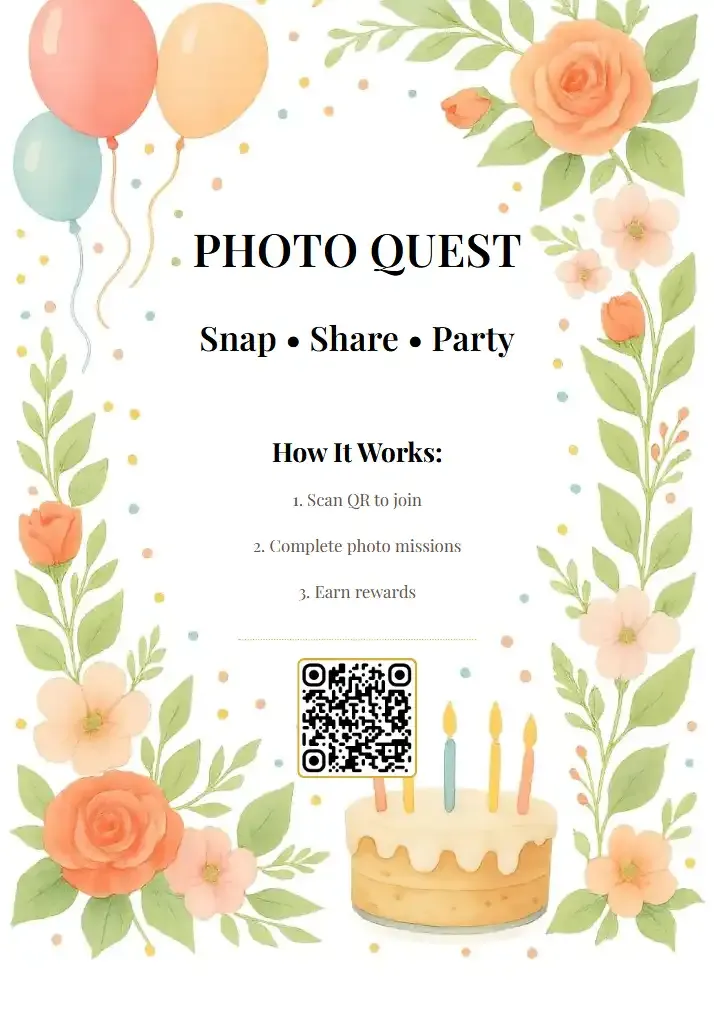
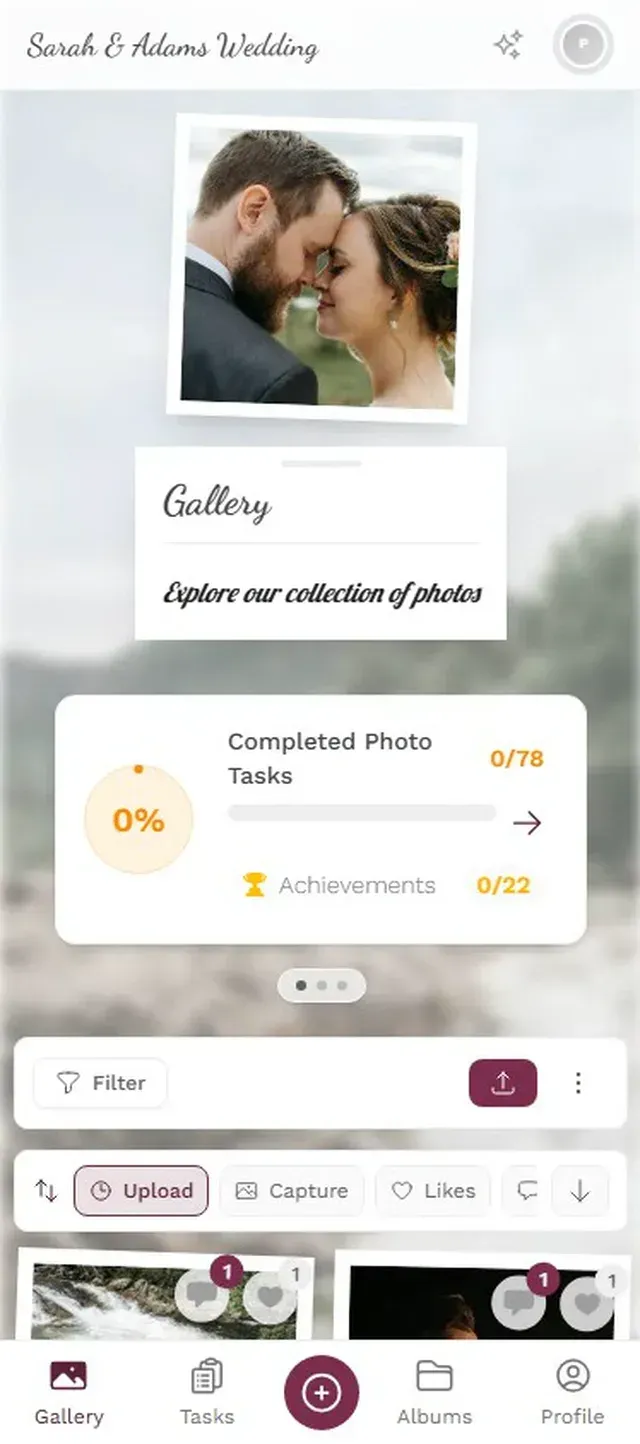

Say you're organizing a 120-guest wedding: you've already handled the guest list, the seating chart, and the meal preferences. Adding a photo wall that displays guest photos on a screen near the bar takes about 10 minutes to set up. Print the QR code on the same table cards you're already designing. Guests who RSVP'd with their smartphones will use those same smartphones to upload photos during dinner.
If you're running photo challenges at the event, the gamification features (leaderboard, achievements, points) give guests a reason to participate actively rather than just passively taking photos. For corporate events, this ties directly into team building activities that drive engagement beyond the usual icebreakers.
Common Mistakes (and How to Avoid Them)
Waiting too long to start. The guest list should be your first planning task, not something you build after choosing the venue. Your headcount determines your budget, your venue capacity, and your catering order. Start with a rough list 9-12 months before a wedding, or 2-3 months before a corporate event.
Not tracking plus-ones properly. "Sarah + 1" is not a guest entry. It's a liability. You don't know the plus-one's name, meal preference, or whether they're actually coming. Ask for the plus-one's name and details on the RSVP form.
Separate systems for separate tasks. Your RSVP tracker, seating chart, and meal count should either live in the same tool or sync automatically. If you're updating three different documents every time someone changes their mind, you will make errors. Photogala's free event planning tools keep guest management and seating planning in one place.
Forgetting the day-of experience. You planned the guest list perfectly. But did you plan what happens when those guests arrive? Check-in, welcome drinks, a timeline that runs smoothly, and a way to capture the memories. Guest list management sets the foundation; the event experience is what people remember.
For family reunions: Managing guests across multiple branches and generations requires extra coordination. Check out our guide on family reunion photo sharing for tips on collecting memories from everyone, including the relatives who couldn't make it.
Making the Guest List Work Harder
Your guest list isn't just an attendance tracker. It's a planning tool that touches every other decision. The headcount drives the budget. The meal preferences drive the menu. The group tags drive the seating chart. And the contact list becomes your communication channel for thank-you notes, photo galleries, and follow-ups.
After the event, sharing a digital guest book or photo gallery with everyone on your guest list closes the loop. The same list you used to send invitations becomes the distribution list for memories. For weddings, the archive and download features let you share original-quality photos with every guest who attended.
The couple from the opening of this article? Imagine they'd used a single RSVP form with a QR code on the invitation, collected meal preferences in the same step, and set up a shared photo gallery using the same QR code approach. Three problems, one mindset: give people one clear way to participate, and they will.
Ready to create your gallery?
Start sharing your event photos with guests in minutes.
Create GalleryWritten by

I believe event photos should be more than static galleries. They should be live, playful, and unforgettable.
Categories
Related Posts

Multicultural Wedding Photo Sharing: Honoring Every Tradition in One Gallery
When your wedding blends two (or more) cultures, collecting guest photos gets complicated fast. Here's how to make it work without losing a single moment.
Free Event Planning Tools Every Organizer Should Bookmark
The best free tools for budgets, guest lists, timelines, photo sharing, and more. No subscriptions, no bloated software suites.

Milestone Birthday Photo Sharing: 30th, 40th, 50th and Beyond
At milestone birthdays, decades of relationships converge in one room. Here's how to collect every guest's photos before they vanish into 40 separate camera rolls.