Wedding Stationery

The invitation sets the tone. Everything else follows it.

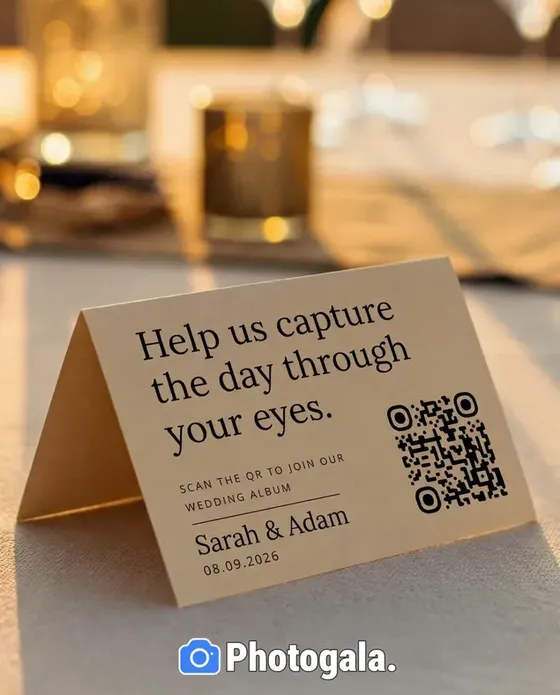
Place cards, table numbers, menu and RSVP cards, QR and seating posters sit side by side as templates in one editor. You decide on colour and typeface once — instead of sourcing the look separately in five places.

Start for free — no credit card required · Paid plans from 39 €

No App Required
Setup in 5 Minutes
30-Day Money Back

The usual route — and this one

Stationery usually arrives one of two ways: a bought template set plus a copy shop, or a stationery designer. Both do something we cannot — one row of the table belongs to them for that reason, and the rest sits below the table. First, what changes when all the pieces are meant to match.

Every card type from one library
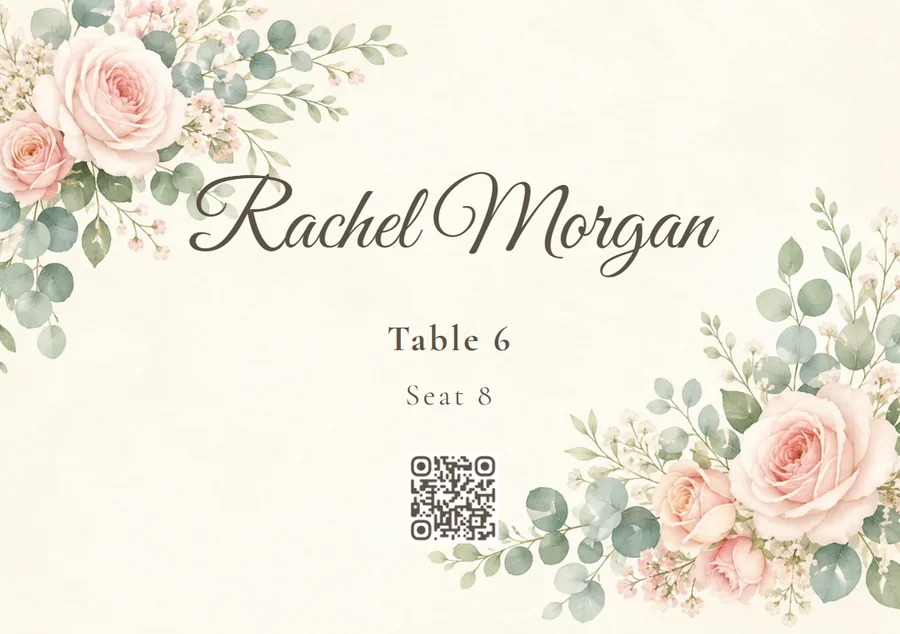
Photogala: Place card, table number, menu and RSVP card, QR and seating poster sit side by side as their own template types — filtered to the card you are building right now, or all of them at once.
Template set or designer: A bought set usually covers the invitation and the menu card. Table numbers, a poster or an RSVP card come from a second source and only roughly match the look.
Changing something
Photogala: Colour, typeface, text and arrangement lie open on the canvas: layers, groups, guides, front and back, a language per element. Up to 100 drafts per event, all inside the same event.
Template set or designer: Many sets can be edited perfectly well in their own graphics service — swapping text is quick. But whatever the set is missing you have to build there yourself; with a designer, every change means another round of proofs.
Paper, finishing, print data
Photogala: This is where we lose. You get a PDF file in RGB — no bleed, no CMYK, no colour profile; the images inside the templates sit at 1500 pixels, which caps an A6 card at roughly 257 dpi. You pick the paper yourself, and we neither print nor ship.
Template set or designer: A bought set often ships press-ready files with bleed. A designer picks paper, embossing and edge colouring and sends the files straight to the print shop.
Screen as well as paper
Photogala: The same celebration also has a digital invitation: 27 designs, each with its own type trio and palette; three type slots and six colour slots can be overridden. The save-the-date is free on every plan, the full version starts with Plus.
Template set or designer: Stationery is paper. The digital part is a second product, often from a second supplier — with a third set of typefaces.
The poster in the same tone
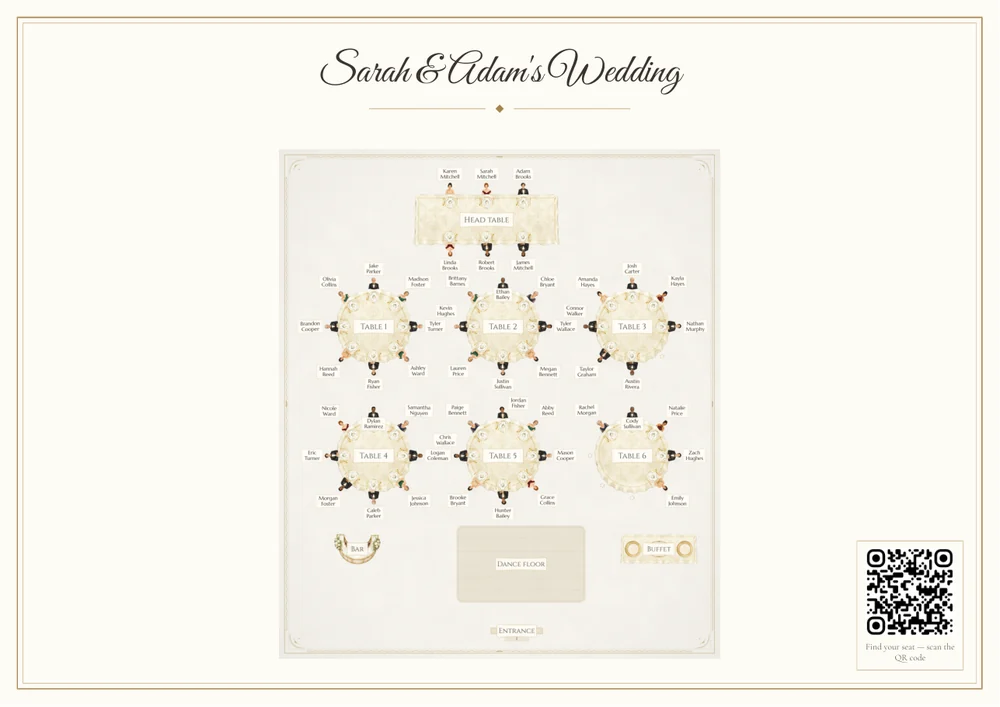
Photogala: The seating plan takes one of 19 illustrated scene styles, plus paper, vignette, frame, name-plate shape and type size — enough adjustment to bring it towards the tone of the cards rather than the other way round.
Template set or designer: The poster is usually typeset separately, often by someone other than whoever made the card set — and matches the look about as well as two sources ever do.
Once the day is over
Photogala: Header, gallery layout and a colour preset carry the same palette into your photo gallery — with a live preview before you save.
Template set or designer: Printed stationery ends with the evening. What remains is the paper, and that is that.

What a designer does better

The biggest difference is not the printing, it is where the artwork comes from. Our templates are already drawn and open to every couple using Photogala. Nothing is created that did not exist before: no monogram of your own, no illustration of your ceremony venue, no motif that belongs only to you. And nobody looks over your draft before you print it — no proofreading, no advice on paper and format, no sample card in the post. That is exactly what a stationery designer delivers, along with real paper, embossing and press-ready files. If the artwork itself matters more to you than consistency across every piece, you are better off there.

Six recordings from the live product

Six screen recordings from a real wedding event — no rebuilt screens, no renderings. You see exactly what happens on the screen.

27 designs, seen end to end

The video pans calmly through the design picker inside the invitation editor: card after card, each with its own type trio and its own palette. This is where the first decision falls — the tone the menu card, place cards and poster pick up afterwards.

One plan, a different style

The finished seating plan is on screen, then the style picker opens: a grid of small scenes, one of them gets clicked — and the entire plan redraws in the new look. What matters here is less the switch itself than how close the plan gets to the tone of the cards. Tables, names and assignments stay exactly as they were.

The menu card in four styles

The PDF dialog opens inside the menu tool. The preview pane shows the finished card on portrait A4; the style picker switches it between the four styles, rebuilding it each time. Nothing is exported in the video.

The template browser, filtered by card type

Opened from the menu card, the Design Studio brings up its template browser. At first it shows only the templates that fit the card type currently selected; then it switches to “All” and scrolls through the whole library — place cards, table numbers, menu and RSVP cards, QR and seating posters. None of them is applied in the video.

The same colours, now on screen

The style tab of the event settings with the live preview open: header and gallery layout are stepped through, and finally a colour preset that sets primary, accent and background together. The framed gallery next to it changes along instantly.

And in the end it shows up there too

A phone, the shared gallery, a calm scroll across the top rows and gently back up. The same palette that sat on your cards now frames the photos of the evening — the last place your look appears.

All of this comes with your own event.

Setting it up takes five minutes. You can build and view everything before you decide.

View Live Demo

One-time payment — No subscription

Starting from 39 € / one-time

All memories from your event — one price, no hidden fees.

See Pricing

Questions about the stationery

Is there a switch that applies one colour to every piece automatically?
No, and we will not claim there is. You set colour and typeface in four places: in the invitation (three type slots, six colour slots), in the seating plan's scene style, in the menu card style, and on the Design Studio canvas — plus a fifth time in the event settings if the same tone should carry into the gallery. The difference from the usual route is not automation — it is that all of those places sit inside the same event and use the same names, tables and courses. So you decide on the look once instead of sourcing it several times over.
What does designing cost — and where does the free plan end?
Designing costs nothing: templates, styles, the canvas, the preview and up to 100 drafts per event are free on every plan, the free one included. What you pay for is delivery. From guest 21 onwards the server blocks the seating export — and with it, in the same dialog, the place cards and table numbers — plus the guest seat search, the personal RSVP links and the guest-list export. Regardless of guest count, the full digital invitation instead of a save-the-date and the standalone templates page only start with the Plus plan (39 €); the studios you open from inside the tools are not affected by that. The menu card PDF and the menu card studio are tied to neither limit.
Are the files press-ready for a print shop?
Only up to a point, and that deserves saying plainly: you get a PDF file in RGB. No CMYK, no bleed, no colour profile, no preflight check — and images sit at 1500 pixels, which caps an A6 card at roughly 257 dpi. That is enough for digital printing at a copy shop and for the printer at home. If you commission an offset printer with bleed, show them the file first. Photogala itself neither prints nor ships anything.
Does the look survive if we reseat someone two days before?
Yes. Seating images, table lists and menu blocks are not copies but linked blocks carrying a fingerprint of the data. If the plan changes afterwards, the studio reports the block as stale and refreshes it in place; layout, typeface and colour stay as they are. You simply generate the file again — as often as you like, as long as your plan covers the export.
Can we design half a year ahead without anything expiring?
Yes, and this is the part almost nobody expects: your event's storage period hangs off the gallery. It begins with the first uploaded photo (with the tenth on the paid plans), not when you sign up. Drafts, cards, seating plan and menu do not count towards it, and images you upload into the Design Studio do not start the clock either. So you can work on the stationery long before the date without a deadline running.
Do you send out the invitation or the cards for us?
No — printed or digital, our work ends at the file. You take the PDF to the print shop, and the link with its QR code you hand out just as much yourself: on the printed card, in the group chat, in person. There is no sending channel towards the guest list, so no email, no SMS, no WhatsApp and no reminder to everyone who has not replied yet.

Ready to Get Started?

Create your event in minutes. No credit card required.

See Pricing
No App Required
Setup in 5 Minutes
30-Day Money Back